Expresses contrast or unexpected result. Iran says they were attacked even though they are not at war.
勉強したのに、試験に落ちた。
Even though I studied, I failed the test.
雨なのに出かけた。
Even though it was raining, I went out.
~ないまま
N3
while still not doing / left undone
The plain negative plus まま describes a state that stays unchanged. 飲まないまま家に残っている means the medicine stays at home in an untaken state.
飲まないまま家に残っている薬。
Medicine left at home without being taken.
使わないまま期限が切れました。
It expired without ever being used.
~ている
N5
is doing, has been doing (ongoing state/action)
Expresses a continuing action or resulting state. Formed with て-form + いる. Can describe an action in progress or a state resulting from a past change.
今、ご飯を食べています。
I am eating rice now.
東京に住んでいます。
I live in Tokyo.
ドアが開いています。
The door is open.
~によると
N3
according to ...
Cites a source of information. The noun before によると is the source. Often followed by a reported statement.
天気予報によると、明日は雨です。
According to the weather forecast, it will rain tomorrow.
ニュースによると、地震がありました。
According to the news, there was an earthquake.
先生によると、テストは来週です。
According to the teacher, the test is next week.
~られる(受身)
N4
passive voice: was/were ~ed
Passive form indicating that the subject receives the action. '食べられて' means 'were eaten'. Central grammar of this article about tulips being eaten by deer.
ケーキが弟に食べられた。
The cake was eaten by my little brother.
~たり~たり
N5
doing things like A and B
Lists example actions.
エアコンを使ったり水を飲んだり。
Using air conditioning, drinking water, etc.
読んだり書いたり。
Reading and writing.
~くなる
N4
to become (い-adjective)
Expresses a change of state for い-adjectives. Drop the final い and add くなる. Indicates something has changed or will change to a new state.
寒くなりました。
It has gotten cold.
日本語が上手になりました。
My Japanese has gotten better.
値段が高くなりました。
The price became expensive.
~てくる
N4
come toward (action approaching)
Indicates motion toward the speaker or a location. Here it describes rocks flying toward people.
鳥が飛んできた。
A bird flew toward (us).
雨が降ってきた。
It started raining.
~なら
N4
if it is ~ / in the case of ~
Noun + なら picks up a topic and states what is true in that case: with online care (as opposed to visiting), you need no train or bus.
オンライン診療なら、家で診察を受けられます。
With online care, you can be examined at home.
電車なら三十分で着きます。
If you take the train, you will arrive in thirty minutes.
~ことができる
N4
can do ..., to be able to ...
Verb dictionary form + ことができる expresses ability or possibility. More formal than the potential verb form. Common in written Japanese and announcements.
日本語を話すことができます。
I can speak Japanese.
ここで写真を撮ることができます。
You can take photos here.
インターネットで予約することができます。
You can make a reservation on the internet.
~方
N4
way of doing
Attached to verb stem to mean 'way of doing'. '力の入れ方' means 'way of applying force'.
食べ方が分からない。
I don't know how to eat it.
書き方を教えてください。
Please teach me how to write.
~てしまう
N4
completely / finish ~ing (often regretful)
Expresses completion, often with regret or unexpectedness. Here the rice sold out quickly.
すぐに全部売れてしまった。
It all sold out right away.
忘れてしまった。
I forgot (unfortunately).
~くする
N4
To make ~ (adjective)
い-adjective stem + くする means 'to make something (adjective).' 安くする means 'to make cheaper.'
部屋を明るくしました。
I made the room brighter.
~ば
N4
conditional: if ~
Ba-form conditional expressing 'if ~ then ~'.
勉強すれば、合格できる。
If you study, you can pass.
早く起きれば間に合う。
If you wake up early, you'll make it.
1
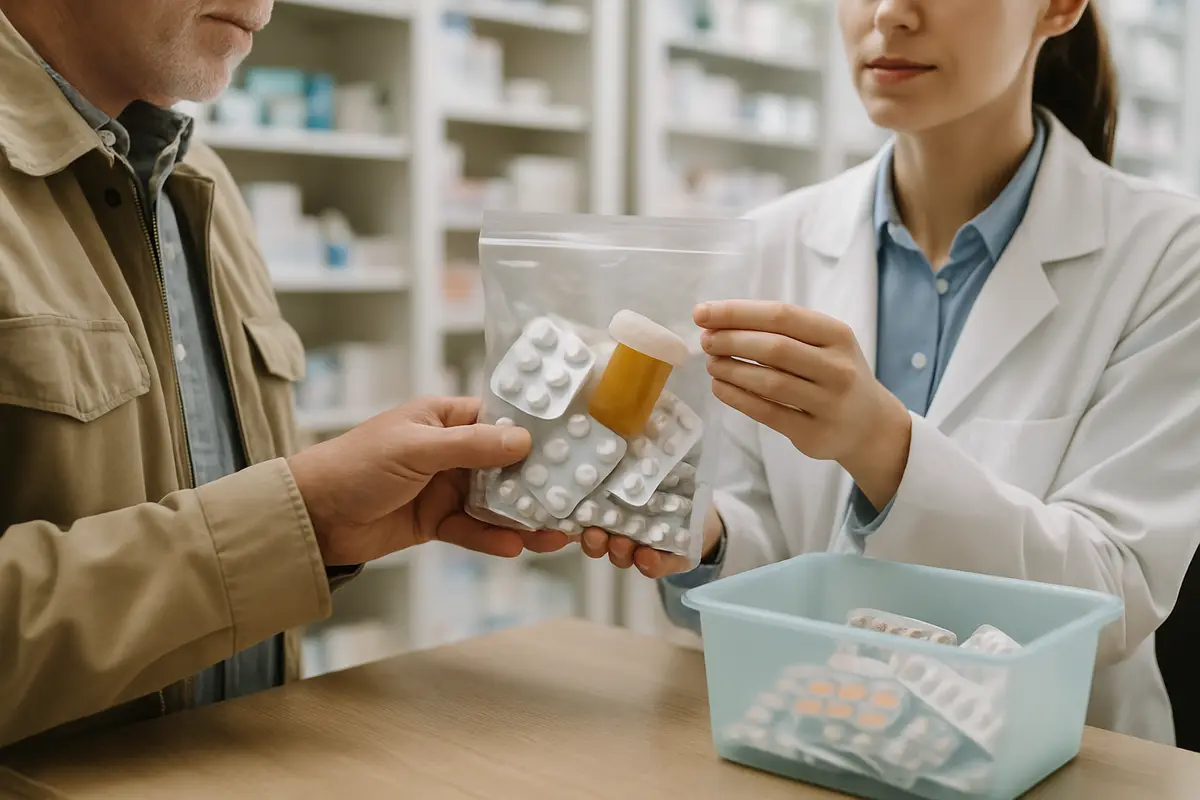
使わない薬を薬局に返す取り組み
An initiative to return unused medicine to pharmacies
2
病院でもらったのに飲まないまま家に残っている薬を、「残薬」と言います。
Medicine that people received at the hospital but never took, and that is left sitting at home, is called "zanyaku" (leftover medicine).
3
国の調査によると、その量は一年で数百億円分にもなると考えられています。
According to a national survey, that amount is thought to reach several tens of billions of yen worth in a single year.
4
飲み忘れたり、症状が良くなって途中でやめたりすることが主な原因です。
The main causes are forgetting to take the medicine, or stopping partway because the symptoms have improved.
5
そこで、いくつかの地域の薬局では、患者が使わなかった薬を持ってくる日を決めました。
So pharmacies in several regions have set a day on which patients bring in the medicine they did not use.
6
薬剤師が中身と期限を確かめて、まだ使える薬なら、次にもらう分を減らすことができます。
A pharmacist checks the contents and the expiry date, and if the medicine can still be used, the amount dispensed next time can be reduced.
7
薬の飲み方が難しくて残してしまう人には、飲む回数を少なくする方法も相談します。
For people who end up with medicine left over because the way of taking it is complicated, the pharmacy also discusses ways to reduce the number of doses.
8
薬局の担当者は「薬を捨てるのはもったいないだけでなく、患者の体にも良くありません」と話しています。
A pharmacy representative says, "Throwing medicine away is not only wasteful, it is also bad for the patient's body."
9
残薬を減らせば、医療費を抑えることにもつながりそうです。
If leftover medicine is reduced, it also looks likely to help hold down medical costs.
使わない薬を薬局に返す取り組み1
2026年08月23日 19:17
著者: jpreader
この画像はAIで生成され、学習目的で使用されています。
This image is AI-generated and used for educational purposes.
An initiative to return unused medicine to pharmacies
2
Medicine that people received at the hospital but never took, and that is left sitting at home, is called "zanyaku" (leftover medicine).
3
According to a national survey, that amount is thought to reach several tens of billions of yen worth in a single year.
4
The main causes are forgetting to take the medicine, or stopping partway because the symptoms have improved.
5
So pharmacies in several regions have set a day on which patients bring in the medicine they did not use.
6
A pharmacist checks the contents and the expiry date, and if the medicine can still be used, the amount dispensed next time can be reduced.
7
For people who end up with medicine left over because the way of taking it is complicated, the pharmacy also discusses ways to reduce the number of doses.
8
A pharmacy representative says, "Throwing medicine away is not only wasteful, it is also bad for the patient's body."
9
If leftover medicine is reduced, it also looks likely to help hold down medical costs.
Discussion
to rate or comment.
No comments yet.