子どもに安く食事を出す「子ども食堂」が、全国で増えています2。地域のボランティアが料理を作り、月に何回か開きます3。値段は無料か、百円くらいの所が多いです4。
最初は、生活が苦しい家庭の子どもを助けるために始まりました5。今は、だれでも来られる場所になっています6。お年寄りや親も一緒に食べて、近所の人と話をします7。
しかし、続けるのは簡単ではありません8。食べ物やお金が足りない所もあります9。そのため、店や農家が野菜を送ったり、市が場所を貸したりして、応援しています10。
(こどもしょくどう)
children's cafeteria (free or cheap community meals for kids)
(ぜんこく)
nationwide; the whole country
(ひろがる)
to spread
(こども)
child
(やすい)
cheap / inexpensive
(しょくじ)
meal
(だす)
to serve, put out
(ふえる)
to increase; to grow
(ちいき)
region; area
(ぼらんてぃあ)
volunteer
(りょうり)
cuisine, cooking
(つくる)
to make
(つき)
month
(なんかい)
how many times / many times
(ひらく)
to open, to hold (event)
(ねだん)
price
(むりょう)
free of charge
(ひゃくえん)
one hundred yen
(ところ)
place; area
(おおい)
many
(さいしょ)
first, beginning
(せいかつ)
daily life; livelihood
(くるしい)
painful, difficult
(かてい)
household; home; family
(たすける)
to help
(はじまる)
to begin
(いま)
now
(くる)
to come
(ばしょ)
place
(おとしより)
elderly person
(おや)
parent
(いっしょ)
Together; at the same time
(たべる)
to eat
(きんじょ)
neighborhood
(ひと)
person / people
(はなし)
talk, story
(つづける)
to continue
(かんたん)
simple / easy
(たべもの)
food
(おかね)
money
(たりる)
to be enough; to be sufficient
(みせ)
shop, store
(のうか)
farmer / farm household
(やさい)
vegetables
(おくる)
to send / to take (someone somewhere)
(し)
city
(かす)
to lend
(おうえん)
cheering; support
is doing, has been doing (ongoing state/action)
Expresses a continuing action or resulting state. Formed with て-form + いる/います. Can describe an action in progress or a state that continues from a past change.
今、本を読んでいます。
I am reading a book now.
窓が開いています。
The window is open.
日本に住んでいます。
I live in Japan.
To the extent that ~
Expresses degree or extent. Tickets are so popular that a lottery is needed — emphasizes the level of popularity.
泣くくらい嬉しかったです。
I was so happy I could cry.
in order to ~
Expresses purpose.
健康のために歩く。
I walk for my health.
止めるために話し合う。
Discuss in order to stop it.
any- (anyone, anything, anywhere)
A question word plus でも means "no matter which one." だれでも来られる場所 is a place that anyone at all can come to, which is the point the article makes about how the cafeterias have changed.
何でも食べられます。
I can eat anything.
いつでも来てください。
Please come any time.
potential form: can do ~
選べる is the potential form of 選ぶ ("can choose"), and 来られる is the potential form of 来る ("can come"). The article uses them to say students can choose their clothes and everyone can come to school.
制服を自由に選べる学校が増えています。
Schools where you can freely choose your uniform are increasing.
みんなが学校に来られることが大事です。
It is important that everyone can come to school.
however / but
Conjunction introducing a contrast. However, this year only 1.5mm fell.
行きたかった。しかし、行けなかった。
I wanted to go. However, I couldn't go.
安い。しかし、品質がいい。
It's cheap. However, the quality is good.
nominalizing a verb phrase with の
Used in 「みんなの前で話をするのは初めてです」to nominalize the verb phrase so it can serve as the topic of the sentence.
日本語を勉強するのは楽しいです。
Studying Japanese is fun.
朝早く起きるのは大変です。
Waking up early is tough.
Is not ~
Polite negative form of です. Used to negate a noun or na-adjective predicate. The price is not yet affordable.
学生ではありません。
I am not a student.
therefore; for that reason
Connects cause and result — because of more investors and profits, more people buy stocks.
そのため、株を買う人が増えた
Therefore, more people bought stocks.
雨だ。そのため、試合は中止だ
It's raining. For that reason, the match is cancelled.
doing things like ~ and ~
Lists representative actions among several. Implies there are other actions too. Used twice in this article.
週末は本を読んだり映画を見たりします。
On weekends I do things like read books and watch movies.
歌ったり踊ったりして楽しんだ。
We had fun singing and dancing.
子ども食堂が全国に広がる
Children's cafeterias are spreading across the country
子どもに安く食事を出す「子ども食堂」が、全国で増えています。
"Children's cafeterias," which serve children meals cheaply, are increasing across the country.
地域のボランティアが料理を作り、月に何回か開きます。
Local volunteers cook the meals, and the cafeterias open several times a month.
値段は無料か、百円くらいの所が多いです。
In most places the meals are free or cost around one hundred yen.
最初は、生活が苦しい家庭の子どもを助けるために始まりました。
They started out as a way to help children from families struggling to get by.
今は、だれでも来られる場所になっています。
Now they have become places that anyone can come to.
お年寄りや親も一緒に食べて、近所の人と話をします。
Elderly people and parents eat together there too, and chat with their neighbours.
しかし、続けるのは簡単ではありません。
However, keeping them going is not easy.
食べ物やお金が足りない所もあります。
Some of them do not have enough food or money.
そのため、店や農家が野菜を送ったり、市が場所を貸したりして、応援しています。
For that reason, shops and farmers send vegetables and city offices lend them space, supporting the cafeterias.
2026年08月24日 19:20
著者: jpreader
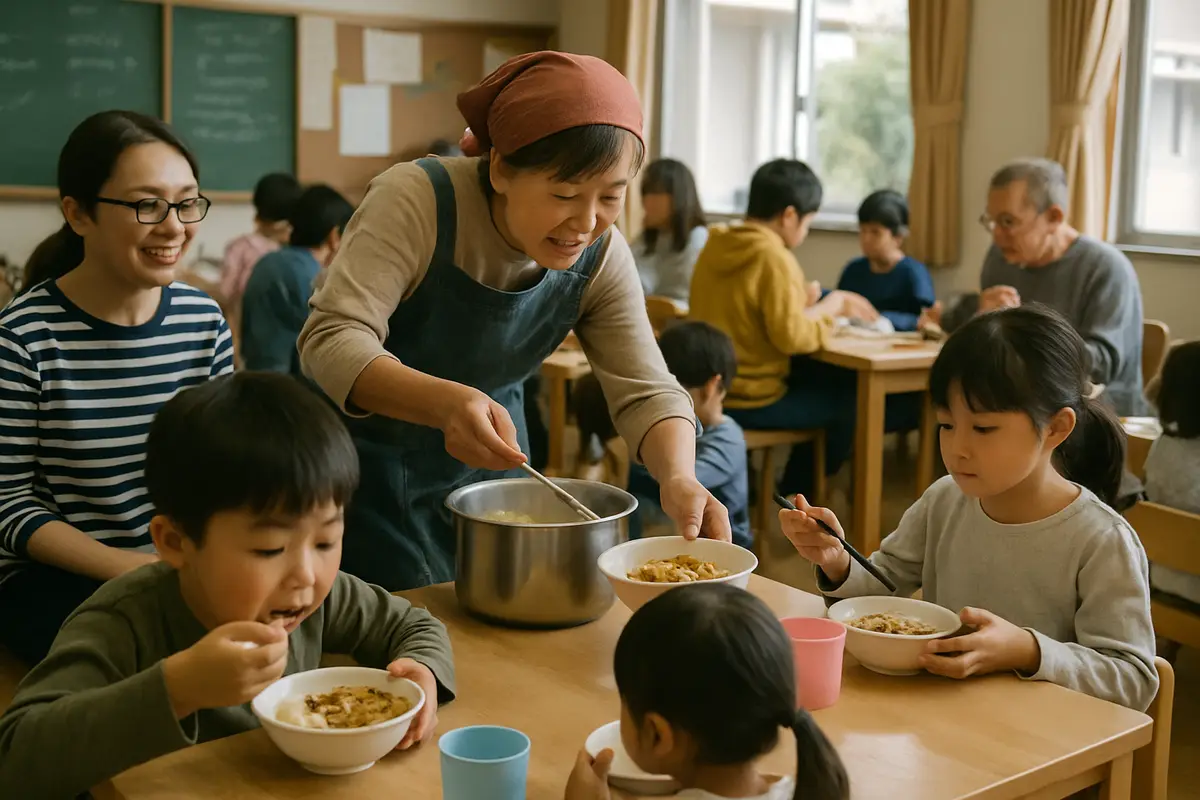
この画像はAIで生成され、学習目的で使用されています。
This image is AI-generated and used for educational purposes.
子どもに安く食事を出す「子ども食堂」が、全国で増えています2。地域のボランティアが料理を作り、月に何回か開きます3。値段は無料か、百円くらいの所が多いです4。
最初は、生活が苦しい家庭の子どもを助けるために始まりました5。今は、だれでも来られる場所になっています6。お年寄りや親も一緒に食べて、近所の人と話をします7。
しかし、続けるのは簡単ではありません8。食べ物やお金が足りない所もあります9。そのため、店や農家が野菜を送ったり、市が場所を貸したりして、応援しています10。
Discussion
to rate or comment.
No comments yet.