新幹線しんかんせん
N4

(しんかんせん)

bullet train / Shinkansen

自動運転じどううんてん
N2

(じどううんてん)

autonomous driving; self-driving

試験しけん
N4

(しけん)

exam

進むすすむ
N3

(すすむ)

to advance, to progress

鉄道てつどう
N3

(てつどう)

railway; railroad

会社かいしゃ
N5

(かいしゃ)

company

自動じどう
N3

(じどう)

automatic

走るはしる
N5

(はしる)

to run

技術ぎじゅつ
N3

(ぎじゅつ)

skill, technology

進めるすすめる
N3

(すすめる)

to advance; to move forward

運転士うんてんし
N2

(うんてんし)

(train) driver; motorman

発車はっしゃ
N2

(はっしゃ)

departure (of a vehicle)

ボタンぼたん
N4

(ぼたん)

button

押すおす
N4

(おす)

to push

あとあと
N5

(あと)

remaining; left; more

車両しゃりょう
N3

(しゃりょう)

train car / vehicle

自分じぶん
N4

(じぶん)

oneself

速度そくど
N2

(そくど)

speed

調整ちょうせい
N2

(ちょうせい)

adjustment; regulation

決めるきめる
N4

(きめる)

to decide

位置いち
N2

(いち)

position / location

止まるとまる
N5

(とまる)

to stop

背景はいけい
N2

(はいけい)

background

人手不足ひとでぶそく
N1

(ひとでぶそく)

labour shortage; shortage of workers

将来しょうらい
N3

(しょうらい)

future

ひと
N5

(ひと)

person / people

減るへる
N3

(へる)

to decrease / to diminish

予想よそう
N2

(よそう)

prediction, forecast

少ないすくない
N5

(すくない)

few, scarce

人数にんずう
N2

(にんずう)

number of people; headcount

安全あんぜん
N4

(あんぜん)

safety

運行うんこう
N1

(うんこう)

operation (of a train or bus service)

仕組みしくみ
N2

(しくみ)

structure, system, mechanism

求めるもとめる
N3

(もとめる)

to seek, request

まずまず
N4

(まず)

first of all

夜間やかん
N2

(やかん)

nighttime; evening (hours)

回送かいそう
N1

(かいそう)

out-of-service run; deadheading (of a train)

列車れっしゃ
N3

(れっしゃ)

train

実用化じつようか
N1

(じつようか)

putting into practical use

目指すめざす
N3

(めざす)

to aim for

計画けいかく
N3

(けいかく)

plan

乗客じょうきゃく
N2

(じょうきゃく)

passenger

乗せるのせる
N3

(のせる)

to put aboard / give a ride

地震じしん
N4

(じしん)

earthquake

強いつよい
N4

(つよい)

strong

かぜ
N5

(かぜ)

wind

異常時いじょうじ
N1

(いじょうじ)

emergency; abnormal situation

どうどう
N5

(どう)

how / in what way

対応たいおう
N2

(たいおう)

response, handling

課題かだい
N2

(かだい)

issue, problem, challenge

残るのこる
N3

(のこる)

to remain / to stay behind

乗るのる
N5

(のる)

to ride, board

監視かんし
N1

(かんし)

monitoring; watching over

かたち
N4

(かたち)

shape, form

段階的だんかいてき
N1

(だんかいてき)

gradual; step by step

始めるはじめる
N5

(はじめる)

to begin, start

方針ほうしん
N2

(ほうしん)

policy, course of action

~せる(使役形)
N4

to make/let something do (causative form)

Godan verbs form the causative by changing -u to -aseru. 走る becomes 走らせる, so 新幹線を自動で走らせる技術 is technology that makes the Shinkansen run automatically.

先生は学生に本を読ませました。

The teacher made the students read a book.

機械を自動で動かせる。

The machine can be made to move automatically.

~ています
N5

is doing, has been doing (ongoing state/action)

Expresses a continuing action or resulting state. Formed with て-form + いる/います. Can describe an action in progress or a state that continues from a past change.

今、本を読んでいます。

I am reading a book now.

窓が開いています。

The window is open.

日本に住んでいます。

I live in Japan.

~られる(受身形)
N4

to be done (passive form)

Ru-verbs take られる to form the passive. 決められた位置 means "a position that has been decided (in advance)" — the article never says who decided it, which is typical of news writing.

会議で新しいルールが決められた。

New rules were decided at the meeting.

この駅は百年前に建てられました。

This station was built a hundred years ago.

~のは~です
N5

nominalizing a verb phrase with の

Used in 「みんなの前で話をするのは初めてです」to nominalize the verb phrase so it can serve as the topic of the sentence.

日本語を勉強するのは楽しいです。

Studying Japanese is fun.

朝早く起きるのは大変です。

Waking up early is tough.

~になる
N5

to become

Expresses a change of state; Kawai became the new commissioner of the Sports Agency.

新しい長官になりました。

He became the new commissioner.

目が見えなくなりました。

He became unable to see.

~ており
N3

and (formal ~ている)

Formal/written form of ~ていて, connecting clauses. Here competition is becoming fierce, and... (激しくなっており).

店は開いており、客も多い。

The shop is open, and there are many customers.

雨が降っており、寒い。

It is raining, and it's cold.

~でも
N5

Even ~; also at ~

Particle でも after a noun means 'even' or 'also at.' 首相官邸の庭でも means 'even at the Prime Minister's residence garden.'

子供でもわかります。

Even a child can understand.

~できる
N4

can do / be able to (potential)

In 運転できない it expresses the potential of being able (or not able) to drive a car.

車を運転できない人。

People who cannot drive a car.

日本語ができる。

I can do (speak) Japanese.

ただし
N3

however, provided that

A formal conjunction adding a qualification or condition to the preceding statement.

参加は自由です。ただし、予約が必要です。

Participation is free. However, a reservation is required.

ただし、時間がかかりそうです。

However, it seems it will take time.

~には
N3

in order to ~

Dictionary form + には indicates a condition required to achieve a goal. To deliver nengajō on Jan 1, you must mail by Dec 25.

駅に行くには、バスが便利です。

To get to the station, the bus is convenient.

上手になるには、練習が必要です。

To improve, practice is necessary.

~など
N5

such as / etc.

Used to give examples from a larger group.

りんごやバナナなどを買いました。

I bought apples, bananas, etc.

長野県や北海道など

Nagano, Hokkaido, etc.

~かという
N3

the question of whether/how ...

An embedded question (どう対応するか) is packaged with という so it can modify a noun. どう対応するかという課題 = "the issue of how to respond."

どこで働くかという問題が残っています。

The question of where to work remains.

だれが行くかという話をしました。

We talked about the question of who would go.

~まま
N3

as is, remain in state

Indicates a state that remains unchanged.

電気をつけたまま寝た。

I slept with the light on.

わからないままです。

I still don't understand.

1

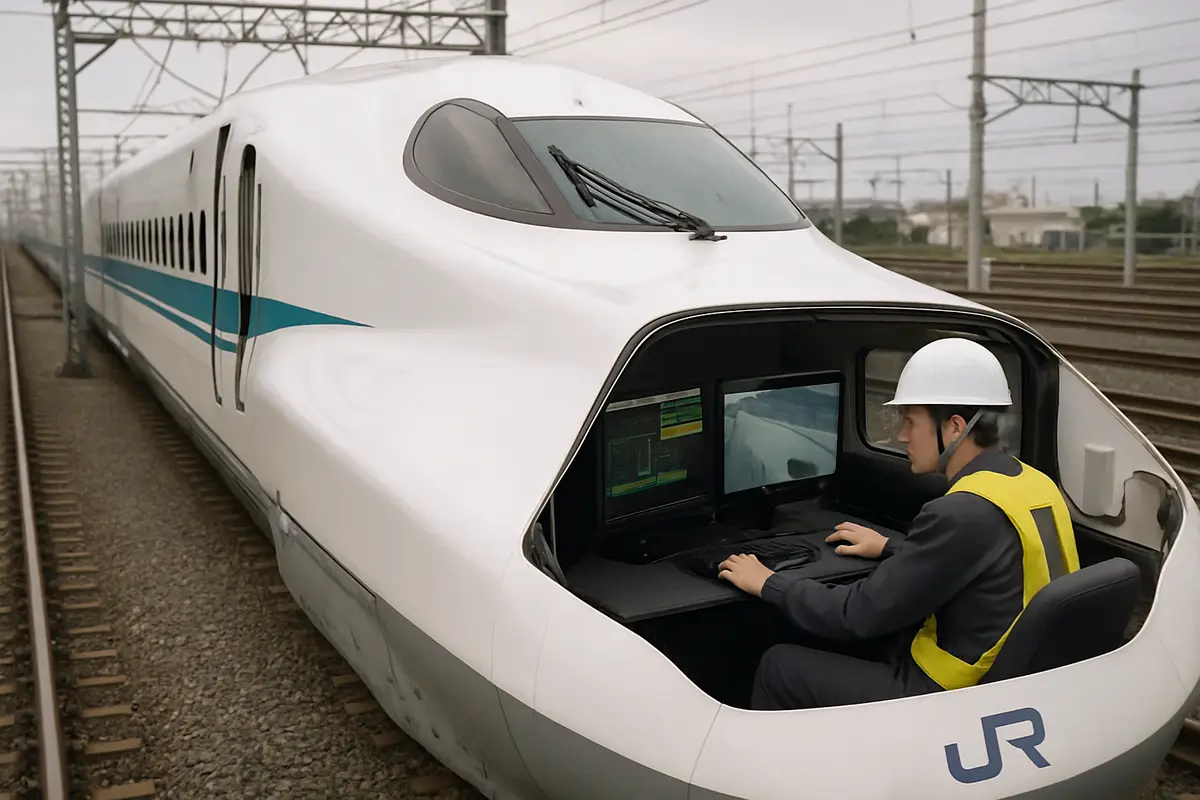
新幹線で自動運転の試験が進む

Automated driving trials move forward on the Shinkansen

2

鉄道会社が、新幹線を自動で走らせる技術の試験を進めています。

A railway company is pressing ahead with trials of technology that runs the Shinkansen automatically.

3

運転士が発車のボタンを押すと、あとは車両が自分で速度を調整し、決められた位置に止まります。

Once the driver presses the departure button, the train then adjusts its own speed and stops at a predetermined position.
4

背景にあるのは、人手不足です。

Behind this lies a shortage of workers.

5

将来、運転士になる人が減ると予想されており、少ない人数でも安全に運行できる仕組みが求められています。

The number of people becoming train drivers is expected to fall in the future, and a system that can run services safely with fewer staff is needed.

6

まずは夜間の回送列車から実用化を目指す計画です。

The plan is to aim for practical use first with out-of-service trains running at night.

7

ただし、乗客を乗せて走るには、地震や強い風などの異常時にどう対応するかという課題が残ります。

However, before trains can run with passengers on board, the question of how to respond to emergencies such as earthquakes and strong winds remains.

8

会社は、運転士が乗ったまま監視する形から段階的に始める方針です。

The company plans to start in stages, beginning with an arrangement in which the driver stays on board and monitors the train.

新幹線しんかんせん自動じどう運転うんてん試験しけんすす1

2026年08月24日 19:24

著者: jpreader

新幹線で自動運転の試験が進む

この画像はAIで生成され、学習目的で使用されています。

This image is AI-generated and used for educational purposes.

鉄道てつどう会社かいしゃが、新幹線しんかんせん自動じどうはしせる技術ぎじゅつ試験しけんすすています2運転士うんてんし発車はっしゃボタンすと、あと車両しゃりょう自分じぶん速度そくど調整ちょうせいし、られた位置いちまります3

背景はいけいにあるのは人手不足ひとでぶそくです4将来しょうらい運転士うんてんしになるひと予想よそうされておりすくない人数にんずうでも安全あんぜん運行うんこうできる仕組しくもとめられています5まず夜間やかん回送かいそう列車れっしゃから実用化じつようか目指めざ計画けいかくです6

ただし乗客じょうきゃくはしには地震じしんつよかぜなど異常時いじょうじどう対応たいおうするかという課題かだいのこます7会社かいしゃは、運転士うんてんしったまま監視かんしするかたちから段階的だんかいてきはじめる方針ほうしんです8

Discussion

00

to rate or comment.

No comments yet.