日本にほん
N5

(にほん)

Japan

献血けんけつ
N1

(けんけつ)

blood donation

するする
N5

(する)

to do

若いわかい
N5

(わかい)

young

ひと
N5

(ひと)

person / people

減るへる
N3

(へる)

to decrease / to diminish

血液けつえき
N2

(けつえき)

blood

病気びょうき
N5

(びょうき)

illness, sickness

けがけが
N3

(けが)

injury

必要ひつよう
N4

(ひつよう)

necessary / needed

しかししかし
N4

(しかし)

however, but

長いながい
N5

(ながい)

long

あいだ
N4

(あいだ)

interval, during

置くおく
N5

(おく)

to place, put

毎日まいにち
N5

(まいにち)

every day

たくさんたくさん
N5

(たくさん)

a lot / many

協力きょうりょく
N3

(きょうりょく)

cooperation

理由りゆう
N3

(りゆう)

reason; cause

いくつかいくつか
N4

(いくつか)

several, a few

子どもこども
N5

(こども)

child

かず
N3

(かず)

number, count

少ないすくない
N5

(すくない)

few, scarce

学校がっこう
N5

(がっこう)

school

会社かいしゃ
N5

(かいしゃ)

company

近くちかく
N5

(ちかく)

nearby

場所ばしょ
N4

(ばしょ)

place

スマートフォンすまーとふぉん
N3

(すまーとふぉん)

smartphone

予約よやく
N3

(よやく)

reservation

知るしる
N5

(しる)

to know, learn

多いおおい
N5

(おおい)

many

日本赤十字社にほんせきじゅうじしゃ
N1

(にほんせきじゅうじしゃ)

the Japanese Red Cross Society

大学だいがく
N5

(だいがく)

university; college

イベントいべんと
N3

(いべんと)

event

会場かいじょう
N3

(かいじょう)

venue / site

バスばす
N5

(ばす)

bus

増やすふやす
N4

(ふやす)

to increase (something)

一度いちど
N4

(いちど)

once, one time

経験けいけん
N3

(けいけん)

experience

来るくる
N5

(くる)

to come

年をとるとしをとる
N3

(としをとる)

to grow old, to age

増えるふえる
N3

(ふえる)

to increase; to grow

輸血ゆけつ
N1

(ゆけつ)

blood transfusion

もっともっと
N5

(もっと)

more / further

~ている
N5

is doing, has been doing (ongoing state/action)

Expresses a continuing action or resulting state. Formed with て-form + いる. Can describe an action in progress or a state resulting from a past change.

今、ご飯を食べています。

I am eating rice now.

東京に住んでいます。

I live in Tokyo.

ドアが開いています。

The door is open.

~ことができる
N4

can do ..., to be able to ...

Verb dictionary form + ことができる expresses ability or possibility. More formal than the potential verb form. Common in written Japanese and announcements.

日本語を話すことができます。

I can speak Japanese.

ここで写真を撮ることができます。

You can take photos here.

インターネットで予約することができます。

You can make a reservation on the internet.

~くなる
N4

to become (い-adjective)

Expresses a change of state for い-adjectives. Drop the final い and add くなる. Indicates something has changed or will change to a new state.

寒くなりました。

It has gotten cold.

日本語が上手になりました。

My Japanese has gotten better.

値段が高くなりました。

The price became expensive.

~ない
N5

negative form: does not ~, will not ~

The plain negative 出ない in the headline and the polite negative 出ません in the article both say that Ohtani will not appear in the game.

オールスターゲームに出ない。

He will not play in the All-Star Game.

今年は出ません。

He will not take part this year.

~とき
N5

when ~

Indicates the time when something happened — when he was in junior high school.

中学生のとき病気になりました。

When I was a junior-high student I got sick.

子どものとき日本にいました。

I was in Japan when I was a child.

~でも
N5

Even ~; also at ~

Particle でも after a noun means 'even' or 'also at.' 首相官邸の庭でも means 'even at the Prime Minister's residence garden.'

子供でもわかります。

Even a child can understand.

~ば
N4

conditional: if ~

Ba-form conditional expressing 'if ~ then ~'.

勉強すれば、合格できる。

If you study, you can pass.

早く起きれば間に合う。

If you wake up early, you'll make it.

~てくれる
N4

to do ~ for me/us (favor)

Indicates that someone does something kindly for the speaker. Here 応援してくれて (cheered me on).

友達が手伝ってくれた。

My friend helped me.

教えてくれてありがとう。

Thank you for teaching me.

~からです
N5

it is because ~

Gives a reason at the end of a sentence. Used here to explain why gasoline prices dropped (government subsidies).

疲れた。たくさん歩いたからです。

I'm tired. It's because I walked a lot.

寒いからです。

It's because it's cold.

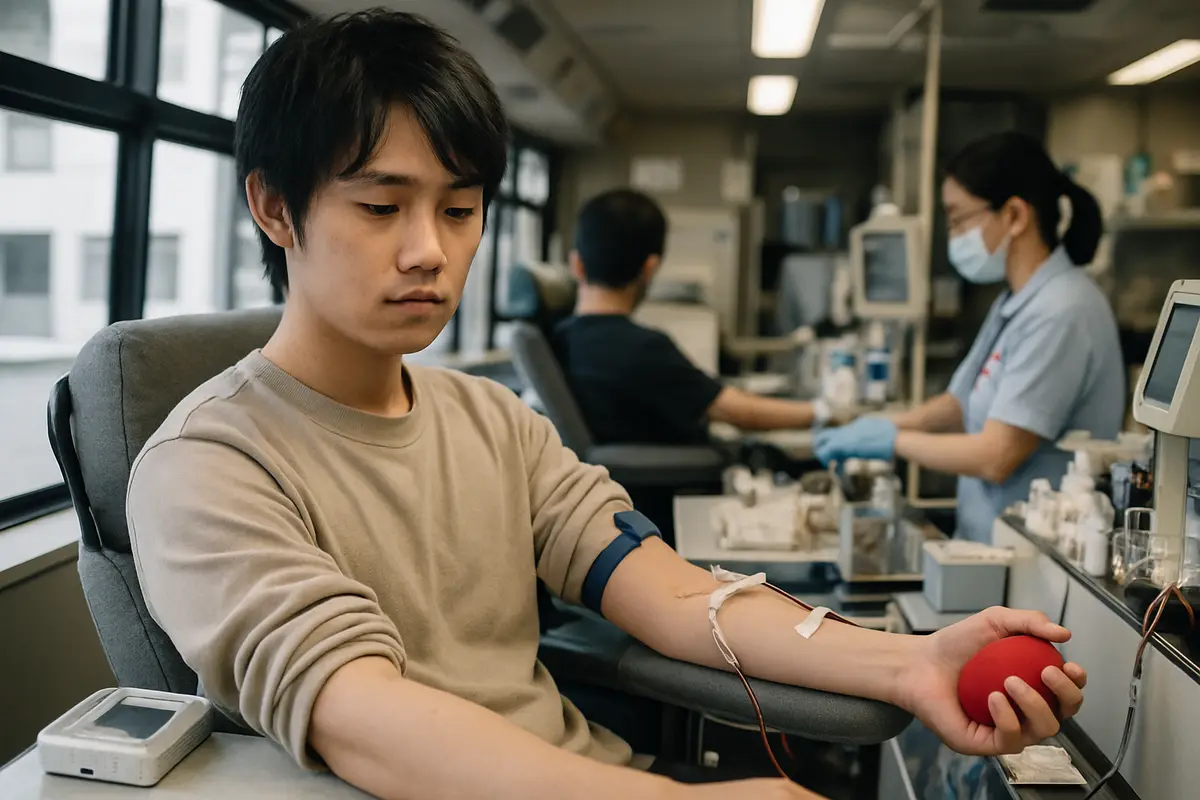
1

若い人の献血が減っている

Blood donation by young people is declining

2

日本では、献血をする若い人が減っています。

In Japan, the number of young people who donate blood is falling.

3

血液は、病気の人やけがをした人に必要です。

Blood is needed by people who are sick and people who have been injured.

4

しかし、長い間、置いておくことができません。

However, it cannot be kept in storage for a long time.

5

だから、毎日たくさんの人の協力が必要です。

That is why the cooperation of many people is needed every day.

6

若い人が減っている理由は、いくつかあります。

There are several reasons why young donors are decreasing.

7

子どもの数が少なくなりました。

The number of children has fallen.

8

学校や会社の近くで、献血をする場所も減りました。

The number of places to donate blood near schools and offices has also fallen.

9

スマートフォンで予約ができることを知らない人も多いです。

There are also many people who do not know that they can book an appointment with a smartphone.

10

日本赤十字社は、大学やイベントの会場で献血バスを増やしています。

The Japanese Red Cross Society is increasing the number of blood donation buses at universities and event venues.

11

若いときに一度でも経験すれば、また来てくれる人が多いからです。

That is because many people who try it even once while they are young will come back again.

12

これから年をとった人が増えて、輸血が必要な人はもっと多くなります。

From now on the number of older people will grow, and even more people will need blood transfusions.

わかひと献血けんけつている1

2026年08月25日 19:17

著者: jpreader

若い人の献血が減っている

この画像はAIで生成され、学習目的で使用されています。

This image is AI-generated and used for educational purposes.

日本にほんでは、献血けんけつするわかひとています2血液けつえきは、病気びょうきひとけがをしたひと必要ひつようです3しかしながあいだいておくことができません4。だから、毎日まいにちたくさんひと協力きょうりょく必要ひつようです5

わかひとている理由りゆうは、いくつかあります6どものかずすくくなりました7学校がっこう会社かいしゃちかくで、献血けんけつする場所ばしょりました8スマートフォン予約よやくができることをないひとおおいです9

日本赤十字社にほんせきじゅうじしゃは、大学だいがくイベント会場かいじょう献血けんけつバスています10わかとき一度いちどでも経験けいけんれば、またてくれるひとおおからです11。これからとしをとったひとて、輸血ゆけつ必要ひつようひともっとおおくなります12

Discussion

00

to rate or comment.

No comments yet.