Expresses a continuing action or resulting state. Formed with て-form + いる. Can describe an action in progress or a state resulting from a past change.
今、ご飯を食べています。
I am eating rice now.
東京に住んでいます。
I live in Tokyo.
ドアが開いています。
The door is open.
~と(条件)
N4
if / when (natural consequence)
Conditional と indicating a natural or expected result. 一緒に捨てると…火が出て means 'if you throw them away together, fire starts.'
ボタンを押すと、ドアが開きます。
When you press the button, the door opens.
春になると、桜が咲きます。
When spring comes, cherry blossoms bloom.
~や
N5
and (non-exhaustive list)
や lists representative examples — Shikoku and Kyushu among other regions (四国や九州).
りんごやみかんを買った。
I bought apples and oranges (among others).
東京や大阪は大きい都市だ。
Tokyo and Osaka are big cities.
~くなる
N4
to become (い-adjective)
Expresses a change of state for い-adjectives. Drop the final い and add くなる. Indicates something has changed or will change to a new state.
寒くなりました。
It has gotten cold.
日本語が上手になりました。
My Japanese has gotten better.
値段が高くなりました。
The price became expensive.
~やすい
N4
easy to ~ / tends to ~
Used in 'うつりやすくて' meaning 'easily contagious / easy to catch'.
この本は読みやすい。
This book is easy to read.
忘れやすい。
Easy to forget.
~からです
N5
it is because ~
Gives a reason at the end of a sentence. Used here to explain why gasoline prices dropped (government subsidies).
疲れた。たくさん歩いたからです。
I'm tired. It's because I walked a lot.
寒いからです。
It's because it's cold.
~によると
N3
according to ...
Cites a source of information. The noun before によると is the source. Often followed by a reported statement.
天気予報によると、明日は雨です。
According to the weather forecast, it will rain tomorrow.
ニュースによると、地震がありました。
According to the news, there was an earthquake.
先生によると、テストは来週です。
According to the teacher, the test is next week.
~になる
N5
to become
Expresses a change of state; Kawai became the new commissioner of the Sports Agency.
新しい長官になりました。
He became the new commissioner.
目が見えなくなりました。
He became unable to see.
~てくる
N4
come toward (action approaching)
Indicates motion toward the speaker or a location. Here it describes rocks flying toward people.
鳥が飛んできた。
A bird flew toward (us).
雨が降ってきた。
It started raining.
~ことができる
N4
can do ..., to be able to ...
Verb dictionary form + ことができる expresses ability or possibility. More formal than the potential verb form. Common in written Japanese and announcements.
日本語を話すことができます。
I can speak Japanese.
ここで写真を撮ることができます。
You can take photos here.
インターネットで予約することができます。
You can make a reservation on the internet.
~なくても
N4
even without ~ / even if not ~
Negative te-form with も meaning even if not. Here 予約をしなくても (even without making a reservation).
行かなくてもいい。
You don't have to go.
食べなくても大丈夫。
It's OK even without eating.
~ように
N4
so that ~
Indicates a goal or desired outcome. Here: so that trainees reach the Specified Skilled Worker level.
分かるように説明します。
I'll explain so you understand.
聞こえるように大きい声で話す。
Speak loudly so it can be heard.
~ていく
N3
to go on doing / continue to (from now)
In '増えていく' – 'will continue to increase (into the future)'. Indicates continuing trend going forward.
これから寒くなっていく。
From now on, it will become colder.
日本語を勉強していきたい。
I want to continue studying Japanese.
~たい
N5
want to ~
Verb stem + たい to express desire.
日本に行きたい。
I want to go to Japan.
水を飲みたいです。
I want to drink water.
1
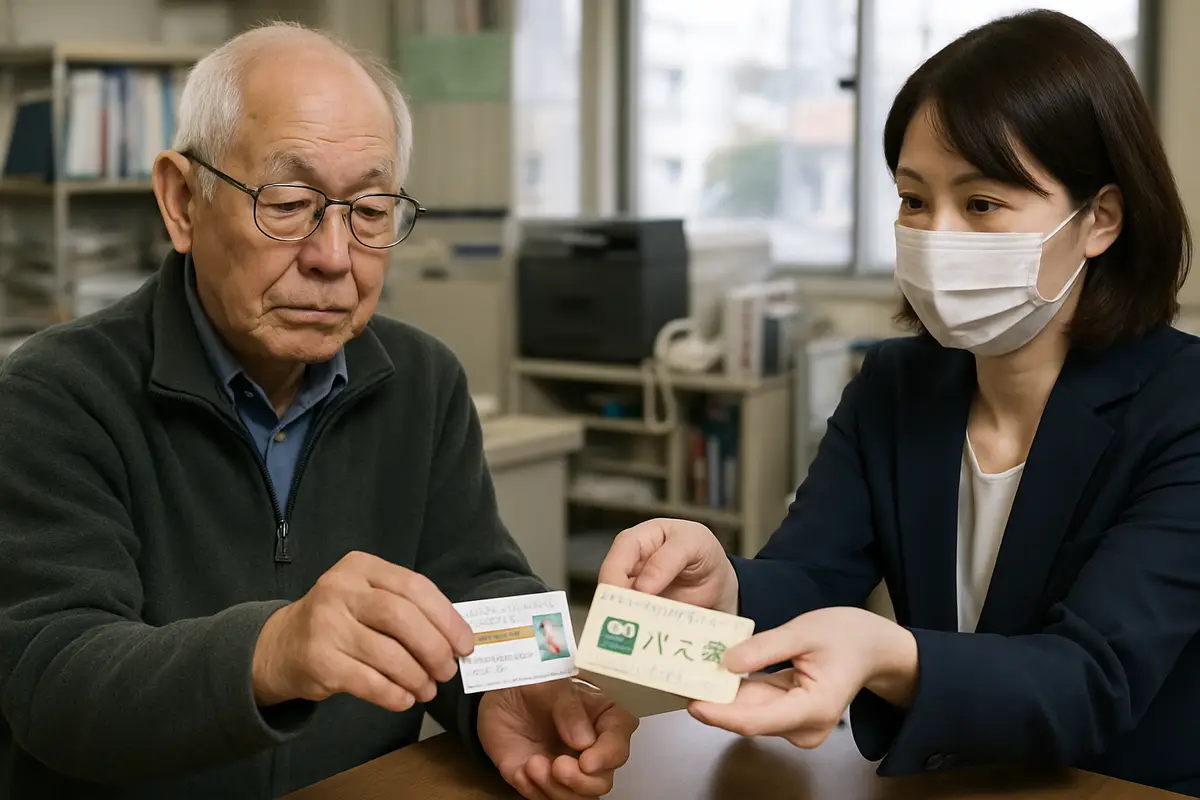
運転免許を返す高齢者にバス券
Bus tickets for elderly people who hand back their driver's licences
2
日本では、車の運転をやめる高齢者が増えています。
In Japan, the number of elderly people who stop driving is increasing.
3
年を取ると、目や耳が弱くなって、事故を起こしやすくなるからです。
That is because, as people age, their eyes and ears weaken and they become more likely to cause accidents.
4
警察によると、去年、運転免許を自分から返した七十五歳以上の人は、全国で約三十万人でした。
According to the police, about 300,000 people aged 75 or older voluntarily returned their driver's licences nationwide last year.
5
しかし、車がないと買い物や病院に行くのが不便になります。
However, without a car it becomes inconvenient to go shopping or to the hospital.
6
そのため、免許を返した人にバスやタクシーの券を配る市や町が増えてきました。
For that reason, more cities and towns have begun handing out bus and taxi tickets to people who return their licences.
7
ある市では、免許を返すと、一年間、市内のバスに半分の値段で乗ることができます。
In one city, if you return your licence you can ride city buses at half price for a year.
Discussion
to rate or comment.
No comments yet.