Expresses a continuing action or resulting state. Formed with て-form + いる. Can describe an action in progress or a state resulting from a past change.
今、ご飯を食べています。
I am eating rice now.
東京に住んでいます。
I live in Tokyo.
ドアが開いています。
The door is open.
~ため
N3
because of, due to
Indicates a reason or cause. More formal than から or ので. Can follow nouns (の + ため) or plain-form verbs/adjectives.
病気のため、学校を休みました。
I was absent from school because of illness.
雨が降ったため、試合は中止です。
The game was cancelled because it rained.
勉強するため、図書館に行きます。
I go to the library in order to study.
~わけではない
N3
it's not that ..., it doesn't mean that ...
Negates an assumption or generalization. Clarifies that something is not always or necessarily the case. わけ means 'reason/meaning', so the pattern literally says 'it is not the case that...'
日本語が全然わからないわけではない。
It's not that I don't understand Japanese at all.
嫌いなわけではありません。
It's not that I dislike it.
いつも遅れるわけではない。
It's not that I'm always late.
~だけで
N4
just ~; only ~; in just ~
Emphasizes a limited amount, showing that the result was achieved with only that much.
1時間だけで全部食べた。
I ate everything in just one hour.
少しだけで十分です。
Just a little is enough.
~にくい
N3
hard to ~; difficult to ~
Attached to a verb stem to describe difficulty — 'people who have difficulty hearing'.
読みにくい
hard to read
食べにくい
hard to eat
~など
N5
such as / etc.
Used to give examples from a larger group.
りんごやバナナなどを買いました。
I bought apples, bananas, etc.
長野県や北海道など
Nagano, Hokkaido, etc.
~や
N5
and (non-exhaustive list)
や lists representative examples — Shikoku and Kyushu among other regions (四国や九州).
りんごやみかんを買った。
I bought apples and oranges (among others).
東京や大阪は大きい都市だ。
Tokyo and Osaka are big cities.
~では
N5
in ~ / at ~ (topic marker for location/context)
Combination of で (location) and は (topic). Sets the context: in speed skating, in ski jumping, etc.
日本では桜が有名です。
In Japan, cherry blossoms are famous.
この店では魚を売っています。
This shop sells fish.
動詞の受身形
N4
passive form: is done (by someone)
使う becomes 使われている so the focus stays on the footage rather than on who uses it.
映像が授業に使われている。
The footage is used in classes.
この本はよく読まれている。
This book is widely read.
~であり
N2
is ~, and (formal linking of clauses)
The formal written equivalent of ~で linking two statements inside the expert's quote: video is merely a supplement, and hands-on experience is essential.
これは補助であり、中心ではない。
This is a supplement, not the main thing.
彼は医者であり、作家でもある。
He is a doctor and also a writer.
~方(かた)
N4
way of doing
Verb stem + 方 expresses the way or manner of doing something. 歩き方 means 'way of walking', one of the things buyers inspected.
この漢字の読み方を教えてください。
Please tell me how to read this kanji.
彼の話し方はやさしいです。
His way of speaking is gentle.
~も
N5
also / too
Used in '心配する人もいます' — there are ALSO people who are worried (in addition to happy people).
私も行きます。
I will go too.
彼も学生です。
He is also a student.
1
伝統工芸の技を動画で残す試み
An attempt to preserve traditional craft skills on video
2
日本各地で、伝統工芸の技術を動画で記録する取り組みが広がっている。
Across Japan, efforts to record traditional craft techniques on video are spreading.
3
職人の高齢化が進み、技を受け継ぐ若者が減っているためだ。
This is because craftsmen are ageing and fewer young people are taking over their skills.
4
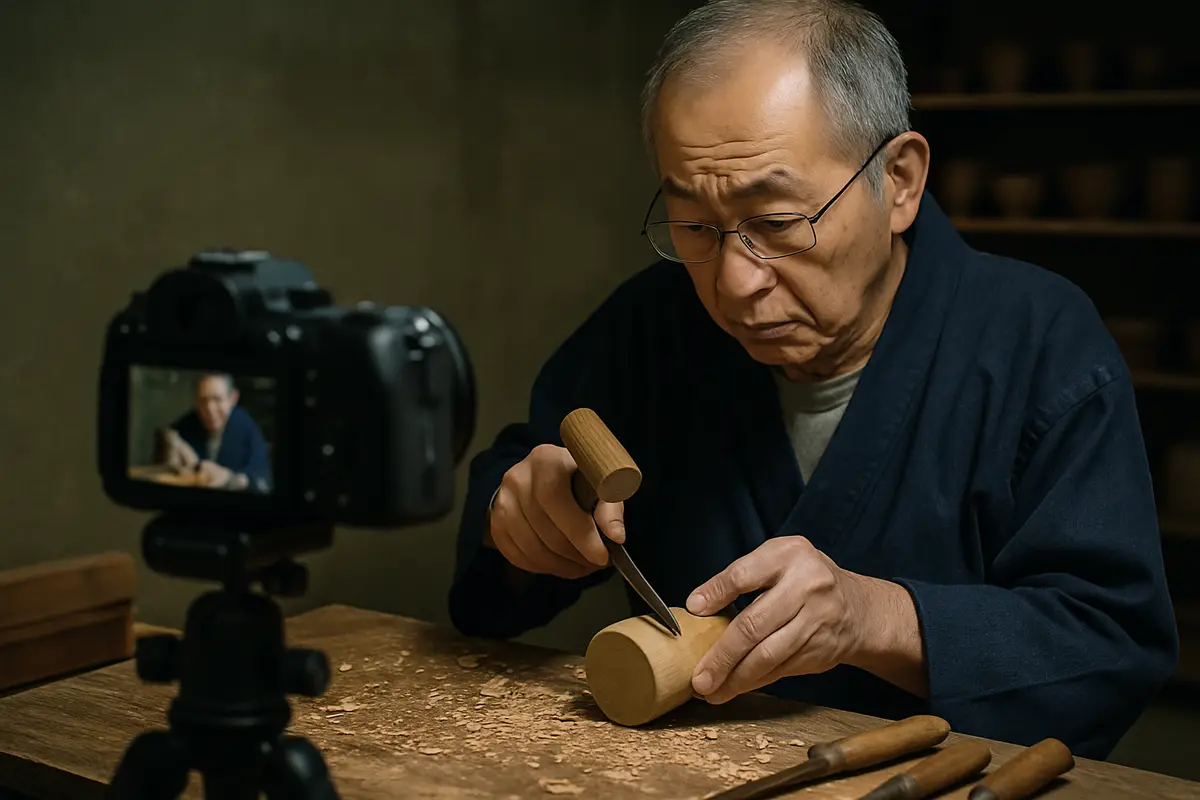
ある県では、漆器や染め物の職人の手元を、複数のカメラで撮影している。
In one prefecture, the hands of lacquerware and dyeing craftsmen are being filmed with multiple cameras.
5
道具の使い方や力の入れ方など、言葉では説明しにくい部分も細かく残す。
Even the parts that are hard to explain in words, such as how to use the tools and how much force to apply, are recorded in fine detail.
6
撮影した映像は、専門学校の授業や、新しく仕事を始めた人の練習に使われている。
The footage that is filmed is used in vocational school classes and for practice by people who have newly started the work.
7
ただし、動画を見るだけで技術が身につくわけではない。
However, that does not mean the skill can be mastered simply by watching the videos.
8
専門家は「映像はあくまで補助であり、実際に手を動かす経験が欠かせない」と指摘している。
An expert points out, "Video is merely a supplement; the experience of actually moving your own hands is indispensable."
9
国は、若い職人を育てるための費用も支援する方針だ。
The government plans to also help fund the training of young craftsmen.
伝統工芸の技を動画で残す試み1
2026年08月29日 19:21
著者: jpreader
この画像はAIで生成され、学習目的で使用されています。
This image is AI-generated and used for educational purposes.
Discussion
to rate or comment.
No comments yet.