東京の駅で、手話で案内するサービスが始まりました2。手話は、手や指を使って話す言葉です3。耳が聞こえない人が、駅員と話すことができます4。
使い方は簡単です5。駅の機械の画面に、手話ができる人が出ます6。その人が、駅員の話を手話で伝えます7。切符の買い方や、電車の時間を聞くことができます8。
この駅では、去年から準備をしていました9。会社の人は「みんなが安心して電車に乗れるようにしたいです」と話しました10。ほかの駅でも、同じサービスを始める予定です11。
(えき)
station
(しゅわ)
sign language
(あんない)
guide, information
(はじまる)
to begin
(とうきょう)
Tokyo
(さーびす)
service
(て)
hand
(ゆび)
finger
(つかう)
to use
(はなす)
to speak, talk
(ことば)
words, language
(みみ)
ear
(きこえる)
to be audible, to hear
(ひと)
person / people
(えきいん)
station attendant, station staff
(つかいかた)
how to use; usage
(かんたん)
simple / easy
(きかい)
machine
(がめん)
screen, display
(でる)
to come out; to occur
(はなし)
talk, story
(つたえる)
to convey / to tell
(きっぷ)
ticket
(かいかた)
how to buy, way of buying
(でんしゃ)
electric train
(じかん)
time
(きく)
to listen, hear
(きょねん)
last year
(じゅんび)
preparation
(かいしゃ)
company
(みんな)
Everyone; everybody
(あんしん)
relief / peace of mind
(のる)
to ride, board
(ほかの)
other, another
(おなじ)
same
(はじめる)
to begin, start
did ... (polite past)
Polite past tense of verbs. Formed with verb stem + ました. Used in formal or polite speech to describe completed actions.
昨日、映画を見ました。
I watched a movie yesterday.
朝ごはんを食べました。
I ate breakfast.
友達が来ました。
A friend came.
and / by doing (means)
The te-form connects clauses; here it expresses the means by which the teacher creates problems (by using AI).
電車に乗って行きます。
I will go by train.
辞書を使って調べます。
I look it up using a dictionary.
can do ..., to be able to ...
Verb dictionary form + ことができる expresses ability or possibility. More formal than the potential verb form. Common in written Japanese and announcements.
日本語を話すことができます。
I can speak Japanese.
ここで写真を撮ることができます。
You can take photos here.
インターネットで予約することができます。
You can make a reservation on the internet.
to form / come into being
Here 台風ができました means a typhoon formed (came into existence).
新しい店ができました。
A new shop has opened.
海で台風ができた。
A typhoon formed over the sea.
polite non-past tense
The polite non-past ~ます states what will happen — the funeral will continue.
葬式は続きます。
The funeral will continue.
明日行きます。
I will go tomorrow.
is doing, has been doing (ongoing state/action)
Expresses a continuing action or resulting state. Formed with て-form + いる. Can describe an action in progress or a state resulting from a past change.
今、ご飯を食べています。
I am eating rice now.
東京に住んでいます。
I live in Tokyo.
ドアが開いています。
The door is open.
to make sure that, to ensure that
Expresses the goal of bringing about a certain state or preventing something. Formed with verb plain form + ようにする. Often used to describe efforts to ensure or prevent something.
毎日野菜を食べるようにしています。
I make sure to eat vegetables every day.
遅刻しないようにしてください。
Please make sure not to be late.
忘れないようにメモを書きました。
I wrote a note so I wouldn't forget.
Even ~; also at ~
Particle でも after a noun means 'even' or 'also at.' 首相官邸の庭でも means 'even at the Prime Minister's residence garden.'
子供でもわかります。
Even a child can understand.
plan to / is scheduled to
Indicates a scheduled plan or intent.
来月行く予定です。
I plan to go next month.
会議は3時からの予定です。
The meeting is scheduled from 3.
駅で手話の案内が始まる
Sign-language guidance is starting at train stations
東京の駅で、手話で案内するサービスが始まりました。
At a station in Tokyo, a service that gives guidance in sign language has started.
手話は、手や指を使って話す言葉です。
Sign language is a language that is spoken using the hands and fingers.
耳が聞こえない人が、駅員と話すことができます。
People who cannot hear are able to talk with station staff.
使い方は簡単です。
It is simple to use.
駅の機械の画面に、手話ができる人が出ます。
A person who can use sign language appears on the screen of a machine in the station.
その人が、駅員の話を手話で伝えます。
That person conveys what the station attendant says in sign language.
切符の買い方や、電車の時間を聞くことができます。
You can ask about how to buy a ticket, or about train times.
この駅では、去年から準備をしていました。
At this station, they had been preparing for it since last year.
会社の人は「みんなが安心して電車に乗れるようにしたいです」と話しました。
A person from the company said, "We want to make it so that everyone can ride the trains with peace of mind."
ほかの駅でも、同じサービスを始める予定です。
They plan to start the same service at other stations as well.
2026年08月31日 19:11
著者: jpreader
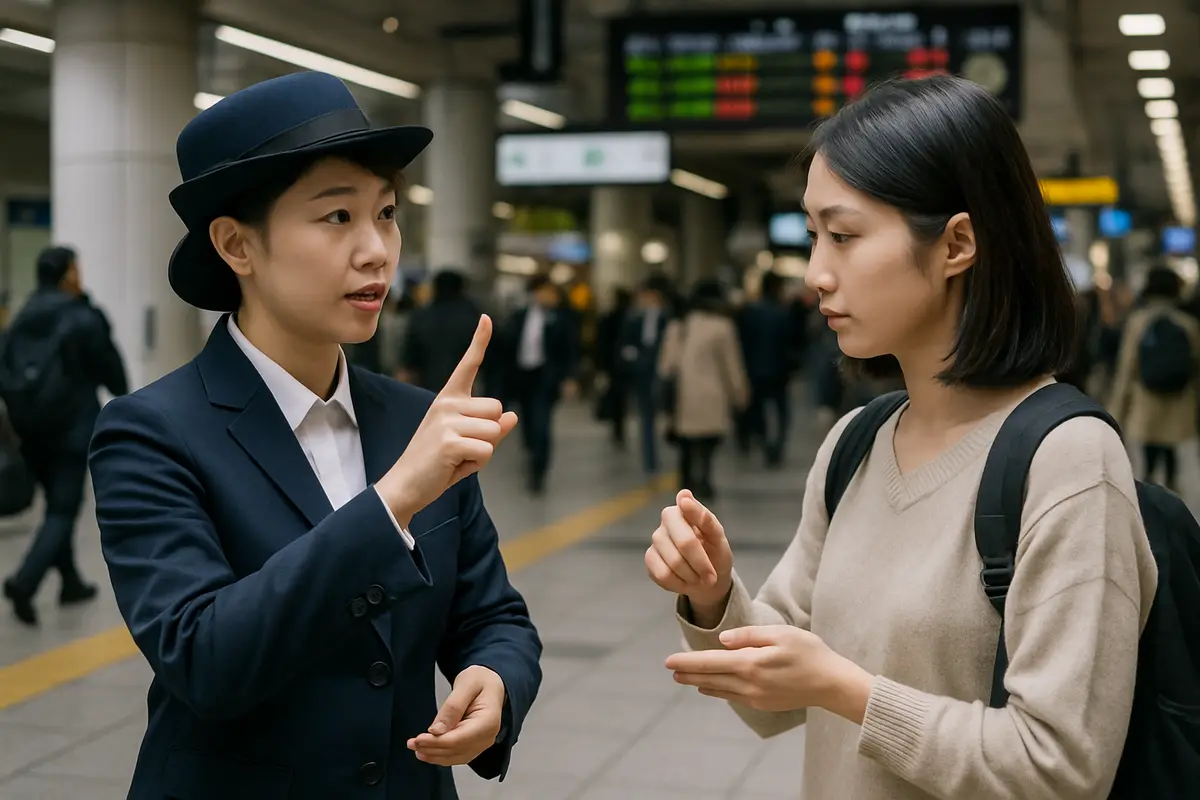
この画像はAIで生成され、学習目的で使用されています。
This image is AI-generated and used for educational purposes.
東京の駅で、手話で案内するサービスが始まりました2。手話は、手や指を使って話す言葉です3。耳が聞こえない人が、駅員と話すことができます4。
使い方は簡単です5。駅の機械の画面に、手話ができる人が出ます6。その人が、駅員の話を手話で伝えます7。切符の買い方や、電車の時間を聞くことができます8。
この駅では、去年から準備をしていました9。会社の人は「みんなが安心して電車に乗れるようにしたいです」と話しました10。ほかの駅でも、同じサービスを始める予定です11。
Discussion
to rate or comment.
No comments yet.