記録的な暑さが続く中、夏祭りの開催時間を夜に移す地域が増えています2。昼間の気温が35度を超える日が多く、参加者が熱中症になる危険が高まっているためです3。
ある市では、今年から祭りの開始を午後4時から午後6時に遅らせました4。会場には水を配る場所を用意し、休むためのテントも増やしたそうです5。市の担当者によると、体調が悪くなった人の数は去年より減りました6。
一方で、時間が遅くなると子どもや高齢者が参加しにくくなるという声もあります7。地域の伝統をどう守るか、話し合いが続いています8。
(あつさ)
heat
(まつり)
festival
(じかん)
time
(よる)
night
(かえる)
to change
(うごき)
movement; trend
(きろくてき)
record-breaking
(つづく)
to continue
(なつまつり)
summer festival
(かいさい)
holding (an event)
(うつす)
to move; to transfer
(ちいき)
region; area
(ふえる)
to increase; to grow
(ひるま)
daytime
(きおん)
temperature (air)
(ど)
degree
(こえる)
to exceed
(ひ)
day
(おおい)
many
(さんかしゃ)
participant, attendee
(ねっちゅうしょう)
heatstroke
(きけん)
danger; risk
(たかまる)
to rise, to grow
(ある)
a certain (some)
(し)
city
(ことし)
this year
(かいし)
start, beginning
(ごご)
afternoon
(じ)
o'clock
(おくらせる)
to delay, to push back
(かいじょう)
venue / site
(みず)
water
(くばる)
to distribute, hand out
(ばしょ)
place
(ようい)
preparation; readiness
(やすむ)
to rest; to take a break
(てんと)
tent
(ふやす)
to increase (something)
(たんとうしゃ)
person in charge
(たいちょう)
physical condition, health
(わるい)
bad
(ひと)
person / people
(かず)
number, count
(きょねん)
last year
(へる)
to decrease / to diminish
(いっぽう)
on the other hand / meanwhile
(おそい)
late / slow
(こども)
child
(こうれいしゃ)
elderly person
(さんか)
participation
(こえ)
voice
(でんとう)
tradition
(どう)
how / in what way
(まもる)
to protect
(はなしあい)
discussion; negotiation
amid ~, while ~ is going on
Placed after a plain-form verb or a noun + の to give the background situation. The article uses it to say that the change is happening while record heat continues.
雨が降る中、試合が行われました。
The match was held while it was raining.
忙しい中、来てくれてありがとう。
Thank you for coming even though you are busy.
is doing, has been doing (ongoing state/action)
Expresses a continuing action or resulting state. Formed with て-form + いる. Can describe an action in progress or a state resulting from a past change.
今、ご飯を食べています。
I am eating rice now.
東京に住んでいます。
I live in Tokyo.
ドアが開いています。
The door is open.
to become
Expresses a change of state; Kawai became the new commissioner of the Sports Agency.
新しい長官になりました。
He became the new commissioner.
目が見えなくなりました。
He became unable to see.
because of, due to
Indicates a reason or cause. More formal than から or ので. Can follow nouns (の + ため) or plain-form verbs/adjectives.
病気のため、学校を休みました。
I was absent from school because of illness.
雨が降ったため、試合は中止です。
The game was cancelled because it rained.
勉強するため、図書館に行きます。
I go to the library in order to study.
from (starting point)
Indicates the origin or source. 建物の中から means 'from inside the building'.
かばんの中から鍵が出てきた。
A key came out from inside the bag.
I hear that ~, they say that ~
Attached to a plain form to report information heard from another source. The article uses it because the increase in collected oil is reported second-hand rather than observed directly.
来月から値段が上がるそうです。
I hear prices will go up from next month.
去年より客が増えたそうです。
They say there were more customers than last year.
according to ...
Cites a source of information. The noun before によると is the source. Often followed by a reported statement.
天気予報によると、明日は雨です。
According to the weather forecast, it will rain tomorrow.
ニュースによると、地震がありました。
According to the news, there was an earthquake.
先生によると、テストは来週です。
According to the teacher, the test is next week.
to become (い-adjective)
Expresses a change of state for い-adjectives. Drop the final い and add くなる. Indicates something has changed or will change to a new state.
寒くなりました。
It has gotten cold.
日本語が上手になりました。
My Japanese has gotten better.
値段が高くなりました。
The price became expensive.
than / more than
Indicates comparison. Used to say prices rose on average 2.8% compared to last year.
去年より寒い。
Colder than last year.
彼より背が高い。
Taller than him.
if / when (natural consequence)
Conditional と indicating a natural or expected result. 一緒に捨てると…火が出て means 'if you throw them away together, fire starts.'
ボタンを押すと、ドアが開きます。
When you press the button, the door opens.
春になると、桜が咲きます。
When spring comes, cherry blossoms bloom.
hard to ~; difficult to ~
Attached to a verb stem to describe difficulty — 'people who have difficulty hearing'.
読みにくい
hard to read
食べにくい
hard to eat
暑さで祭りの時間を夜に変える動き
A move to shift festival hours to the evening because of the heat
記録的な暑さが続く中、夏祭りの開催時間を夜に移す地域が増えています。
Amid record-breaking heat, a growing number of regions are moving the times their summer festivals are held to the evening.
昼間の気温が35度を超える日が多く、参加者が熱中症になる危険が高まっているためです。
This is because there are many days when the daytime temperature exceeds 35 degrees, and the risk of participants suffering heatstroke is rising.
ある市では、今年から祭りの開始を午後4時から午後6時に遅らせました。
One city pushed the start of its festival back from 4 p.m. to 6 p.m. starting this year.
会場には水を配る場所を用意し、休むためのテントも増やしたそうです。
They say the venue set up spots for handing out water and also increased the number of tents where people can rest.
市の担当者によると、体調が悪くなった人の数は去年より減りました。
According to a city official, the number of people who felt unwell fell compared with last year.
一方で、時間が遅くなると子どもや高齢者が参加しにくくなるという声もあります。
On the other hand, there are also voices saying that if the hour gets later, children and elderly people will find it harder to take part.
地域の伝統をどう守るか、話し合いが続いています。
Discussions are continuing about how to protect the region's traditions.
2026年09月01日 19:27
著者: jpreader
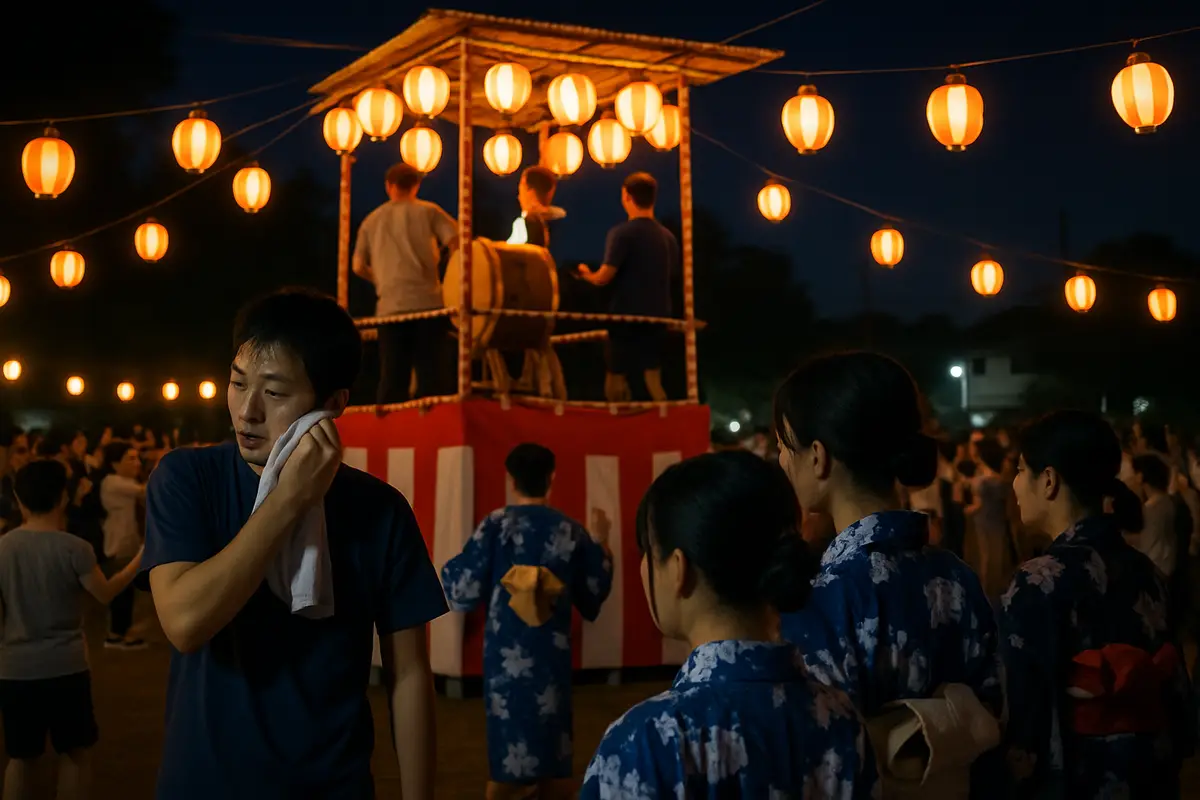
この画像はAIで生成され、学習目的で使用されています。
This image is AI-generated and used for educational purposes.
記録的な暑さが続く中、夏祭りの開催時間を夜に移す地域が増えています2。昼間の気温が35度を超える日が多く、参加者が熱中症になる危険が高まっているためです3。
ある市では、今年から祭りの開始を午後4時から午後6時に遅らせました4。会場には水を配る場所を用意し、休むためのテントも増やしたそうです5。市の担当者によると、体調が悪くなった人の数は去年より減りました6。
一方で、時間が遅くなると子どもや高齢者が参加しにくくなるという声もあります7。地域の伝統をどう守るか、話し合いが続いています8。
Discussion
to rate or comment.
No comments yet.