野菜やさい
N5

(やさい)

vegetables

値段ねだん
N3

(ねだん)

price

高いたかい
N5

(たかい)

expensive; high

今年ことし
N5

(ことし)

this year

なつ
N5

(なつ)

Summer

あめ
N5

(あめ)

rain

少ないすくない
N5

(すくない)

few, scarce

とてもとても
N5

(とても)

very; extremely

暑いあつい
N5

(あつい)

hot

N5

(ひ)

day

続くつづく
N4

(つづく)

to continue

作るつくる
N5

(つくる)

to make

はたけ
N3

(はたけ)

Farm field; cultivated field

みず
N5

(みず)

water

足りるたりる
N4

(たりる)

to be enough; to be sufficient

育つそだつ
N3

(そだつ)

to grow up / to be raised

みせ
N5

(みせ)

shop, store

来るくる
N5

(くる)

to come

かず
N3

(かず)

number, count

スーパーすーぱー
N5

(すーぱー)

supermarket

キャベツきゃべつ
N3

(きゃべつ)

cabbage

トマトとまと
N4

(とまと)

tomato

去年きょねん
N5

(きょねん)

last year

買い物かいもの
N5

(かいもの)

shopping

ひと
N5

(ひと)

person / people

毎日まいにち
N5

(まいにち)

every day

使うつかう
N5

(つかう)

to use

もの
N5

(もの)

thing

困るこまる
N4

(こまる)

to be troubled; to be in difficulty

話すはなす
N5

(はなす)

to speak, talk

安いやすい
N5

(やすい)

cheap / inexpensive

選ぶえらぶ
N4

(えらぶ)

To choose; to select

買うかう
N5

(かう)

to buy

多いおおい
N5

(おおい)

many

くに
N5

(くに)

country; the government

農家のうか
N3

(のうか)

farmer / farm household

助けるたすける
N4

(たすける)

to help

お金おかね
N5

(おかね)

money

出すだす
N5

(だす)

to serve, put out

予定よてい
N4

(よてい)

plan, schedule

これからもこれからも
N4

(これからも)

from now on too

売るうる
N5

(うる)

to sell

方法ほうほう
N3

(ほうほう)

method; way

考えるかんがえる
N4

(かんがえる)

to think; to consider

あき
N5

(あき)

autumn; fall

天気てんき
N5

(てんき)

weather

下がるさがる
N4

(さがる)

To fall; to go down

~くなる
N4

to become (い-adjective)

Expresses a change of state for い-adjectives. Drop the final い and add くなる. Indicates something has changed or will change to a new state.

寒くなりました。

It has gotten cold.

日本語が上手になりました。

My Japanese has gotten better.

値段が高くなりました。

The price became expensive.

~ませんでした
N5

Did not ~ (polite past negative)

Polite past negative form of verbs. Expresses that something did not happen in the past.

昨日学校に行きませんでした。

I did not go to school yesterday.

~より
N5

than / more than

Indicates comparison. Used to say prices rose on average 2.8% compared to last year.

去年より寒い。

Colder than last year.

彼より背が高い。

Taller than him.

~なので
N4

because it is ~ (polite reason)

ので gives a reason, and a noun or na-adjective takes な before it. The shopper explains the problem with 毎日使う物なので困ります — 'because they are things we use every day'.

毎日使う物なので困ります。

They are things we use every day, so it is a problem.

日曜日なので店が休みです。

It is Sunday, so the shop is closed.

~ている
N5

is doing, has been doing (ongoing state/action)

Expresses a continuing action or resulting state. Formed with て-form + いる. Can describe an action in progress or a state resulting from a past change.

今、ご飯を食べています。

I am eating rice now.

東京に住んでいます。

I live in Tokyo.

ドアが開いています。

The door is open.

~て(動作をつなぐ)
N5

and then ~ (te-form linking)

The te-form links successive actions in one sentence. 置いて connects placing the clothes with comparing their temperature, and 考えて connects thinking with choosing.

朝起きて、顔を洗います。

I get up in the morning and wash my face.

よく考えて決めてください。

Please think carefully and decide.

~ために
N4

in order to ~

Expresses purpose.

健康のために歩く。

I walk for my health.

止めるために話し合う。

Discuss in order to stop it.

~になる
N5

to become

Expresses a change of state; Kawai became the new commissioner of the Sports Agency.

新しい長官になりました。

He became the new commissioner.

目が見えなくなりました。

He became unable to see.

~ば
N4

conditional: if ~

Ba-form conditional expressing 'if ~ then ~'.

勉強すれば、合格できる。

If you study, you can pass.

早く起きれば間に合う。

If you wake up early, you'll make it.

~かもしれません
N4

might ~, perhaps ~

Expresses possibility.

明日雨が降るかもしれません。

It might rain tomorrow.

彼は来ないかもしれません。

He might not come.

1

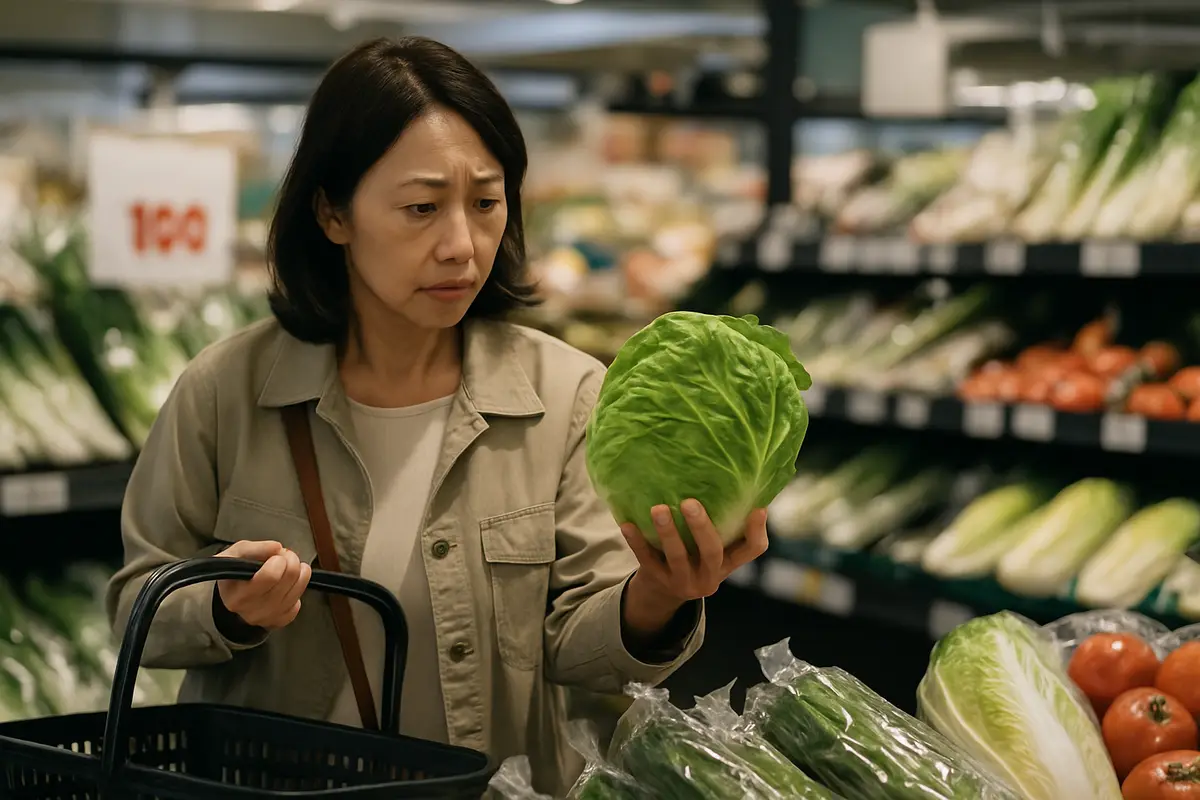
野菜の値段が高くなっている

Vegetable prices are rising

2

今年の夏は雨が少なくて、とても暑い日が続きました。

This summer there was little rain, and very hot days continued.

3

野菜を作る畑では、水が足りませんでした。

In the fields where vegetables are grown, there was not enough water.

4

そのため、野菜がよく育ちませんでした。

As a result, the vegetables did not grow well.

5

店に来る野菜の数が少なくなっています。

The number of vegetables arriving at shops is decreasing.

6

スーパーでは、キャベツやトマトの値段が去年より高くなりました。

At supermarkets, the prices of cabbage and tomatoes have become higher than last year.

7

買い物に来た人は「毎日使う物なので困ります」と話しています。

A shopper said, 'They are things we use every day, so it is a problem.'

8

安い野菜を選んで買う人も多いです。

Many people also choose and buy the cheaper vegetables.

9

国は、農家を助けるためにお金を出す予定です。

The government plans to provide money in order to help farmers.

10

店の人は、これからも安く売る方法を考えています。

Shop staff are thinking about ways to keep selling cheaply from now on.

11

秋になって天気がよくなれば、野菜の値段は下がるかもしれません。

If autumn comes and the weather improves, vegetable prices may go down.

野菜やさい値段ねだんたかくなっている1

2026年09月03日 19:16

著者: jpreader

野菜の値段が高くなっている

この画像はAIで生成され、学習目的で使用されています。

This image is AI-generated and used for educational purposes.

今年ことしなつあめすくなくて、とてもあつつづきました2野菜やさいつくはたけでは、みずませんでした3。そのため、野菜やさいがよくそだませんでした4みせ野菜やさいかずすくくなっています5

スーパーでは、キャベツトマト値段ねだん去年きょねんよりたかくなりました6ものひとは「毎日まいにち使つかものなのでこまります」とはなています7やす野菜やさいえらんでひとおおいです8

くには、農家のうかたすけるためにかね予定よていです9みせひとは、これからもやす方法ほうほうかんがています10あきになって天気てんきがよくなれば野菜やさい値段ねだんがるかもしれません11

Discussion

00

to rate or comment.

No comments yet.