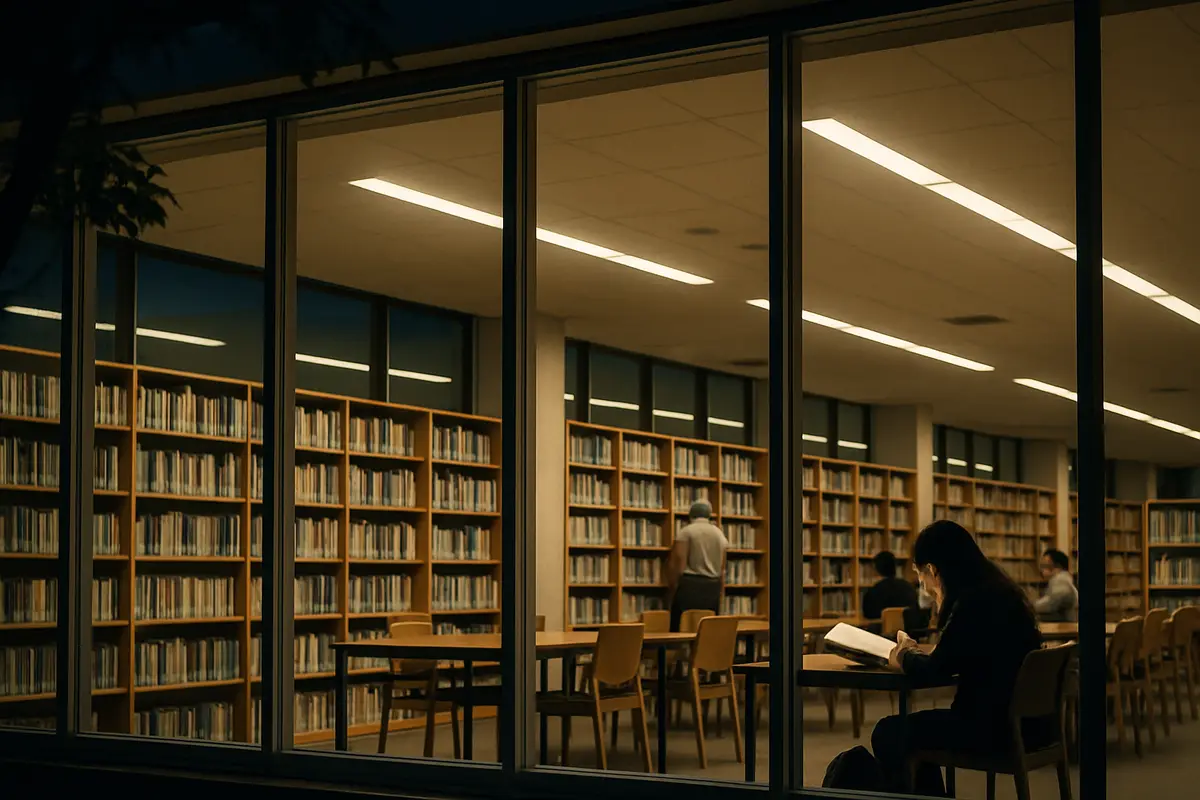
よる
N5

(よる)

night

開くひらく
N4

(ひらく)

to open, to hold (event)

図書館としょかん
N5

(としょかん)

library

増えるふえる
N3

(ふえる)

to increase; to grow

遅いおそい
N5

(おそい)

late / slow

全国ぜんこく
N3

(ぜんこく)

nationwide; the whole country

仕事しごと
N5

(しごと)

work, job

学校がっこう
N5

(がっこう)

school

終わるおわる
N5

(おわる)

to end

間に合うまにあう
N3

(まにあう)

to make it in time

こえ
N4

(こえ)

voice

応えるこたえる
N2

(こたえる)

to respond to; to meet (expectations)

動きうごき
N3

(うごき)

movement; trend

あるある
N4

(ある)

a certain (some)

N4

(し)

city

平日へいじつ
N2

(へいじつ)

weekday

閉館時間へいかんじかん
N2

(へいかんじかん)

closing time (of a facility)

午後五時ごごごじ
N5

(ごごごじ)

5 p.m.

午後九時ごごくじ
N5

(ごごくじ)

9 p.m.

延ばすのばす
N2

(のばす)

to postpone, to extend

時間じかん
N5

(じかん)

time

利用者りようしゃ
N2

(りようしゃ)

user

去年きょねん
N5

(きょねん)

last year

二割にわり
N3

(にわり)

twenty percent

ほどほど
N4

(ほど)

approximately; about; to the extent

特にとくに
N3

(とくに)

especially / particularly

会社かいしゃ
N5

(かいしゃ)

company

帰りかえり
N4

(かえり)

the way home; return

ひと
N5

(ひと)

person / people

受験じゅけん
N2

(じゅけん)

taking an entrance exam

勉強べんきょう
N5

(べんきょう)

study

高校生こうこうせい
N4

(こうこうせい)

high school student

姿すがた
N3

(すがた)

figure; appearance

目立つめだつ
N3

(めだつ)

to stand out, to be noticeable

館内かんない
N2

(かんない)

inside the building

静かしずか
N5

(しずか)

quiet

話し合うはなしあう
N3

(はなしあう)

to discuss

部屋へや
N5

(へや)

room

用意ようい
N4

(ようい)

preparation; readiness

一方いっぽう
N3

(いっぽう)

on the other hand / meanwhile

職員しょくいん
N3

(しょくいん)

Staff; employee

負担ふたん
N2

(ふたん)

burden, bear (cost)

重いおもい
N5

(おもい)

heavy

問題もんだい
N5

(もんだい)

problem

地域ちいき
N3

(ちいき)

region; area

ボランティアぼらんてぃあ
N3

(ぼらんてぃあ)

volunteer

手伝うてつだう
N4

(てつだう)

to help

開館時間かいかんじかん
N2

(かいかんじかん)

opening hours (of a facility)

少しずつすこしずつ
N4

(すこしずつ)

little by little

広げるひろげる
N3

(ひろげる)

to expand; to spread; to broaden

予定よてい
N4

(よてい)

plan, schedule

~ている
N5

is doing, has been doing (ongoing state/action)

Expresses a continuing action or resulting state. Formed with て-form + いる. Can describe an action in progress or a state resulting from a past change.

今、ご飯を食べています。

I am eating rice now.

東京に住んでいます。

I live in Tokyo.

ドアが開いています。

The door is open.

~まで
N5

until / as far as

Indicates an end point in space or time. Here it expresses how far the balls flew.

駅まで歩きます。

I walk to the station.

遠くまで飛びました。

It flew far away.

~てから
N4

after doing ...

Expresses a sequence where one action is completed before the next begins. Formed with て-form + から. Emphasizes completion of the first action.

ご飯を食べてから、出かけます。

After eating, I will go out.

手を洗ってから、食べてください。

Please eat after washing your hands.

日本に来てから、3年が過ぎました。

Three years have passed since coming to Japan.

~という
N4

called/named ~

Used to introduce or name something. In this article, 「鳥貴族」という店 means 'a store called Torikizoku'.

田中という人を知っていますか。

Do you know a person called Tanaka?

これは寿司という料理です。

This is a dish called sushi.

~から(起点)
N5

from (starting point)

Indicates the origin or source. 建物の中から means 'from inside the building'.

かばんの中から鍵が出てきた。

A key came out from inside the bag.

~より
N5

than / more than

Indicates comparison. Used to say prices rose on average 2.8% compared to last year.

去年より寒い。

Colder than last year.

彼より背が高い。

Taller than him.

~そうです(伝聞)
N4

I hear that ~, they say that ~

Attached to a plain form to report information heard from another source. The article uses it because the increase in collected oil is reported second-hand rather than observed directly.

来月から値段が上がるそうです。

I hear prices will go up from next month.

去年より客が増えたそうです。

They say there were more customers than last year.

~される(受身)
N4

passive form of する-verbs

検討されています is the passive of 検討する - the proposal is being examined, with no explicit agent.

案も検討されています。

The proposal is also being considered.

新しいルールが発表されました。

New rules were announced.

~てもらう
N4

have someone do (for me)

Expresses receiving a favor/action from someone.

助けてもらって本当にありがとうございます。

Thank you so much for helping us.

教えてもらいました。

I had them teach me.

~ていく
N3

to go on doing / continue to (from now)

In '増えていく' – 'will continue to increase (into the future)'. Indicates continuing trend going forward.

これから寒くなっていく。

From now on, it will become colder.

日本語を勉強していきたい。

I want to continue studying Japanese.

1

夜も開く図書館が増えている

More libraries are staying open at night

2

夜遅くまで開いている図書館が全国で増えています。

Libraries that stay open until late at night are increasing across the country.

3

仕事や学校が終わってからでは間に合わない、という声に応えた動きです。

It is a response to voices saying that going after work or school ends does not leave enough time.

4

ある市の図書館は、平日の閉館時間を午後五時から午後九時に延ばしました。

One city's library extended its weekday closing time from 5 p.m. to 9 p.m.

5

時間を延ばした図書館では、利用者が去年より二割ほど増えました。

At the libraries that extended their hours, users increased by about twenty percent compared with last year.

6

特に会社帰りの人や、受験の勉強をする高校生の姿が目立つそうです。

Apparently people on their way home from work and high school students studying for entrance exams are especially visible.

7

館内には、静かに話し合える部屋も用意されています。

Inside the building, rooms where people can talk quietly are also provided.

8

一方で、職員の負担が重くなるという問題もあります。

On the other hand, there is also the problem that the burden on staff becomes heavier.

9

図書館は、地域のボランティアに手伝ってもらいながら、開館時間を少しずつ広げていく予定です。

With help from local volunteers, the libraries plan to extend their opening hours little by little.

よるひら図書館としょかんている1

2026年09月03日 19:23

著者: jpreader

夜も開く図書館が増えている

この画像はAIで生成され、学習目的で使用されています。

This image is AI-generated and used for educational purposes.

よるおそまでひらている図書館としょかん全国ぜんこくています2仕事しごと学校がっこうわってからではわない、というこえこたえたうごきです3ある図書館としょかんは、平日へいじつ閉館時間へいかんじかん午後五時ごごごじから午後九時ごごくじばしました4

時間じかんばした図書館としょかんでは、利用者りようしゃ去年きょねんより二割にわりほどえました5とく会社かいしゃがえりのひとや、受験じゅけん勉強べんきょうをする高校生こうこうせい姿すがた目立めだそうです6館内かんないには、しずかにはなえる部屋へや用意よういされています7

一方いっぽうで、職員しょくいん負担ふたんおもくなるという問題もんだいもあります8図書館としょかんは、地域ちいきボランティア手伝てつだてもらいながら、開館時間かいかんじかんすこしずつひろていく予定よていです9

Discussion

00

to rate or comment.

No comments yet.