Expresses a continuing action or resulting state. Formed with て-form + いる. Can describe an action in progress or a state resulting from a past change.
今、ご飯を食べています。
I am eating rice now.
東京に住んでいます。
I live in Tokyo.
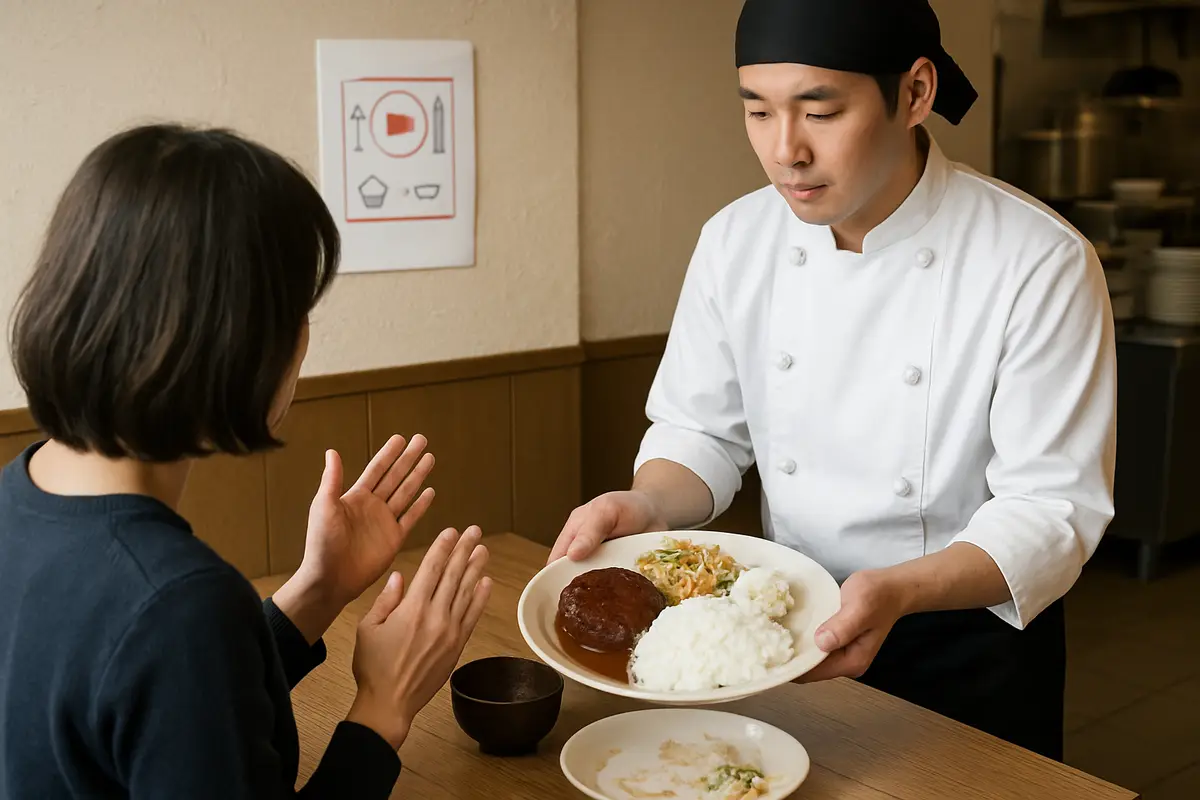
ドアが開いています。
The door is open.
~られる
N4
potential / can (ru-verb)
The potential form expresses ability or possibility. Here, used in the negative, it describes elderly people who cannot quit driving.
運転をやめられない。
Cannot quit driving.
朝早く起きられない。
Cannot get up early.
~になる
N5
to become
Expresses a change of state; Kawai became the new commissioner of the Sports Agency.
新しい長官になりました。
He became the new commissioner.
目が見えなくなりました。
He became unable to see.
~ようにする
N4
to make sure that, to ensure that
Expresses the goal of bringing about a certain state or preventing something. Formed with verb plain form + ようにする. Often used to describe efforts to ensure or prevent something.
毎日野菜を食べるようにしています。
I make sure to eat vegetables every day.
遅刻しないようにしてください。
Please make sure not to be late.
忘れないようにメモを書きました。
I wrote a note so I wouldn't forget.
~だけ
N5
only ~
Limiter particle. 女性だけが宇宙船に乗りました means 'only women boarded the spaceship.'
私だけが知っています。
Only I know.
水だけ飲みました。
I only drank water.
~たい
N5
want to ~
Verb stem + たい to express desire.
日本に行きたい。
I want to go to Japan.
水を飲みたいです。
I want to drink water.
~ことができる
N4
can do ..., to be able to ...
Verb dictionary form + ことができる expresses ability or possibility. More formal than the potential verb form. Common in written Japanese and announcements.
日本語を話すことができます。
I can speak Japanese.
ここで写真を撮ることができます。
You can take photos here.
インターネットで予約することができます。
You can make a reservation on the internet.
~ため
N3
because of, due to
Indicates a reason or cause. More formal than から or ので. Can follow nouns (の + ため) or plain-form verbs/adjectives.
病気のため、学校を休みました。
I was absent from school because of illness.
雨が降ったため、試合は中止です。
The game was cancelled because it rained.
勉強するため、図書館に行きます。
I go to the library in order to study.
~てくる
N4
come toward (action approaching)
Indicates motion toward the speaker or a location. Here it describes rocks flying toward people.
鳥が飛んできた。
A bird flew toward (us).
雨が降ってきた。
It started raining.
~前に
N5
before ~
Indicates doing something before another action. Used to advise checking the store before ordering.
食べる前に手を洗います。
I wash my hands before eating.
寝る前に本を読む。
I read before sleeping.
~までに
N4
by (a certain time)
Indicates a deadline — by February of next year, the company aims to restore shipping.
5時までに帰ります。
I'll be home by 5.
金曜日までに出してください。
Please submit it by Friday.
~にする
N4
decide on / make it X
Indicates choice or theme. Here makes SF and LGBTQ the themes.
コーヒーにします
I'll have coffee.
テーマにする
make it the theme
1
食べ残しを減らす店の工夫
Shops' clever ideas for reducing leftover food
2
レストランやスーパーで、食べ物を捨てる量を減らす工夫が広がっています。
At restaurants and supermarkets, clever ways of reducing the amount of food thrown away are spreading.
3
日本では毎年、まだ食べられる食品がたくさん捨てられています。
In Japan, a great deal of food that is still edible is thrown away every year.
4
これは「食品ロス」と呼ばれ、大きな問題になっています。
This is called "food loss," and it has become a major problem.
5
ある食堂では、客がご飯の量を三つから選べるようにしました。
At one eatery, they arranged things so that customers can choose their rice portion from three sizes.
6
少しだけ食べたい人は、小さいサイズを頼むことができます。
People who want to eat only a little can order the small size.
7
スーパーでは、賞味期限が近い商品を安く売っています。
At supermarkets, products whose best-before date is approaching are sold cheaply.
8
売れ残りを減らすためです。
This is in order to reduce unsold stock.
9
買う人の考え方も変わってきました。
The way shoppers think has also been changing.
10
買い物の前に、冷蔵庫の中を写真に撮る人もいます。
Some people take a photo of the inside of their refrigerator before they go shopping.
11
同じ物を二度買わないためです。
It is so that they do not buy the same thing twice.
12
国は、2030年までに食品ロスを半分にする目標を立てています。
The government has set a goal of halving food loss by 2030.
食べ残しを減らす店の工夫1
2026年09月04日 19:18
著者: jpreader
この画像はAIで生成され、学習目的で使用されています。
This image is AI-generated and used for educational purposes.
Discussion
to rate or comment.
No comments yet.