Ministry of Land, Infrastructure, Transport and Tourism
建設
N2
(けんせつ)
construction
五十年
N5
(ごじゅうねん)
fifty years
以上
N3
(いじょう)
more than; beyond this
たつ
N3
(たつ)
to pass (of time)
全体
N3
(ぜんたい)
the whole / overall
約
N3
(やく)
approximately, about
四割
N3
(よんわり)
forty percent
占める
N2
(しめる)
to account for, to occupy
十年後
N4
(じゅうねんご)
ten years from now
七割
N3
(ななわり)
seventy percent
近い
N5
(ちかい)
near / close
見込み
N2
(みこみ)
prospect, expectation, likelihood
自治体
N1
(じちたい)
local government / municipality
五年
N5
(ごねん)
five years
一度
N4
(いちど)
once, one time
点検
N2
(てんけん)
inspection
義務づける
N1
(ぎむづける)
to make mandatory, to require by law
技術者
N2
(ぎじゅつしゃ)
engineer; technician
不足
N3
(ふそく)
shortage; insufficiency
費用
N3
(ひよう)
expense, cost
負担
N2
(ふたん)
burden, bear (cost)
重い
N5
(おもい)
heavy
修理
N3
(しゅうり)
repair
追いつく
N2
(おいつく)
to catch up
通る
N4
(とおる)
to pass through
少ない
N5
(すくない)
few, scarce
そこで
N3
(そこで)
and so, therefore
ドローン
N2
(どろーん)
drone
センサー
N2
(せんさー)
sensor
活用
N2
(かつよう)
utilization, making good use of
効率
N1
(こうりつ)
efficiency
取り組み
N2
(とりくみ)
efforts, initiatives
広がる
N3
(ひろがる)
to spread
専門家
N2
(せんもんか)
expert, specialist
限る
N3
(かぎる)
to limit; to restrict
予算
N2
(よさん)
budget
中
N5
(なか)
inside
優先順位
N1
(ゆうせんじゅんい)
priority, order of priority
つける
N4
(つける)
to attach / put on
直す
N4
(なおす)
to fix; to repair
欠かせない
N2
(かかせない)
indispensable; essential
指摘
N1
(してき)
pointing out, indication
課題
N2
(かだい)
issue, problem, challenge
~ている
N5
is doing, has been doing (ongoing state/action)
Expresses a continuing action or resulting state. Formed with て-form + いる. Can describe an action in progress or a state resulting from a past change.
今、ご飯を食べています。
I am eating rice now.
東京に住んでいます。
I live in Tokyo.
ドアが開いています。
The door is open.
~によると
N3
according to ...
Cites a source of information. The noun before によると is the source. Often followed by a reported statement.
天気予報によると、明日は雨です。
According to the weather forecast, it will rain tomorrow.
ニュースによると、地震がありました。
According to the news, there was an earthquake.
先生によると、テストは来週です。
According to the teacher, the test is next week.
~になる
N5
to become
Expresses a change of state; Kawai became the new commissioner of the Sports Agency.
新しい長官になりました。
He became the new commissioner.
目が見えなくなりました。
He became unable to see.
~られる
N4
potential / can (ru-verb)
The potential form expresses ability or possibility. Here, used in the negative, it describes elderly people who cannot quit driving.
運転をやめられない。
Cannot quit driving.
朝早く起きられない。
Cannot get up early.
~うえに
N2
on top of that, in addition to ~
Connects two facts that pile up in the same direction, usually both bad. 紙の本を買う人が減ったうえに、…利益はもともと少ない stacks falling sales on top of already thin margins.
本を買う人が減ったうえに、利益ももともと少ない。
On top of fewer people buying books, the profits were small to begin with.
雨が降ったうえに、風も強くなった。
On top of the rain, the wind got stronger too.
~ず
N3
without ~ing
In 「分からず」 it means without understanding the meaning of signs, leading to accidents.
意味が分からず、事故になる。
Without understanding the meaning, an accident occurs.
何も言わず帰った。
Left without saying anything.
~なくなる
N4
to become no longer / to disappear
Indicates a change where something ceases to exist or can no longer be done. Here it describes that prayer gatherings can no longer be held in Hong Kong.
お金がなくなった。
The money is gone.
痛みがなくなりました。
The pain went away.
~も少なくない
N3
there are not a few ~, quite a few ~
A double negative used in news writing to say a number is significant without giving a figure. Here it means quite a few bridges are still closed.
反対する人も少なくありません。
There are quite a few people who oppose it.
同じ問題を持つ町も少なくない。
There are not a few towns with the same problem.
~ていく
N3
to go on doing / continue to (from now)
In '増えていく' – 'will continue to increase (into the future)'. Indicates continuing trend going forward.
これから寒くなっていく。
From now on, it will become colder.
日本語を勉強していきたい。
I want to continue studying Japanese.
1
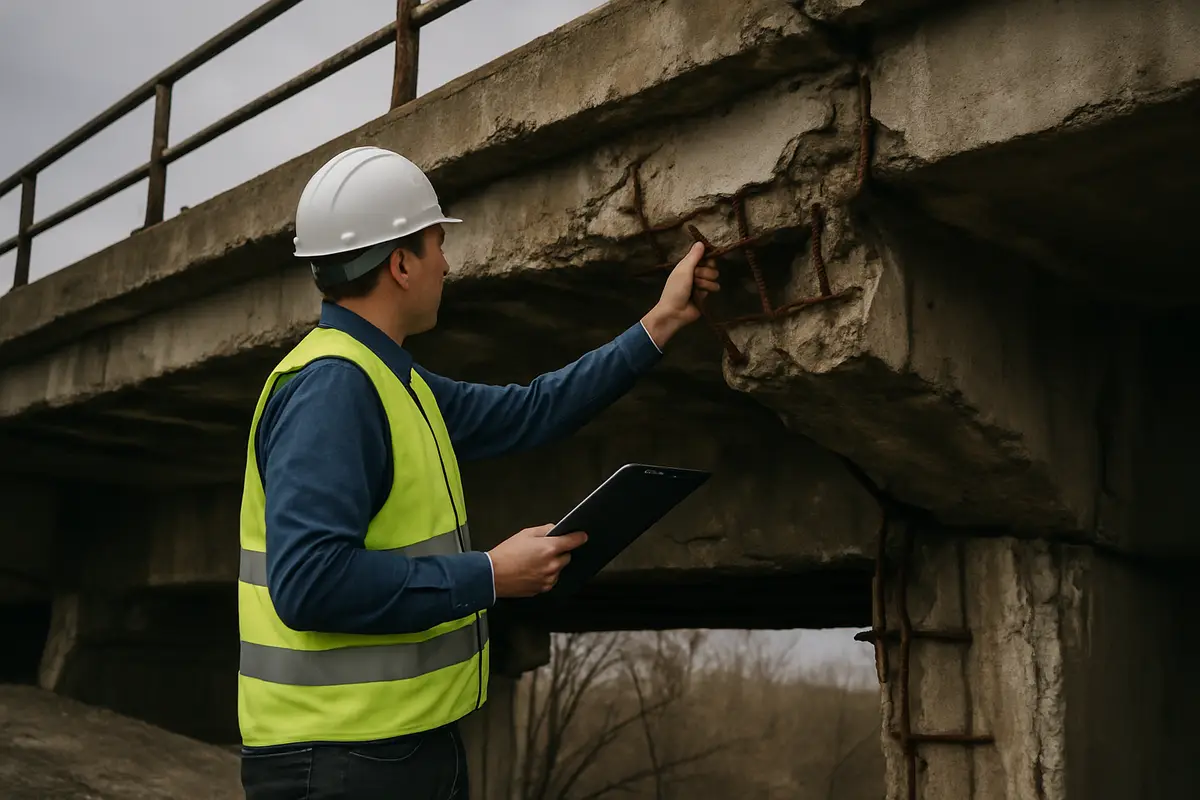
老朽化した橋の点検が課題になる
Inspecting aging bridges is becoming a challenge
2
全国にある橋やトンネルの老朽化が問題になっています。
The aging of bridges and tunnels around the country is becoming a problem.
According to the Ministry of Land, Infrastructure, Transport and Tourism, bridges built more than fifty years ago account for about forty percent of the total, and in ten years the figure is expected to be close to seventy percent.
Local governments are required to carry out an inspection once every five years, but on top of a shortage of engineers, the cost burden is also getting heavier.
5
修理が追いつかず、通れなくなったままの橋も少なくありません。
Repairs cannot keep up, and there are quite a few bridges that remain closed to traffic.
6
そこで、ドローンやセンサーを活用して効率よく点検する取り組みが広がっています。
So efforts to inspect efficiently by making use of drones and sensors are spreading.
7
専門家は「限られた予算の中で、優先順位をつけて直していくことが欠かせません」と指摘しています。
An expert points out, "Within a limited budget, it is essential to set priorities and repair them one by one."
老朽化した橋の点検が課題になる1
2026年09月05日 19:20
著者: jpreader
この画像はAIで生成され、学習目的で使用されています。
This image is AI-generated and used for educational purposes.
Ministry of Land, Infrastructure, Transport and Tourism
建設
N2
(けんせつ)
construction
五十年
N5
(ごじゅうねん)
fifty years
以上
N3
(いじょう)
more than; beyond this
たつ
N3
(たつ)
to pass (of time)
全体
N3
(ぜんたい)
the whole / overall
約
N3
(やく)
approximately, about
四割
N3
(よんわり)
forty percent
占める
N2
(しめる)
to account for, to occupy
十年後
N4
(じゅうねんご)
ten years from now
七割
N3
(ななわり)
seventy percent
近い
N5
(ちかい)
near / close
見込み
N2
(みこみ)
prospect, expectation, likelihood
自治体
N1
(じちたい)
local government / municipality
五年
N5
(ごねん)
five years
一度
N4
(いちど)
once, one time
点検
N2
(てんけん)
inspection
義務づける
N1
(ぎむづける)
to make mandatory, to require by law
技術者
N2
(ぎじゅつしゃ)
engineer; technician
不足
N3
(ふそく)
shortage; insufficiency
費用
N3
(ひよう)
expense, cost
負担
N2
(ふたん)
burden, bear (cost)
重い
N5
(おもい)
heavy
修理
N3
(しゅうり)
repair
追いつく
N2
(おいつく)
to catch up
通る
N4
(とおる)
to pass through
少ない
N5
(すくない)
few, scarce
そこで
N3
(そこで)
and so, therefore
ドローン
N2
(どろーん)
drone
センサー
N2
(せんさー)
sensor
活用
N2
(かつよう)
utilization, making good use of
効率
N1
(こうりつ)
efficiency
取り組み
N2
(とりくみ)
efforts, initiatives
広がる
N3
(ひろがる)
to spread
専門家
N2
(せんもんか)
expert, specialist
限る
N3
(かぎる)
to limit; to restrict
予算
N2
(よさん)
budget
中
N5
(なか)
inside
優先順位
N1
(ゆうせんじゅんい)
priority, order of priority
つける
N4
(つける)
to attach / put on
直す
N4
(なおす)
to fix; to repair
欠かせない
N2
(かかせない)
indispensable; essential
指摘
N1
(してき)
pointing out, indication
課題
N2
(かだい)
issue, problem, challenge
~ている
N5
is doing, has been doing (ongoing state/action)
~によると
N3
according to ...
~になる
N5
to become
~られる
N4
potential / can (ru-verb)
~うえに
N2
on top of that, in addition to ~
~ず
N3
without ~ing
~なくなる
N4
to become no longer / to disappear
~も少なくない
N3
there are not a few ~, quite a few ~
~ていく
N3
to go on doing / continue to (from now)
1
Inspecting aging bridges is becoming a challenge
2
The aging of bridges and tunnels around the country is becoming a problem.
3
According to the Ministry of Land, Infrastructure, Transport and Tourism, bridges built more than fifty years ago account for about forty percent of the total, and in ten years the figure is expected to be close to seventy percent.
4
Local governments are required to carry out an inspection once every five years, but on top of a shortage of engineers, the cost burden is also getting heavier.
5
Repairs cannot keep up, and there are quite a few bridges that remain closed to traffic.
6
So efforts to inspect efficiently by making use of drones and sensors are spreading.
7
An expert points out, "Within a limited budget, it is essential to set priorities and repair them one by one."
Discussion
to rate or comment.
No comments yet.