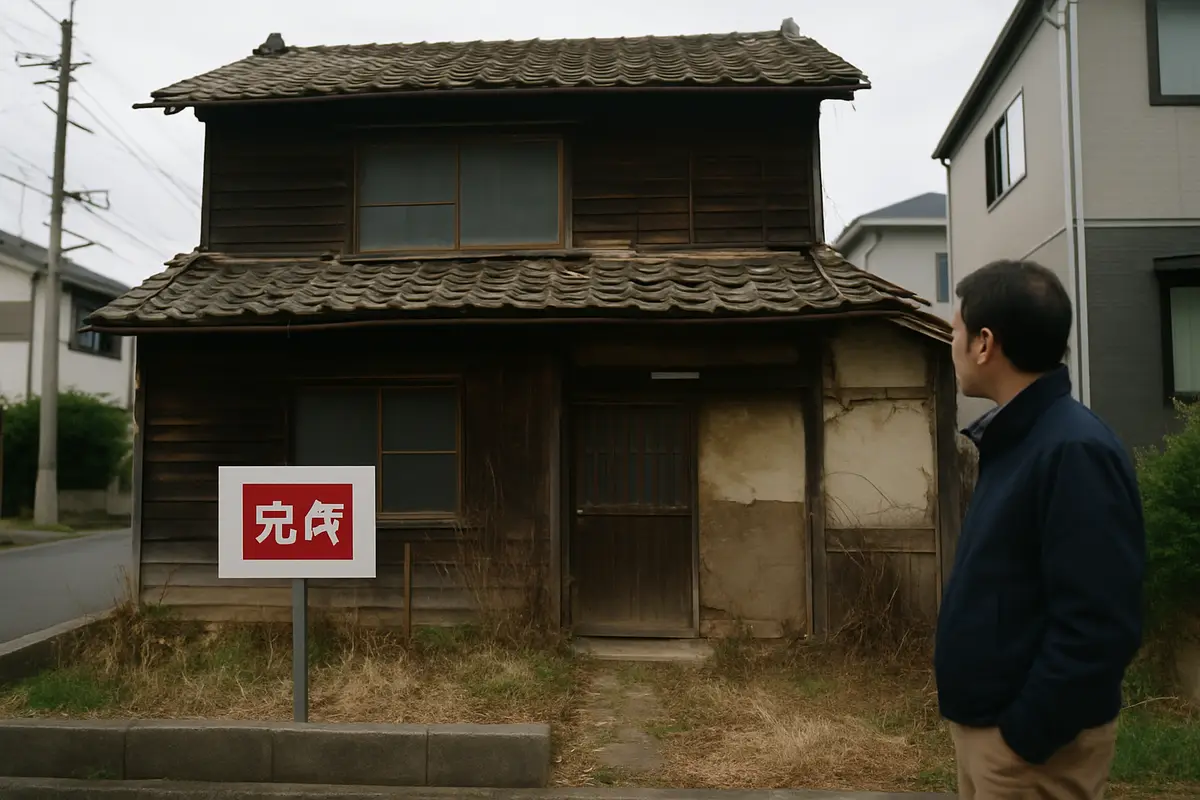
日本では、だれも住んでいない家が多くなっています2。この家を「空き家」と言います3。空き家は、古くなると、あぶないです4。近くの人も、心配しています5。
いくつかの町は、空き家を安く貸しています6。町に来て住みたい人は、安いお金で家を借りることができます7。家を直すためのお金をもらえる町もあります8。
先月、ある町では、五つの家に新しい人が住みました9。町の人は「若い人が来て、うれしいです」と話しています10。これから、同じことを始める町がもっと増えそうです11。
(あきや)
empty house, vacant house
(やすい)
cheap / inexpensive
(かす)
to lend
(まち)
town
(ふえる)
to increase; to grow
(にほん)
Japan
(すむ)
to live; to reside
(いえ)
house
(おおい)
many
(いう)
to say
(ふるい)
old (things)
(あぶない)
dangerous
(ちかく)
nearby
(ひと)
person / people
(しんぱい)
worry / concern
(いくつか)
several, a few
(くる)
to come
(おかね)
money
(かりる)
to borrow
(なおす)
to fix; to repair
(もらう)
to receive
(ある)
a certain (some)
(せんげつ)
last month
(いつつ)
five (things)
(あたらしい)
new
(わかい)
young
(うれしい)
happy; glad
(はなす)
to speak, talk
(これから)
from now on
(おなじ)
same
(はじめる)
to begin, start
(もっと)
more / further
nobody / no one does ~
だれも with a negative verb means 'nobody'. In this article it describes houses where 住んでいない — nobody is living there.
教室にはだれもいません。
There is nobody in the classroom.
だれもこの本を読みませんでした。
Nobody read this book.
has not ~ / is not ~ing
Negative te-iru form expressing that an action has not taken place or a state doesn't exist. Rain has not fallen.
まだ食べていません。
I haven't eaten yet.
宿題をしていない。
I haven't done my homework.
to become (い-adjective)
Expresses a change of state for い-adjectives. Drop the final い and add くなる. Indicates something has changed or will change to a new state.
寒くなりました。
It has gotten cold.
日本語が上手になりました。
My Japanese has gotten better.
値段が高くなりました。
The price became expensive.
is doing, has been doing (ongoing state/action)
Expresses a continuing action or resulting state. Formed with て-form + いる/います. Can describe an action in progress or a state that continues from a past change.
今、本を読んでいます。
I am reading a book now.
窓が開いています。
The window is open.
日本に住んでいます。
I live in Japan.
want to ~
Verb stem + たい to express desire.
日本に行きたい。
I want to go to Japan.
水を飲みたいです。
I want to drink water.
can do ..., to be able to ...
Verb dictionary form + ことができる expresses ability or possibility. More formal than the potential verb form. Common in written Japanese and announcements.
日本語を話すことができます。
I can speak Japanese.
ここで写真を撮ることができます。
You can take photos here.
インターネットで予約することができます。
You can make a reservation on the internet.
in order to, for the purpose of
Expresses purpose. Formed with verb dictionary form + ための + noun, or noun + のための + noun. Modifies the following noun to indicate its purpose.
試験のための勉強をしています。
I am studying for the exam.
健康のために運動します。
I exercise for my health.
日本語を勉強するための本を買いました。
I bought a book for studying Japanese.
did ... (polite past)
Polite past tense of verbs. Formed with verb stem + ました. Used in formal or polite speech to describe completed actions.
昨日、映画を見ました。
I watched a movie yesterday.
朝ごはんを食べました。
I ate breakfast.
友達が来ました。
A friend came.
looks like / seems like it will
Attached to verb stem to express conjecture based on appearance. 続きそうです means 'it seems like it will continue.'
雨が降りそうです。
It looks like it will rain.
このケーキはおいしそうです。
This cake looks delicious.
空き家を安く貸す町が増える
More towns are renting out vacant houses cheaply
日本では、だれも住んでいない家が多くなっています。
In Japan, the number of houses where nobody lives is increasing.
この家を「空き家」と言います。
These houses are called "akiya" (vacant houses).
空き家は、古くなると、あぶないです。
When a vacant house gets old, it becomes dangerous.
近くの人も、心配しています。
The people living nearby are worried too.
いくつかの町は、空き家を安く貸しています。
Some towns are renting out vacant houses cheaply.
町に来て住みたい人は、安いお金で家を借りることができます。
People who want to come and live in the town can rent a house for very little money.
家を直すためのお金をもらえる町もあります。
There are also towns where you can receive money to repair the house.
先月、ある町では、五つの家に新しい人が住みました。
Last month, in one town, new people moved into five houses.
町の人は「若い人が来て、うれしいです」と話しています。
People in the town say, "We are happy that young people have come."
これから、同じことを始める町がもっと増えそうです。
From now on, it seems that even more towns will start doing the same thing.
2026年09月07日 19:10
著者: jpreader
この画像はAIで生成され、学習目的で使用されています。
This image is AI-generated and used for educational purposes.
日本では、だれも住んでいない家が多くなっています2。この家を「空き家」と言います3。空き家は、古くなると、あぶないです4。近くの人も、心配しています5。
いくつかの町は、空き家を安く貸しています6。町に来て住みたい人は、安いお金で家を借りることができます7。家を直すためのお金をもらえる町もあります8。
先月、ある町では、五つの家に新しい人が住みました9。町の人は「若い人が来て、うれしいです」と話しています10。これから、同じことを始める町がもっと増えそうです11。
Discussion
to rate or comment.
No comments yet.