宇宙うちゅう
N2

(うちゅう)

space; universe

ごみごみ
N4

(ごみ)

trash, garbage

減らすへらす
N3

(へらす)

to reduce; to decrease

技術ぎじゅつ
N3

(ぎじゅつ)

skill, technology

開発かいはつ
N2

(かいはつ)

development

進むすすむ
N3

(すすむ)

to advance, to progress

地球ちきゅう
N3

(ちきゅう)

Earth, the globe

周りまわり
N3

(まわり)

Surroundings; people around; vicinity

役目やくめ
N2

(やくめ)

role / duty

終えるおえる
N3

(おえる)

to finish / to bring to an end

人工衛星じんこうえいせい
N1

(じんこうえいせい)

artificial satellite

ロケットろけっと
N3

(ろけっと)

rocket

部品ぶひん
N2

(ぶひん)

part; component

数多くかずおおく
N2

(かずおおく)

a great many; numerous

残るのこる
N3

(のこる)

to remain / to stay behind

こうしたこうした
N3

(こうした)

such / this kind of

非常にひじょうに
N3

(ひじょうに)

extremely / exceedingly

速いはやい
N5

(はやい)

fast

速度そくど
N2

(そくど)

speed

飛ぶとぶ
N4

(とぶ)

to fly

続けるつづける
N4

(つづける)

to continue

小さなちいさな
N4

(ちいさな)

small / little

ぶつかるぶつかる
N3

(ぶつかる)

to crash into, to collide

壊すこわす
N3

(こわす)

to break, destroy

取り除くとりのぞく
N2

(とりのぞく)

to remove / get rid of

世界中せかいじゅう
N3

(せかいじゅう)

all over the world

日本にほん
N5

(にほん)

Japan

企業きぎょう
N2

(きぎょう)

company; enterprise

磁石じしゃく
N2

(じしゃく)

magnet

使うつかう
N5

(つかう)

to use

つかまえるつかまえる
N3

(つかまえる)

to catch; to capture

装置そうち
N2

(そうち)

device; equipment

試験しけん
N4

(しけん)

exam

来年らいねん
N5

(らいねん)

next year

実際にじっさいに
N3

(じっさいに)

actually, in practice

古いふるい
N5

(ふるい)

old (things)

回収かいしゅう
N2

(かいしゅう)

collection, recovery

計画けいかく
N3

(けいかく)

plan

ただしただし
N2

(ただし)

however, provided that

費用ひよう
N3

(ひよう)

expense, cost

高いたかい
N5

(たかい)

expensive; high

ほか
N4

(ほか)

other

くに
N5

(くに)

country; the government

調整ちょうせい
N2

(ちょうせい)

adjustment; regulation

必要ひつよう
N4

(ひつよう)

necessary / needed

課題かだい
N2

(かだい)

issue, problem, challenge

専門家せんもんか
N2

(せんもんか)

expert, specialist

安全あんぜん
N4

(あんぜん)

safety

国際的こくさいてき
N2

(こくさいてき)

international

ルールるーる
N4

(るーる)

rule

作るつくる
N5

(つくる)

to make

欠かせないかかせない
N2

(かかせない)

indispensable; essential

指摘してき
N1

(してき)

pointing out, indication

~ています
N5

is doing, has been doing (ongoing state/action)

Expresses a continuing action or resulting state. Formed with て-form + いる/います. Can describe an action in progress or a state that continues from a past change.

今、本を読んでいます。

I am reading a book now.

窓が開いています。

The window is open.

日本に住んでいます。

I live in Japan.

~てしまう
N4

completely / finish ~ing (often regretful)

Expresses completion, often with regret or unexpectedness. Here the rice sold out quickly.

すぐに全部売れてしまった。

It all sold out right away.

忘れてしまった。

I forgot (unfortunately).

~恐れがある
N2

there is a fear/risk that

In 「影響が広がる恐れがある」 it warns of the risk that the impact on citizens' lives could spread.

台風が来る恐れがある。

There is a risk that a typhoon will come.

病気が広がる恐れがある。

There is a fear the disease will spread.

そのため
N3

therefore; for that reason

Connects cause and result — because of more investors and profits, more people buy stocks.

そのため、株を買う人が増えた

Therefore, more people bought stocks.

雨だ。そのため、試合は中止だ

It's raining. For that reason, the match is cancelled.

~ということです
N3

it is reported that ~, they say that ~

A hearsay ending typical of Japanese news writing. It signals that the figure comes from the ministry rather than from the reporter's own observation.

明日は雪が降るということです。

They say it will snow tomorrow.

工事は来月終わるということです。

Reportedly the construction will finish next month.

~ことや~こと
N4

nominalization (the fact that / doing)

こと turns a clause into a noun, listing items. Here 攻撃をしないことや、話し合いを続けること lists what is written.

お互いに攻撃をしないことや、話し合いを続けること

not attacking each other and continuing discussions

走ることが好きです。

I like running.

~こと(名詞化)
N4

nominalizer (the act of ~)

Turns verbs into nouns — changing one's awareness (意識を変えること), not over-buying (買いすぎないこと), and using leftovers well (使うこと).

走ることが好きだ。

I like running.

話すことが大切だ。

Talking is important.

~ためには
N3

in order to ~

Expresses what is necessary in order to sell cars in America.

アメリカで車を売るためには、新しいアイデアが必要です。

In order to sell cars in America, new ideas are necessary.

1

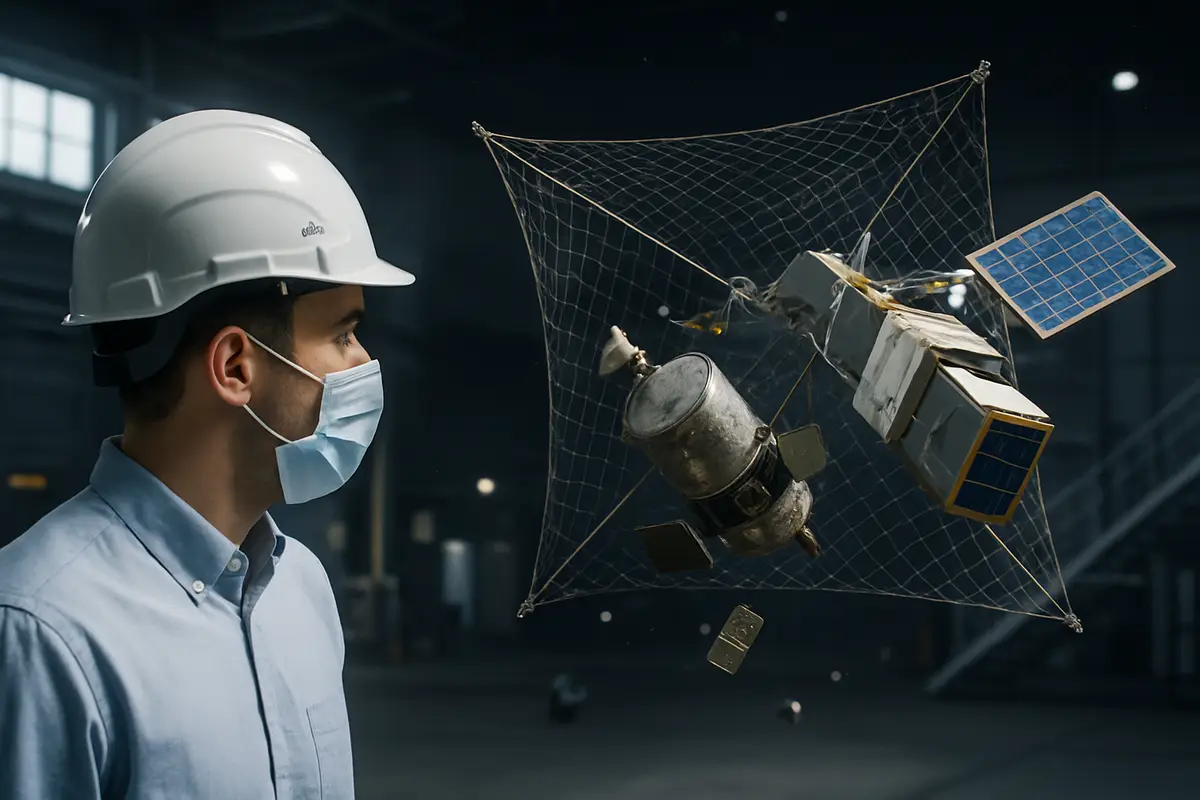
宇宙のごみを減らす技術の開発が進む

Development advances on technology to cut down space junk

2

地球の周りには、役目を終えた人工衛星やロケットの部品が数多く残っています。

A great many satellites that have finished their work, and rocket parts, are left in orbit around the Earth.

3

こうした「宇宙ごみ」は、非常に速い速度で飛び続けています。

This "space junk" keeps flying at extremely high speed.

4

小さなごみでも、ぶつかれば人工衛星を壊してしまう恐れがあります。

Even a small piece of debris carries the risk of destroying a satellite if it hits one.

5

そのため、宇宙ごみを取り除く技術の開発が世界中で進んでいます。

For that reason, the development of technology to remove space junk is advancing all over the world.

6

日本の企業も、磁石を使ってごみをつかまえる装置を試験しています。

A Japanese company is also testing a device that uses magnets to capture the debris.

7

来年には、実際に古い部品を回収する計画があるということです。

Reportedly there is a plan to actually retrieve old parts next year.

8

ただし、費用が高いことや、他の国との調整が必要なことが課題です。

However, the high cost and the need for coordination with other countries are challenges.

9

専門家は「宇宙を安全に使い続けるためには、国際的なルール作りが欠かせない」と指摘しています。

An expert points out, "In order to keep using space safely, creating international rules is indispensable."

宇宙うちゅうごみらす技術ぎじゅつ開発かいはつすす1

2026年09月07日 19:21

著者: jpreader

宇宙のごみを減らす技術の開発が進む

この画像はAIで生成され、学習目的で使用されています。

This image is AI-generated and used for educational purposes.

地球ちきゅうまわりには、役目やくめえた人工衛星じんこうえいせいロケット部品ぶひん数多かずおおのこています2こうした宇宙うちゅうごみ」は、非常ひじょうはや速度そくどつづています3ちいさなごみでも、ぶつかれ人工衛星じんこうえいせいこわてしまうおそれがあります4

そのため宇宙うちゅうごみのぞ技術ぎじゅつ開発かいはつ世界中せかいじゅうすすでいます5日本にほん企業きぎょうも、磁石じしゃく使つかってごみつかまえる装置そうち試験しけんています6来年らいねんには、実際じっさいふる部品ぶひん回収かいしゅうする計画けいかくがあるということです7

ただし費用ひようたかことやほかくにとの調整ちょうせい必要ひつようなこと課題かだいです8専門家せんもんかは「宇宙うちゅう安全あんぜん使つかつづけるためには国際的こくさいてきルールづくりがかせない」と指摘してきています9

Discussion

00

to rate or comment.

No comments yet.