9月8日、愛知県と岐阜県で雨がたくさん降りました2。庄内川の水がとても多くなりました3。国は「氾濫特別警報」を出しました4。これはいちばん強い警報です5。
川の水が道や家に入るかもしれません6。市は近くに住む人に「早く高い所へ行ってください」と言いました7。学校や公民館が開いています8。そこで休むことができます9。
天気予報によると、雨は今晩まで続きます10。川の近くに行くのはあぶないです11。テレビやスマホで新しい情報を見てください12。
(がつ)
month (counter)
(にち)
day
(あいちけん)
Aichi Prefecture
(ぎふけん)
Gifu Prefecture
(あめ)
rain
(たくさん)
a lot / many
(ふる)
to fall (rain, snow)
(しょうないがわ)
the Shonai River
(みず)
water
(とても)
very; extremely
(おおい)
many
(くに)
country; the government
(はんらんとくべつけいほう)
special flood warning (the highest river-flooding alert)
(だす)
to serve, put out
(いちばん)
most; number one
(つよい)
strong
(けいほう)
warning, alarm
(おおあめ)
heavy rain
(かわ)
river
(みち)
road, street, path
(いえ)
house
(はいる)
to enter, be contained in
(し)
city
(ちかく)
nearby
(すむ)
to live; to reside
(ひと)
person / people
(はやい)
early / fast
(たかい)
expensive; high
(ところ)
place; area
(いく)
to go
(いう)
to say
(がっこう)
school
(こうみんかん)
community hall, public hall
(あく)
to be open
(やすむ)
to rest; to take a break
(てんきよほう)
Weather forecast
(こんばん)
tonight, this evening
(つづく)
to continue
(あぶない)
dangerous
(てれび)
television, TV
(すまほ)
smartphone
(あたらしい)
new
(じょうほう)
information
(みる)
to see, watch
did ... (polite past)
Polite past tense of verbs. Formed with verb stem + ました. Used in formal or polite speech to describe completed actions.
昨日、映画を見ました。
I watched a movie yesterday.
朝ごはんを食べました。
I ate breakfast.
友達が来ました。
A friend came.
polite non-past tense
The polite non-past ~ます states what will happen — the funeral will continue.
葬式は続きます。
The funeral will continue.
明日行きます。
I will go tomorrow.
polite copula / is, am, are
Describes states such as the mother panda being healthy and the baby being small.
これは本です。
This is a book.
今日は寒いです。
It is cold today.
to become (い-adjective)
Expresses a change of state for い-adjectives. Drop the final い and add くなる. Indicates something has changed or will change to a new state.
寒くなりました。
It has gotten cold.
日本語が上手になりました。
My Japanese has gotten better.
値段が高くなりました。
The price became expensive.
is doing, has been doing (ongoing state/action)
Expresses a continuing action or resulting state. Formed with て-form + いる. Can describe an action in progress or a state resulting from a past change.
今、ご飯を食べています。
I am eating rice now.
東京に住んでいます。
I live in Tokyo.
ドアが開いています。
The door is open.
might ~, perhaps ~
Expresses possibility.
明日雨が降るかもしれません。
It might rain tomorrow.
彼は来ないかもしれません。
He might not come.
please do ...
Polite request form. Formed with て-form + ください. Used to ask someone to perform an action.
ここに名前を書いてください。
Please write your name here.
もう一度言ってください。
Please say it once more.
窓を開けてください。
Please open the window.
and (non-exhaustive list)
や lists representative examples — Shikoku and Kyushu among other regions (四国や九州).
りんごやみかんを買った。
I bought apples and oranges (among others).
東京や大阪は大きい都市だ。
Tokyo and Osaka are big cities.
can do ..., to be able to ...
Verb dictionary form + ことができる expresses ability or possibility. More formal than the potential verb form. Common in written Japanese and announcements.
日本語を話すことができます。
I can speak Japanese.
ここで写真を撮ることができます。
You can take photos here.
インターネットで予約することができます。
You can make a reservation on the internet.
until / as far as
Indicates an end point in space or time. Here it expresses how far the balls flew.
駅まで歩きます。
I walk to the station.
遠くまで飛びました。
It flew far away.
according to ...
Cites a source of information. The noun before によると is the source. Often followed by a reported statement.
天気予報によると、明日は雨です。
According to the weather forecast, it will rain tomorrow.
ニュースによると、地震がありました。
According to the news, there was an earthquake.
先生によると、テストは来週です。
According to the teacher, the test is next week.
愛知県と岐阜県の川に大雨の警報
Heavy-rain warnings for rivers in Aichi and Gifu Prefectures
9月8日、愛知県と岐阜県で雨がたくさん降りました。
On September 8, a great deal of rain fell in Aichi and Gifu Prefectures.
庄内川の水がとても多くなりました。
The water in the Shonai River rose sharply.
国は「氾濫特別警報」を出しました。
The national government issued a "special flood warning".
これはいちばん強い警報です。
This is the strongest warning there is.
川の水が道や家に入るかもしれません。
River water may get into roads and houses.
市は近くに住む人に「早く高い所へ行ってください」と言いました。
The city told people living nearby, "Please go to high ground quickly."
学校や公民館が開いています。
Schools and community halls are open.
そこで休むことができます。
You can take shelter and rest there.
天気予報によると、雨は今晩まで続きます。
According to the weather forecast, the rain will continue until tonight.
川の近くに行くのはあぶないです。
Going near the river is dangerous.
テレビやスマホで新しい情報を見てください。
Please check the latest information on TV or your smartphone.
2026年09月09日 19:15
著者: jpreader
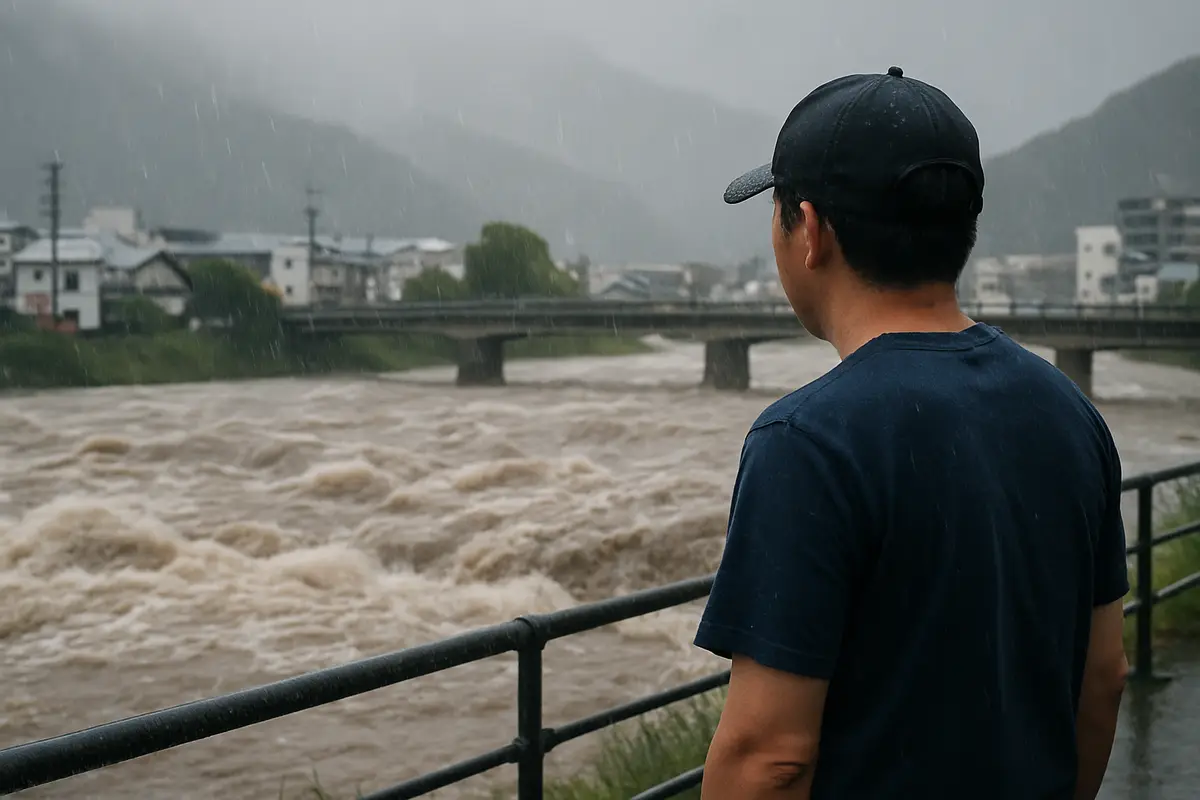
この画像はAIで生成され、学習目的で使用されています。
This image is AI-generated and used for educational purposes.
9月8日、愛知県と岐阜県で雨がたくさん降りました2。庄内川の水がとても多くなりました3。国は「氾濫特別警報」を出しました4。これはいちばん強い警報です5。
川の水が道や家に入るかもしれません6。市は近くに住む人に「早く高い所へ行ってください」と言いました7。学校や公民館が開いています8。そこで休むことができます9。
天気予報によると、雨は今晩まで続きます10。川の近くに行くのはあぶないです11。テレビやスマホで新しい情報を見てください12。
Discussion
to rate or comment.
No comments yet.