駅の近くで自転車を借りるサービスが広がっています2。スマートフォンのアプリを使って、すぐに自転車を借りることができます3。借りた自転車は、別の場所に返してもいいです4。
このサービスは、日本の多くの町にあります5。会社に行く人や、買い物をする人が使います6。電車を降りてから、家や会社まで少し遠いとき、とても便利です7。
自転車を使うと、空気が汚れません8。町も静かになります9。しかし、自転車を止める場所が足りない問題もあります10。市や会社は、駐車場を増やす計画です11。
(えき)
station
(じてんしゃ)
bicycle
(かりる)
to borrow
(ひと)
person / people
(ふえる)
to increase; to grow
(ちかく)
nearby
(さーびす)
service
(ひろがる)
to spread
(すまーとふぉん)
smartphone
(あぷり)
app / application
(つかう)
to use
(すぐ)
immediately, soon
(べつ)
another; different
(ばしょ)
place
(かえす)
to return (something); to give back
(にほん)
Japan
(おおい)
many
(まち)
town
(ある)
a certain (some)
(かいしゃ)
company
(いく)
to go
(かいもの)
shopping
(する)
to do
(でんしゃ)
electric train
(おりる)
to descend, get off
(いえ)
house
(まで)
until, up to, by the time
(すこし)
a little
(とおい)
far; distant
(とても)
very; extremely
(べんり)
convenient
(くうき)
air
(よごれる)
to become dirty; to be contaminated
(しずか)
quiet
(しかし)
however, but
(とめる)
to stop, to halt
(たりる)
to be enough; to be sufficient
(もんだい)
problem
(し)
city
(ちゅうしゃじょう)
parking lot
(ふやす)
to increase (something)
(けいかく)
plan
is doing, has been doing (ongoing state/action)
Expresses a continuing action or resulting state. Formed with て-form + いる. Can describe an action in progress or a state resulting from a past change.
今、ご飯を食べています。
I am eating rice now.
東京に住んでいます。
I live in Tokyo.
ドアが開いています。
The door is open.
can do ..., to be able to ...
Verb dictionary form + ことができる expresses ability or possibility. More formal than the potential verb form. Common in written Japanese and announcements.
日本語を話すことができます。
I can speak Japanese.
ここで写真を撮ることができます。
You can take photos here.
インターネットで予約することができます。
You can make a reservation on the internet.
may do / it's okay to
Used when Hamas says they would be willing to release the hostages — giving permission or willingness.
入ってもいいですか。
May I come in?
食べてもいいですよ。
You may eat it.
polite copula / is, am, are
Describes states such as the mother panda being healthy and the baby being small.
これは本です。
This is a book.
今日は寒いです。
It is cold today.
after doing ...
Expresses a sequence where one action is completed before the next begins. Formed with て-form + から. Emphasizes completion of the first action.
ご飯を食べてから、出かけます。
After eating, I will go out.
手を洗ってから、食べてください。
Please eat after washing your hands.
日本に来てから、3年が過ぎました。
Three years have passed since coming to Japan.
when ~
Indicates the time when something happened — when he was in junior high school.
中学生のとき病気になりました。
When I was a junior-high student I got sick.
子どものとき日本にいました。
I was in Japan when I was a child.
if / when (natural consequence)
Conditional と indicating a natural or expected result. 一緒に捨てると…火が出て means 'if you throw them away together, fire starts.'
ボタンを押すと、ドアが開きます。
When you press the button, the door opens.
春になると、桜が咲きます。
When spring comes, cherry blossoms bloom.
does not ~ (polite negative)
ません is the polite negative form of verbs. It negates the action in a formal/polite context.
今日は学校に行きません。
I won't go to school today.
to become
Expresses a change of state; Kawai became the new commissioner of the Sports Agency.
新しい長官になりました。
He became the new commissioner.
目が見えなくなりました。
He became unable to see.
negative form: does not ~, will not ~
The plain negative 出ない in the headline and the polite negative 出ません in the article both say that Ohtani will not appear in the game.
オールスターゲームに出ない。
He will not play in the All-Star Game.
今年は出ません。
He will not take part this year.
駅で自転車を借りる人が増える
More people are renting bicycles at train stations
駅の近くで自転車を借りるサービスが広がっています。
Services for renting bicycles near train stations are spreading.
スマートフォンのアプリを使って、すぐに自転車を借りることができます。
Using a smartphone app, you can rent a bicycle right away.
借りた自転車は、別の場所に返してもいいです。
You may return the bicycle you rented at a different place.
このサービスは、日本の多くの町にあります。
This service is available in many towns across Japan.
会社に行く人や、買い物をする人が使います。
People heading to work and people going shopping use it.
電車を降りてから、家や会社まで少し遠いとき、とても便利です。
It is very convenient when your home or office is a little far after you get off the train.
自転車を使うと、空気が汚れません。
If you use a bicycle, the air does not get polluted.
町も静かになります。
The town also becomes quieter.
しかし、自転車を止める場所が足りない問題もあります。
However, there is also the problem that there are not enough places to park bicycles.
市や会社は、駐車場を増やす計画です。
Cities and companies plan to increase the number of parking areas.
2026年09月12日 19:06
著者: jpreader
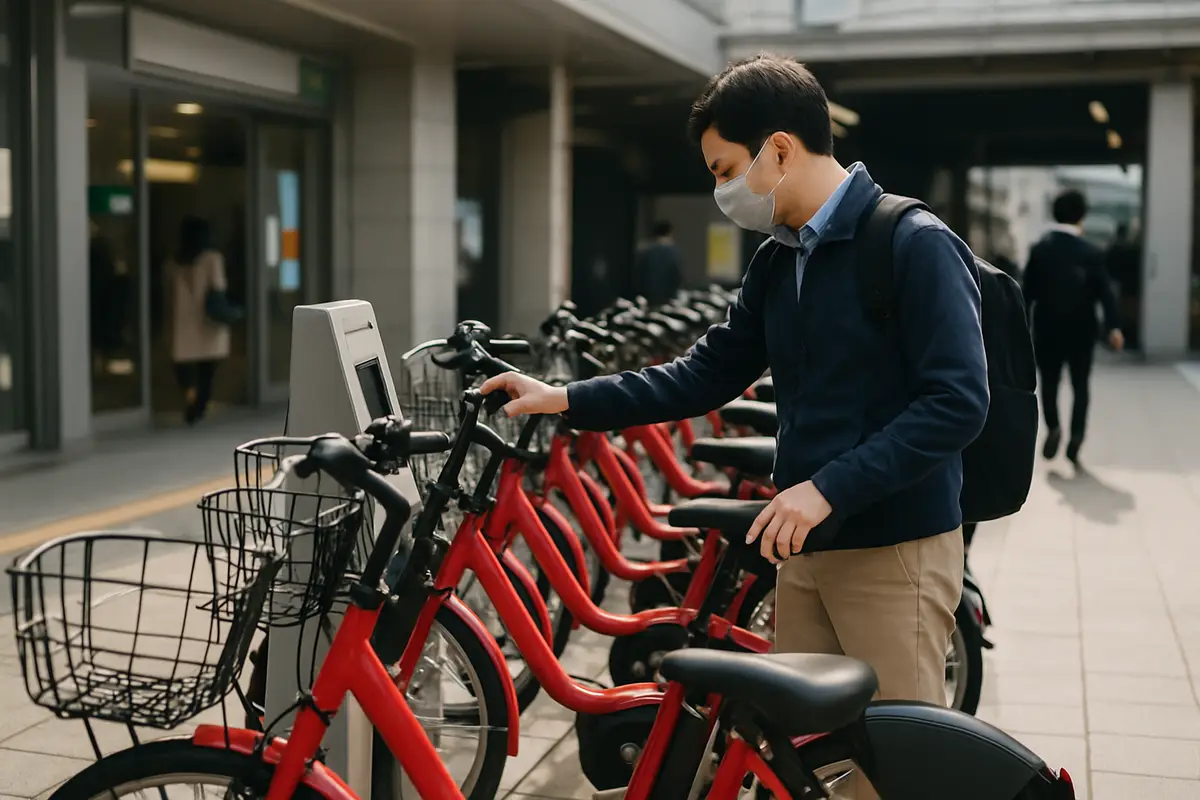
この画像はAIで生成され、学習目的で使用されています。
This image is AI-generated and used for educational purposes.
駅の近くで自転車を借りるサービスが広がっています2。スマートフォンのアプリを使って、すぐに自転車を借りることができます3。借りた自転車は、別の場所に返してもいいです4。
このサービスは、日本の多くの町にあります5。会社に行く人や、買い物をする人が使います6。電車を降りてから、家や会社まで少し遠いとき、とても便利です7。
自転車を使うと、空気が汚れません8。町も静かになります9。しかし、自転車を止める場所が足りない問題もあります10。市や会社は、駐車場を増やす計画です11。
Discussion
to rate or comment.
No comments yet.