日本では高齢者が増えて、介護をする人が足りなくなっています2。そのため、介護の現場でロボットを使う施設が増えてきました3。
ロボットは、ベッドから車いすへ移る人を支えたり、夜に部屋の様子を確認したりします4。職員の体の負担が軽くなるので、長く働き続けられるようになります5。話し相手になるロボットもあり、高齢者が笑顔になることもあるそうです6。
しかし、ロボットは高いので、小さい施設では買うことが難しいです7。国は費用の一部を出して、もっと多くの施設で使えるようにする計画です8。
(かいご)
nursing care
(げんば)
the site, the front line (of work)
(はたらく)
to work
(ろぼっと)
robot
(ふえる)
to increase; to grow
(にほん)
Japan
(こうれいしゃ)
elderly person
(ひと)
person / people
(たりる)
to be enough; to be sufficient
(つかう)
to use
(しせつ)
facility; institution
(べっど)
bed
(くるまいす)
wheelchair
(うつる)
to move, transfer
(ささえる)
to support
(よる)
night
(へや)
room
(ようす)
appearance; state
(かくにんする)
to confirm; to check
(しょくいん)
Staff; employee
(からだ)
body
(ふたん)
burden, bear (cost)
(かるい)
light (weight)
(ながい)
long
(つづける)
to continue
(はなしあいて)
someone to talk with, conversation partner
(ある)
a certain (some)
(えがお)
smile; smiling face
(しかし)
however, but
(たかい)
expensive; high
(ちいさい)
small
(かう)
to buy
(むずかしい)
difficult
(くに)
country; the government
(ひよう)
expense, cost
(いちぶ)
part, portion
(だす)
to serve, put out
(もっと)
more / further
(おおい)
many
(けいかく)
plan
to become no longer / to disappear
Indicates a change where something ceases to exist or can no longer be done. Here it describes that prayer gatherings can no longer be held in Hong Kong.
お金がなくなった。
The money is gone.
痛みがなくなりました。
The pain went away.
is doing, has been doing (ongoing state/action)
Expresses a continuing action or resulting state. Formed with て-form + いる. Can describe an action in progress or a state resulting from a past change.
今、ご飯を食べています。
I am eating rice now.
東京に住んでいます。
I live in Tokyo.
ドアが開いています。
The door is open.
come toward (action approaching)
Indicates motion toward the speaker or a location. Here it describes rocks flying toward people.
鳥が飛んできた。
A bird flew toward (us).
雨が降ってきた。
It started raining.
doing things like ~ and ~
Lists representative actions among several. Implies there are other actions too. Used twice in this article.
週末は本を読んだり映画を見たりします。
On weekends I do things like read books and watch movies.
歌ったり踊ったりして楽しんだ。
We had fun singing and dancing.
to become (い-adjective)
Expresses a change of state for い-adjectives. Drop the final い and add くなる. Indicates something has changed or will change to a new state.
寒くなりました。
It has gotten cold.
日本語が上手になりました。
My Japanese has gotten better.
値段が高くなりました。
The price became expensive.
because ~ / since ~
Causal connector. Because JA is buying at higher prices, store prices will also rise.
雨が降ったので、家にいた。
Since it rained, I stayed home.
忙しいので、行けません。
Since I'm busy, I can't go.
potential form (can do)
入れられる is the potential form of 入れる — 'can put (things) in'. It describes what the furniture allows you to do.
物を入れられる家具。
Furniture you can put things into.
ここで食べられます。
You can eat here.
come to / reach the point where
Indicates a change in state or ability.
運転できるようになった。
Trains became able to run.
日本語が話せるようになりました。
I became able to speak Japanese.
to become
Expresses a change of state; Kawai became the new commissioner of the Sports Agency.
新しい長官になりました。
He became the new commissioner.
目が見えなくなりました。
He became unable to see.
there are times when ~
Indicates that something sometimes happens.
遅れることがある。
Sometimes I'm late.
間違えることがある。
There are times I make mistakes.
I hear that / it is said
Reports hearsay. 大きく育つそうです means '(I hear) they grow big'.
雨が降るそうだ
I hear it will rain
おいしいそうだ
they say it's delicious
nominalizer (the act of ~)
Turns verbs into nouns — changing one's awareness (意識を変えること), not over-buying (買いすぎないこと), and using leftovers well (使うこと).
走ることが好きだ。
I like running.
話すことが大切だ。
Talking is important.
polite copula / is, am, are
Describes states such as the mother panda being healthy and the baby being small.
これは本です。
This is a book.
今日は寒いです。
It is cold today.
to make sure that, to ensure that
Expresses the goal of bringing about a certain state or preventing something. Formed with verb plain form + ようにする. Often used to describe efforts to ensure or prevent something.
毎日野菜を食べるようにしています。
I make sure to eat vegetables every day.
遅刻しないようにしてください。
Please make sure not to be late.
忘れないようにメモを書きました。
I wrote a note so I wouldn't forget.
介護の現場で働くロボットが増える
Robots working in nursing-care settings are on the rise
日本では高齢者が増えて、介護をする人が足りなくなっています。
In Japan the elderly population is growing, and there are no longer enough people to provide nursing care.
そのため、介護の現場でロボットを使う施設が増えてきました。
For that reason, more and more facilities have come to use robots in nursing-care settings.
ロボットは、ベッドから車いすへ移る人を支えたり、夜に部屋の様子を確認したりします。
The robots do things like supporting people as they move from a bed to a wheelchair, and checking on rooms at night.
職員の体の負担が軽くなるので、長く働き続けられるようになります。
Because the physical burden on staff becomes lighter, they become able to keep working for many years.
話し相手になるロボットもあり、高齢者が笑顔になることもあるそうです。
There are also robots that act as conversation partners, and elderly residents reportedly break into smiles at times.
しかし、ロボットは高いので、小さい施設では買うことが難しいです。
However, robots are expensive, so it is difficult for small facilities to buy them.
国は費用の一部を出して、もっと多くの施設で使えるようにする計画です。
The national government plans to cover part of the cost so that many more facilities can use them.
2026年09月12日 19:09
著者: jpreader
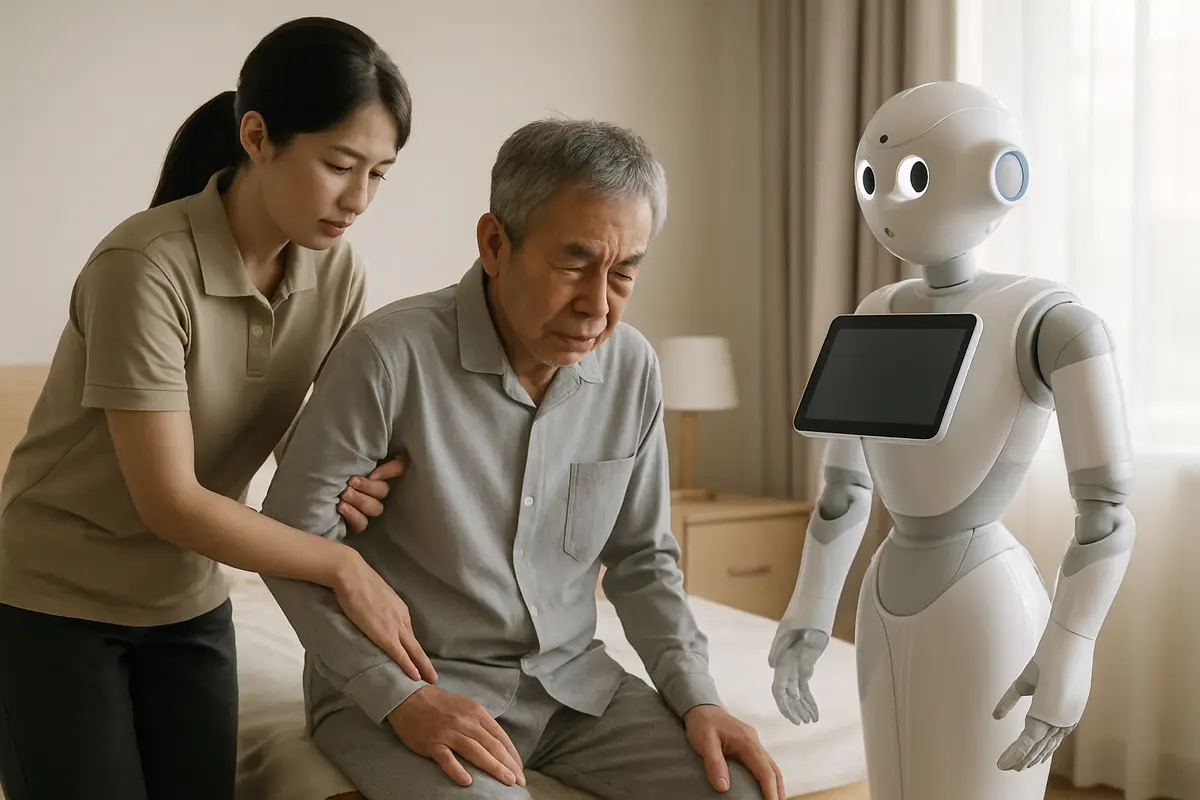
この画像はAIで生成され、学習目的で使用されています。
This image is AI-generated and used for educational purposes.
日本では高齢者が増えて、介護をする人が足りなくなっています2。そのため、介護の現場でロボットを使う施設が増えてきました3。
ロボットは、ベッドから車いすへ移る人を支えたり、夜に部屋の様子を確認したりします4。職員の体の負担が軽くなるので、長く働き続けられるようになります5。話し相手になるロボットもあり、高齢者が笑顔になることもあるそうです6。
しかし、ロボットは高いので、小さい施設では買うことが難しいです7。国は費用の一部を出して、もっと多くの施設で使えるようにする計画です8。
Discussion
to rate or comment.
No comments yet.