Used to introduce or name something. In this article, 「鳥貴族」という店 means 'a store called Torikizoku'.
田中という人を知っていますか。
Do you know a person called Tanaka?
これは寿司という料理です。
This is a dish called sushi.
~ている
N5
is doing, has been doing (ongoing state/action)
Expresses a continuing action or resulting state. Formed with て-form + いる. Can describe an action in progress or a state resulting from a past change.
今、ご飯を食べています。
I am eating rice now.
東京に住んでいます。
I live in Tokyo.
ドアが開いています。
The door is open.
~によると
N3
according to ...
Cites a source of information. The noun before によると is the source. Often followed by a reported statement.
天気予報によると、明日は雨です。
According to the weather forecast, it will rain tomorrow.
ニュースによると、地震がありました。
According to the news, there was an earthquake.
先生によると、テストは来週です。
According to the teacher, the test is next week.
~ながら
N4
while doing ...
Verb stem + ながら indicates doing two things simultaneously. The action before ながら is the secondary action; the main action follows.
音楽を聞きながら勉強します。
I study while listening to music.
歩きながら話しましょう。
Let's talk while walking.
テレビを見ながらごはんを食べます。
I eat while watching TV.
可能形(~られる/~える)
N4
potential form: can ~ / be able to ~
「学べる」 (from 学ぶ) and 「得られる」 (from 得る) are potential forms — what a trainee is able to study, and the income one is able to earn.
技術を学べる制度がある。
There is a program where you can learn the craft.
十分な収入を得られるとは限らない。
It is not necessarily the case that you can earn a sufficient income.
~たり~たりする
N4
doing things like ~ and ~
Lists representative actions among several. Implies there are other actions too. Used twice in this article.
週末は本を読んだり映画を見たりします。
On weekends I do things like read books and watch movies.
歌ったり踊ったりして楽しんだ。
We had fun singing and dancing.
~ても
N4
even if; even though
Used to express concession or hypothetical situation.
雨が降っても行きます。
I'll go even if it rains.
高くても買います。
Even if it's expensive, I'll buy it.
~とは限らない
N3
it is not necessarily the case that ~
「得られるとは限らない」 denies a general assumption: finishing the apprenticeship does not automatically guarantee a decent income.
十分な収入を得られるとは限らない。
You cannot always earn a sufficient income.
高い物がいいとは限らない。
Expensive things are not necessarily good.
~だけでなく
N3
Not only ~ but also
Expresses that something is not limited to one thing. Not only Tokyo and Kyoto, but various other places too.
日本語だけでなく、英語も話せます。
I can speak not only Japanese but also English.
~として
N3
as / in the role of
Marks the role, capacity, or status in which something is treated. Used here as 特別な史跡として (as a special historic site).
先生として働く。
To work as a teacher.
プレゼントとしてもらった。
I received it as a present.
~こと(名詞化)
N4
nominalizer (the act of ~)
Turns verbs into nouns — changing one's awareness (意識を変えること), not over-buying (買いすぎないこと), and using leftovers well (使うこと).
走ることが好きだ。
I like running.
話すことが大切だ。
Talking is important.
1
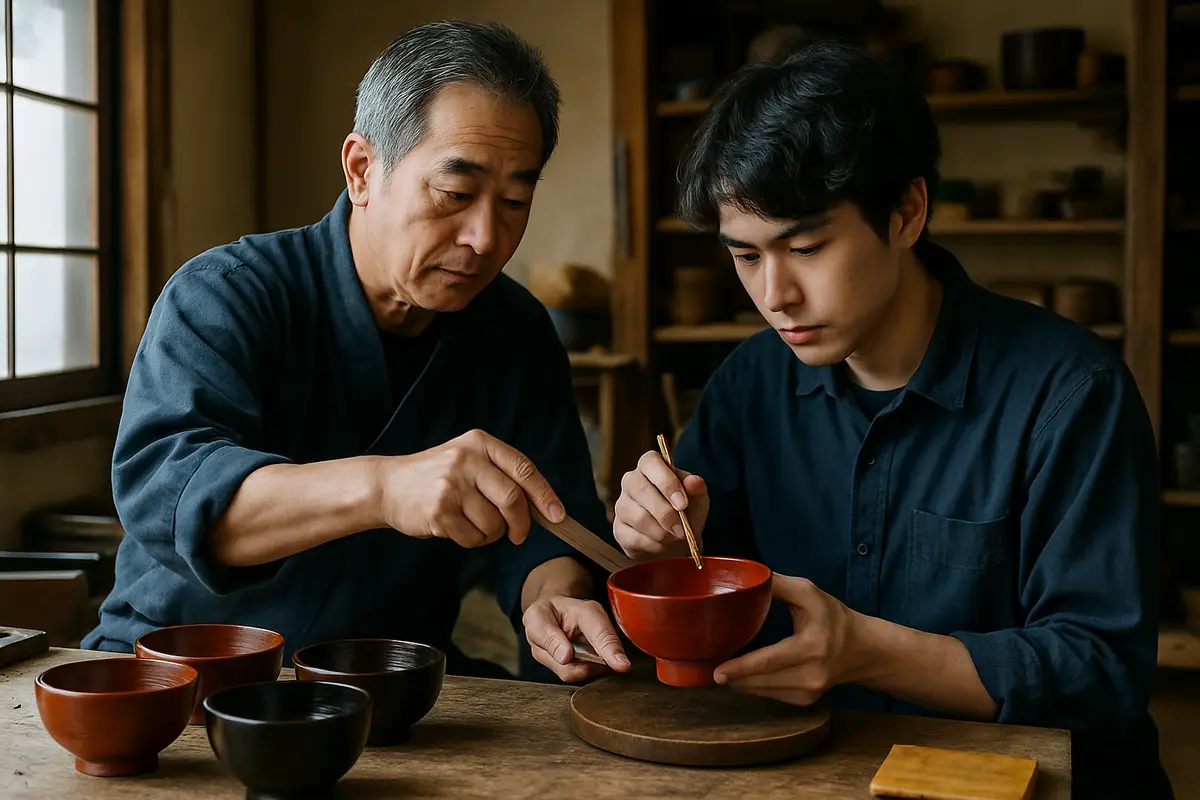
伝統工芸の技を若者に伝える取り組み
Efforts to pass traditional craft skills on to young people
2
全国の伝統工芸の産地では、職人の高齢化が進み、技術を受け継ぐ若者が足りないという課題を抱えている。
Traditional craft regions across the country face the problem that their artisans are growing older and there are not enough young people to inherit the techniques.
3
国の調査によると、職人の数はこの三十年でおよそ三分の一に減ったという。
According to a national survey, the number of artisans has fallen to roughly one third over the past thirty years.
4
こうした状況を受けて、各地の自治体や組合は、若い世代を育てる取り組みを始めている。
In response to this situation, local governments and trade associations around the country have begun initiatives to train a younger generation.
Some regions have set up programs that let trainees study the craft for several years while receiving a living allowance, or teach them how to sell their work online.
6
一方で、修行を終えても十分な収入を得られるとは限らない。
On the other hand, finishing the apprenticeship does not necessarily mean one can earn a sufficient income.
People in the field point out that it is essential not only to pass on the techniques but also to widen sales channels so the craft can stand on its own as an industry.
伝統工芸の技を若者に伝える取り組み1
2026年09月12日 19:12
著者: jpreader
この画像はAIで生成され、学習目的で使用されています。
This image is AI-generated and used for educational purposes.
Efforts to pass traditional craft skills on to young people
2
Traditional craft regions across the country face the problem that their artisans are growing older and there are not enough young people to inherit the techniques.
3
According to a national survey, the number of artisans has fallen to roughly one third over the past thirty years.
4
In response to this situation, local governments and trade associations around the country have begun initiatives to train a younger generation.
5
Some regions have set up programs that let trainees study the craft for several years while receiving a living allowance, or teach them how to sell their work online.
6
On the other hand, finishing the apprenticeship does not necessarily mean one can earn a sufficient income.
7
People in the field point out that it is essential not only to pass on the techniques but also to widen sales channels so the craft can stand on its own as an industry.
Discussion
to rate or comment.
No comments yet.