(ふそく)
shortage; insufficiency
(たりる)
to be enough; to be sufficient
(こくどこうつうしょう)
Ministry of Land, Infrastructure, Transport and Tourism
(へる)
to decrease / to diminish
(してき)
pointing out, indication
(あつまる)
to gather; to come together
(びんすう)
number of services / departures
(そのもの)
itself, the very thing
(つうがく)
commuting to school
(こうこうせい)
high school student
(せいかつ)
daily life; livelihood
(かかせない)
indispensable; essential
(いどうしゅだん)
means of transport
(こうした)
such / this kind of
(じょうきょう)
situation, circumstances
(かくち)
various places, everywhere
(あげる)
to raise; to increase
(じちたい)
local government / municipality
(こがた)
Small-sized; compact
(のりあい)
shared ride, ride-sharing
(どうにゅう)
introduction (of a system); 導入する = to introduce
(ふえる)
to increase; to grow
(せんもんか)
expert, specialist
(ぜんたい)
the whole / overall
(こうつう)
traffic, transportation
(しくみ)
structure, system, mechanism
passive form: is done / is said to be
指摘する becomes 指摘されています so the article can report the analysis without naming who made it: 原因だと指摘されています.
給料の低さが原因だと指摘されています
Low pay is pointed out as a cause
この道は昔から使われています
This road has been used since long ago
according to ...
Cites a source of information. The noun before によると is the source. Often followed by a reported statement.
天気予報によると、明日は雨です。
According to the weather forecast, it will rain tomorrow.
ニュースによると、地震がありました。
According to the news, there was an earthquake.
先生によると、テストは来週です。
According to the teacher, the test is next week.
-ness (turns an adjective into a noun)
Replacing the final い of an i-adjective with さ makes a noun. 暑い becomes 暑さ, 'the heat', which is the cause of the poor rice quality here.
山の高さを測る。
To measure the height of a mountain.
夏の暑さが厳しい。
The summer heat is severe.
because of ~ / since ~
Plain form + ため states a cause in formal writing. 知られていないため = 'because it is not well known'.
十分に知られていないため、食べ物が捨てられている。
Because it is not well known, food is being thrown away.
雨のため、試合は中止になった。
Because of the rain, the match was called off.
doing things like ~ and ~
Lists representative actions among several. Implies there are other actions too. Used twice in this article.
週末は本を読んだり映画を見たりします。
On weekends I do things like read books and watch movies.
歌ったり踊ったりして楽しんだ。
We had fun singing and dancing.
come toward (action approaching)
Indicates motion toward the speaker or a location. Here it describes rocks flying toward people.
鳥が飛んできた。
A bird flew toward (us).
雨が降ってきた。
It started raining.
for ~ / from the perspective of ~
Indicates a point of view or perspective. Used twice here for 'the company' and 'the Vietnamese people'.
私にとって家族は大切です。
Family is important to me.
子供にとって勉強は難しい。
Study is difficult for children.
if (conditional form)
The ば-form states the condition under which the result holds. 使えば、簡単には燃えません is the companies' claim: if special wood is used, it will not burn easily.
特別な木を使えば、簡単には燃えません。
If you use special wood, it will not burn easily.
安ければ買います。
If it is cheap, I will buy it.
時間があれば、行きます。
If I have time, I will go.
to become (い-adjective)
Expresses a change of state for い-adjectives. Drop the final い and add くなる. Indicates something has changed or will change to a new state.
寒くなりました。
It has gotten cold.
日本語が上手になりました。
My Japanese has gotten better.
値段が高くなりました。
The price became expensive.
in order to, for the purpose of
Expresses purpose. Formed with verb dictionary form + ための + noun, or noun + のための + noun. Modifies the following noun to indicate its purpose.
試験のための勉強をしています。
I am studying for the exam.
健康のために運動します。
I exercise for my health.
日本語を勉強するための本を買いました。
I bought a book for studying Japanese.
in response to ~, according to ~
Describes the on-demand service: 予約に応じて走る小型の乗り合いタクシー (shared taxis that run in response to bookings).
予約に応じて走るタクシーです
It is a taxi that runs in response to bookings
収入に応じて金額が変わります
The amount changes according to your income
need to / necessary to
Expresses necessity. Here it states that congressional discussion is required by law for military attacks.
議会で話し合う必要がある。
It is necessary to discuss it in Congress.
勉強する必要があります。
You need to study.
is doing, has been doing (ongoing state/action)
Expresses a continuing action or resulting state. Formed with て-form + いる. Can describe an action in progress or a state resulting from a past change.
今、ご飯を食べています。
I am eating rice now.
東京に住んでいます。
I live in Tokyo.
ドアが開いています。
The door is open.
plain negative modifying a noun
The plain negative 足りない sits in front of 町 to describe it: お金が足りない町 (towns where money is short).
お金が足りない町では、まだできません
In towns where money is short, it still cannot be done
人が来ない図書館
a library that nobody comes to
1
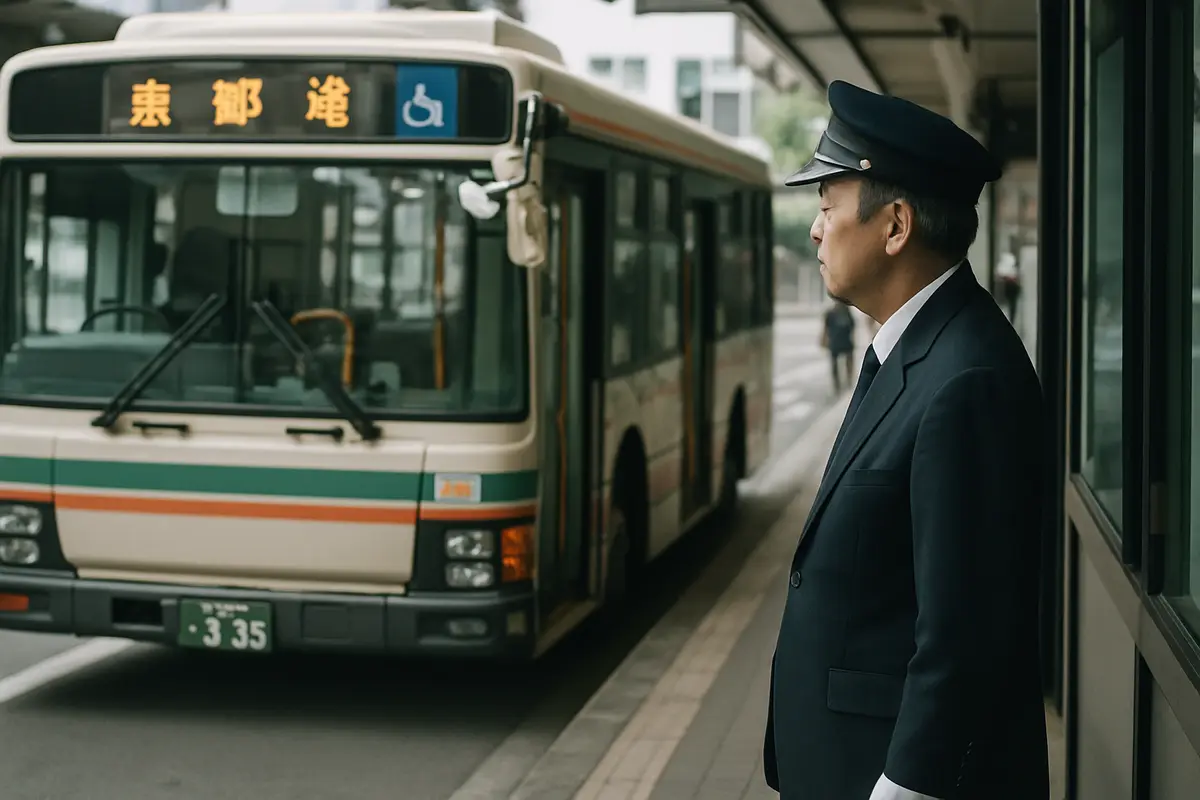
路線バスの運転手不足が深刻に
The shortage of route-bus drivers is becoming serious
2
地方を中心に、路線バスの運転手が足りない状態が続いています。
Mainly in rural areas, a shortage of route-bus drivers is continuing.
3
国土交通省によると、運転手の数はこの十年で大きく減りました。
According to the Ministry of Land, Infrastructure, Transport and Tourism, the number of drivers has fallen sharply over the past ten years.
4
長い労働時間や給料の低さが原因だと指摘されています。
Long working hours and low pay are pointed to as the causes.
5
運転手が集まらないため、便数を減らしたり、路線そのものをやめたりするバス会社も出てきました。
Because they cannot find drivers, bus companies have begun cutting the number of services or scrapping routes altogether.
6
車を運転しない高齢者や通学する高校生にとって、バスは生活に欠かせない移動手段です。
For elderly people who do not drive and for high school students commuting to school, the bus is an indispensable means of getting around.
7
路線がなくなれば、病院や学校へ行くことが難しくなります。
If a route disappears, getting to hospitals and schools becomes difficult.
8
こうした状況を受けて、各地で対策が始まっています。
In response to this situation, countermeasures are starting in many parts of the country.
9
給料を上げる会社や、免許を取るための費用を補助する自治体があります。
There are companies raising wages, and local governments that subsidise the cost of obtaining a licence.
10
予約に応じて走る小型の乗り合いタクシーを導入する地域も増えています。
A growing number of areas are also introducing small shared taxis that run in response to bookings.
11
専門家は「地域全体で交通を支える仕組みを作る必要がある」と話しています。
Experts say, "We need to build a system in which the whole community supports its transport."
Discussion
to rate or comment.
No comments yet.