国は毎年、日本の土地の値段を調べています2。今年の調べで、土地の平均の値段は去年より上がりました3。値段が上がったのは、5年続けてです4。
大きな町では、駅の近くやお店が多い所の値段が上がりました5。外国から来る人が増えて、新しいホテルや店を作りたい会社が多いからです6。土地を買いたい人が増えると、値段は高くなります7。
でも、人が少なくなった町では、今も値段が下がっている所があります8。国は「場所によって違いが大きいです」と話しています9。
(とち)
land, plot of land
(ねだん)
price
(ねん)
year
(つづける)
to continue
(あがる)
to rise / to go up
(くに)
country; the government
(まいとし)
every year
(にほん)
Japan
(しらべる)
to investigate; to survey
(ことし)
this year
(へいきん)
average / mean
(きょねん)
last year
(おおきい)
big; large
(まち)
town
(えき)
station
(ちかい)
near / close
(みせ)
shop, store
(おおい)
many
(ところ)
place; area
(がいこく)
foreign country
(くる)
to come
(ひと)
person / people
(ふえる)
to increase; to grow
(あたらしい)
new
(ほてる)
hotel
(つくる)
to make
(かいしゃ)
company
(かう)
to buy
(たかい)
expensive; high
(でも)
but; however
(すくない)
few, scarce
(いま)
now
(さがる)
To fall; to go down
(ある)
a certain (some)
(ばしょ)
place
(ちがい)
difference
(はなす)
to speak, talk
is doing, has been doing (ongoing state/action)
Expresses a continuing action or resulting state. Formed with て-form + いる/います. Can describe an action in progress or a state that continues from a past change.
今、本を読んでいます。
I am reading a book now.
窓が開いています。
The window is open.
日本に住んでいます。
I live in Japan.
than / more than
Indicates comparison. Used to say prices rose on average 2.8% compared to last year.
去年より寒い。
Colder than last year.
彼より背が高い。
Taller than him.
did ... (polite past)
Polite past tense of verbs. Formed with verb stem + ました. Used in formal or polite speech to describe completed actions.
昨日、映画を見ました。
I watched a movie yesterday.
朝ごはんを食べました。
I ate breakfast.
友達が来ました。
A friend came.
The one that ~; what ~ is
Nominalizer の followed by the topic marker は, used to turn a clause into a noun phrase that serves as the topic of the sentence.
私が好きなのは寿司です。
What I like is sushi.
in ~ / at ~ (topic marker for location/context)
Combination of で (location) and は (topic). Sets the context: in speed skating, in ski jumping, etc.
日本では桜が有名です。
In Japan, cherry blossoms are famous.
この店では魚を売っています。
This shop sells fish.
and (non-exhaustive list)
や lists representative examples — Shikoku and Kyushu among other regions (四国や九州).
りんごやみかんを買った。
I bought apples and oranges (among others).
東京や大阪は大きい都市だ。
Tokyo and Osaka are big cities.
want to ~
Verb stem + たい to express desire.
日本に行きたい。
I want to go to Japan.
水を飲みたいです。
I want to drink water.
it is because ~
Gives a reason at the end of a sentence. Used here to explain why gasoline prices dropped (government subsidies).
疲れた。たくさん歩いたからです。
I'm tired. It's because I walked a lot.
寒いからです。
It's because it's cold.
if / when (natural consequence)
Conditional と indicating a natural or expected result. 一緒に捨てると…火が出て means 'if you throw them away together, fire starts.'
ボタンを押すと、ドアが開きます。
When you press the button, the door opens.
春になると、桜が咲きます。
When spring comes, cherry blossoms bloom.
to become (い-adjective)
Expresses a change of state for い-adjectives. Drop the final い and add くなる. Indicates something has changed or will change to a new state.
寒くなりました。
It has gotten cold.
日本語が上手になりました。
My Japanese has gotten better.
値段が高くなりました。
The price became expensive.
is doing, has been doing (ongoing state/action)
Expresses a continuing action or resulting state. Formed with て-form + いる. Can describe an action in progress or a state resulting from a past change.
今、ご飯を食べています。
I am eating rice now.
東京に住んでいます。
I live in Tokyo.
ドアが開いています。
The door is open.
by means of / through
Expresses the means by which something is achieved — through sport, everyone can live together.
スポーツによって一緒に生きていけます。
Through sports we can live together.
インターネットによって情報が広がります。
Information spreads via the Internet.
quotation particle と
と marks the quoted content before verbs like 言う, 答える and 話す. Both quoted remarks in this article — the survey answer and the expert's comment — are closed with 」と.
「はい」と答えました。
He answered "yes".
「行きたい」と言いました。
She said "I want to go".
土地の値段が5年続けて上がった
Land prices have risen for the fifth year in a row
国は毎年、日本の土地の値段を調べています。
Every year the government surveys land prices in Japan.
今年の調べで、土地の平均の値段は去年より上がりました。
In this year's survey, the average price of land was higher than last year.
値段が上がったのは、5年続けてです。
This is the fifth year in a row that prices have risen.
大きな町では、駅の近くやお店が多い所の値段が上がりました。
In large towns, prices rose near stations and in areas with many shops.
外国から来る人が増えて、新しいホテルや店を作りたい会社が多いからです。
That is because more people are coming from abroad, and many companies want to build new hotels and shops.
土地を買いたい人が増えると、値段は高くなります。
When more people want to buy land, prices go up.
でも、人が少なくなった町では、今も値段が下がっている所があります。
However, in towns where the population has fallen, there are still places where prices are dropping.
国は「場所によって違いが大きいです」と話しています。
The government says, "The differences between locations are large."
2026年09月16日 19:14
著者: jpreader
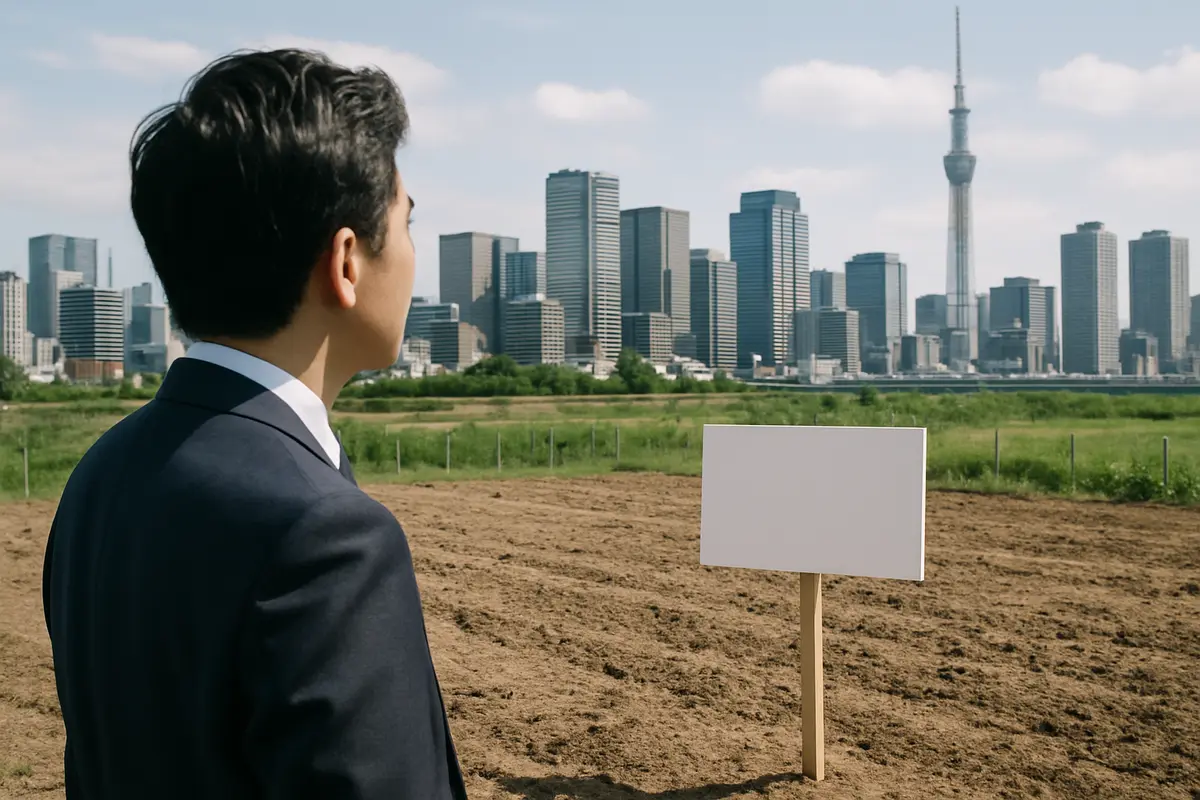
この画像はAIで生成され、学習目的で使用されています。
This image is AI-generated and used for educational purposes.
国は毎年、日本の土地の値段を調べています2。今年の調べで、土地の平均の値段は去年より上がりました3。値段が上がったのは、5年続けてです4。
大きな町では、駅の近くやお店が多い所の値段が上がりました5。外国から来る人が増えて、新しいホテルや店を作りたい会社が多いからです6。土地を買いたい人が増えると、値段は高くなります7。
でも、人が少なくなった町では、今も値段が下がっている所があります8。国は「場所によって違いが大きいです」と話しています9。
Discussion
to rate or comment.
No comments yet.