食べ物たべもの
N5

(たべもの)

food

捨てるすてる
N4

(すてる)

to throw away; to discard

工夫くふう
N2

(くふう)

ingenuity; device; scheme

広がるひろがる
N3

(ひろがる)

to spread

まだまだ
N5

(まだ)

still; yet

食べるたべる
N5

(たべる)

to eat

食品ロスしょくひんロス
N2

(しょくひんロス)

food loss; food waste

呼ぶよぶ
N4

(よぶ)

to call

日本にほん
N5

(にほん)

Japan

毎年まいとし
N5

(まいとし)

every year

たくさんたくさん
N5

(たくさん)

a lot / many

出るでる
N5

(でる)

to come out; to occur

くに
N5

(くに)

country; the government

会社かいしゃ
N5

(かいしゃ)

company

りょう
N3

(りょう)

Quantity; amount; volume

減らすへらす
N3

(へらす)

to reduce; to decrease

最近さいきん
N4

(さいきん)

recently

みせ
N5

(みせ)

shop, store

売れ残るうれのこる
N2

(うれのこる)

to remain unsold

弁当べんとう
N4

(べんとう)

boxed lunch; bento

パンぱん
N5

(ぱん)

bread

安いやすい
N5

(やすい)

cheap / inexpensive

値段ねだん
N3

(ねだん)

price

買うかう
N5

(かう)

to buy

アプリあぷり
N3

(あぷり)

app / application

人気にんき
N4

(にんき)

popularity

利用者りようしゃ
N2

(りようしゃ)

user

スマートフォンすまーとふぉん
N3

(すまーとふぉん)

smartphone

近いちかい
N5

(ちかい)

near / close

探すさがす
N4

(さがす)

to search for; to look for

閉店へいてん
N2

(へいてん)

closing time; shop closing

まえ
N5

(まえ)

before, previous

受け取るうけとる
N3

(うけとる)

to receive; to accept

行くいく
N5

(いく)

to go

ぶん
N3

(ぶん)

portion; share; amount

減るへる
N3

(へる)

to decrease / to diminish

きゃく
N4

(きゃく)

Customer; guest

両方りょうほう
N4

(りょうほう)

both

良いよい
N5

(よい)

good

方法ほうほう
N3

(ほうほう)

method; way

言ういう
N5

(いう)

to say

家庭かてい
N3

(かてい)

household; home; family

あるある
N4

(ある)

a certain (some)

買い物かいもの
N5

(かいもの)

shopping

冷蔵庫れいぞうこ
N4

(れいぞうこ)

refrigerator

なか
N5

(なか)

inside

確かめるたしかめる
N3

(たしかめる)

to make sure; to confirm

期限きげん
N2

(きげん)

time limit, deadline, expiry date

もの
N5

(もの)

thing

使うつかう
N5

(つかう)

to use

むだむだ
N3

(むだ)

waste; futility

少ないすくない
N5

(すくない)

few, scarce

小さいちいさい
N5

(ちいさい)

small

続けるつづける
N4

(つづける)

to continue

大きいおおきい
N5

(おおきい)

big; large

効果こうか
N3

(こうか)

effect

~のに
N4

even though / despite ~

Expresses contrast or unexpected result. Iran says they were attacked even though they are not at war.

勉強したのに、試験に落ちた。

Even though I studied, I failed the test.

雨なのに出かけた。

Even though it was raining, I went out.

~てしまう
N4

completely / finish ~ing (often regretful)

Expresses completion, often with regret or unexpectedness. Here the rice sold out quickly.

すぐに全部売れてしまった。

It all sold out right away.

忘れてしまった。

I forgot (unfortunately).

~と呼ばれる
N3

is called ~

Passive form of 呼ぶ (to call); used to state what someone/something is called.

日本で富士山と呼ばれる山。

The mountain called Mt. Fuji in Japan.

彼は天才と呼ばれています。

He is called a genius.

~ています
N5

is doing, has been doing (ongoing state/action)

Expresses a continuing action or resulting state. Formed with て-form + いる/います. Can describe an action in progress or a state that continues from a past change.

今、本を読んでいます。

I am reading a book now.

窓が開いています。

The window is open.

日本に住んでいます。

I live in Japan.

~や
N5

and (non-exhaustive list)

や lists representative examples — Shikoku and Kyushu among other regions (四国や九州).

りんごやみかんを買った。

I bought apples and oranges (among others).

東京や大阪は大きい都市だ。

Tokyo and Osaka are big cities.

~ようとする
N3

try to ~; be about to ~

Expresses an attempt/intention. Used to say China 'was about to / trying to' tighten rare earth exports.

出かけようとしたとき、電話が鳴った。

Just as I was about to go out, the phone rang.

問題を解決しようとしている。

They are trying to solve the problem.

~に行く
N5

to go to ~

Place + に + 行く indicates going to a destination. に marks the goal or direction of movement.

学校に行きます。

I go to school.

~ので
N4

because ~ / since ~

Causal connector. Because JA is buying at higher prices, store prices will also rise.

雨が降ったので、家にいた。

Since it rained, I stayed home.

忙しいので、行けません。

Since I'm busy, I can't go.

~にとって
N3

for ~ / from the perspective of ~

Indicates a point of view or perspective. Used twice here for 'the company' and 'the Vietnamese people'.

私にとって家族は大切です。

Family is important to me.

子供にとって勉強は難しい。

Study is difficult for children.

~と(引用)
N5

quotative particle

Marks the content of what someone said or reported. Used with 言う here.

彼は行くと言いました。

He said he would go.

明日休みだと聞きました。

I heard tomorrow is a holiday.

~たり~たりする
N4

doing things like ~ and ~

Lists representative actions among several. Implies there are other actions too. Used twice in this article.

週末は本を読んだり映画を見たりします。

On weekends I do things like read books and watch movies.

歌ったり踊ったりして楽しんだ。

We had fun singing and dancing.

~から(起点)
N5

from (starting point)

Indicates the origin or source. 建物の中から means 'from inside the building'.

かばんの中から鍵が出てきた。

A key came out from inside the bag.

~くなる
N4

to become (い-adjective)

Expresses a change of state for い-adjectives. Drop the final い and add くなる. Indicates something has changed or will change to a new state.

寒くなりました。

It has gotten cold.

日本語が上手になりました。

My Japanese has gotten better.

値段が高くなりました。

The price became expensive.

~でも
N5

Even ~; also at ~

Particle でも after a noun means 'even' or 'also at.' 首相官邸の庭でも means 'even at the Prime Minister's residence garden.'

子供でもわかります。

Even a child can understand.

~ば
N4

conditional: if ~

Ba-form conditional expressing 'if ~ then ~'.

勉強すれば、合格できる。

If you study, you can pass.

早く起きれば間に合う。

If you wake up early, you'll make it.

1

食べ物を捨てない工夫が広がる

Ideas for not throwing food away are spreading

2

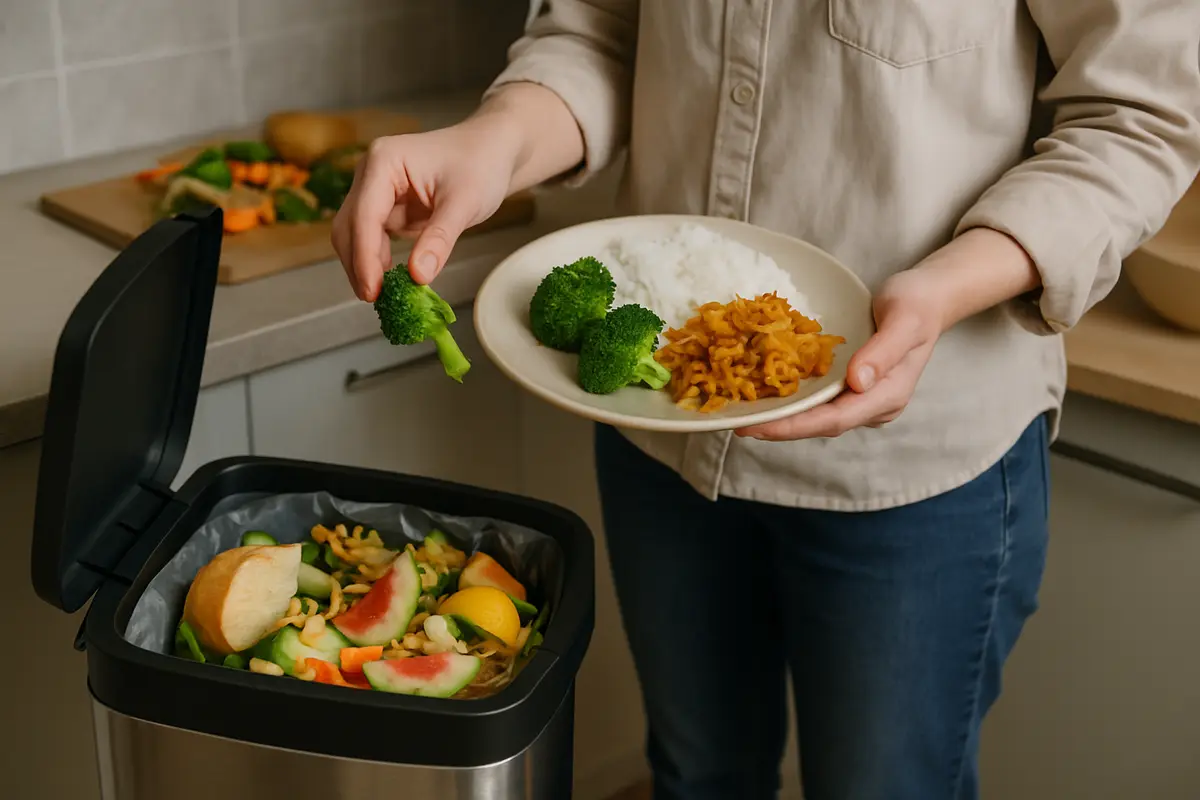
まだ食べられるのに捨てられてしまう食べ物は「食品ロス」と呼ばれています。

Food that ends up being thrown away even though it is still edible is called "food loss".

3

日本では毎年、たくさんの食品ロスが出ています。

In Japan, a large amount of food loss is produced every year.

4

国や会社は、この量を減らそうとしています。

The government and companies are trying to reduce this amount.

5

最近は、店で売れ残った弁当やパンを安い値段で買えるアプリが人気です。

Recently, apps that let you buy unsold bento and bread from shops at low prices have become popular.

6

利用者はスマートフォンで近くの店を探して、閉店の前に受け取りに行きます。

Users search for nearby shops on their smartphones and go to pick the food up before closing time.

7

店は捨てる分が減り、客は安く買えるので、両方にとって良い方法だと言われています。

Shops throw away less and customers buy cheaply, so it is said to be a good arrangement for both sides.

8

家庭でできることもあります。

There are also things that can be done at home.

9

買い物の前に冷蔵庫の中を確かめたり、期限が近い物から使ったりすると、むだが少なくなります。

If you check inside the fridge before shopping and use up items nearest their expiry date first, there is less waste.

10

小さな工夫でも、続ければ大きな効果があります。

Even small efforts have a big effect if you keep them up.

ものてない工夫くふうひろがる1

2026年09月16日 19:20

著者: jpreader

食べ物を捨てない工夫が広がる

この画像はAIで生成され、学習目的で使用されています。

This image is AI-generated and used for educational purposes.

まだべられるのにてられてしまうものは「食品しょくひんロス」とばれています2日本にほんでは毎年まいとしたくさん食品しょくひんロスています3くに会社かいしゃは、このりょうそうとしています4

最近さいきんは、みせのこった弁当べんとうパンやす値段ねだんえるアプリ人気にんきです5利用者りようしゃスマートフォンちかくのみせさがして、閉店へいてんまえりにきます6みせてるぶんきゃくやすえるので両方りょうほうにとって方法ほうほうだとわれています7

家庭かていでできることもあります8ものまえ冷蔵庫れいぞうこなかたしかめたり期限きげんちかものから使つかたりすると、むだすくくなります9ちいさな工夫くふうでもつづければおおきな効果こうかあります10

Discussion

00

to rate or comment.

No comments yet.