Indicates the origin or source. 建物の中から means 'from inside the building'.
かばんの中から鍵が出てきた。
A key came out from inside the bag.
~てくる
N4
come toward (action approaching)
Indicates motion toward the speaker or a location. Here it describes rocks flying toward people.
鳥が飛んできた。
A bird flew toward (us).
雨が降ってきた。
It started raining.
~される(受身)
N4
passive form of する-verbs
検討されています is the passive of 検討する - the proposal is being examined, with no explicit agent.
案も検討されています。
The proposal is also being considered.
新しいルールが発表されました。
New rules were announced.
~ためだ
N4
it is for / it is because
Used to give a reason or purpose. The entry ban is 'to protect the country from terrorists'.
家族のためだ。
It's for my family.
健康を守るためです。
It's to protect health.
~ず(に)
N3
without doing ...
Negative connective; here 'without enduring it alone, consult right away'.
我慢せず相談する。
Consult without putting up with it.
食べずに行く。
Go without eating.
~たり~たりする
N4
doing things like ~ and ~
Lists representative actions among several. Implies there are other actions too. Used twice in this article.
週末は本を読んだり映画を見たりします。
On weekends I do things like read books and watch movies.
歌ったり踊ったりして楽しんだ。
We had fun singing and dancing.
~ている
N5
is doing, has been doing (ongoing state/action)
Expresses a continuing action or resulting state. Formed with て-form + いる. Can describe an action in progress or a state resulting from a past change.
今、ご飯を食べています。
I am eating rice now.
東京に住んでいます。
I live in Tokyo.
ドアが開いています。
The door is open.
~として
N3
as / in the role of
Marks the role, capacity, or status in which something is treated. Used here as 特別な史跡として (as a special historic site).
先生として働く。
To work as a teacher.
プレゼントとしてもらった。
I received it as a present.
~てもらう
N4
have someone do (for me)
Expresses receiving a favor/action from someone.
助けてもらって本当にありがとうございます。
Thank you so much for helping us.
教えてもらいました。
I had them teach me.
~や
N5
and (non-exhaustive list)
や lists representative examples — Shikoku and Kyushu among other regions (四国や九州).
りんごやみかんを買った。
I bought apples and oranges (among others).
東京や大阪は大きい都市だ。
Tokyo and Osaka are big cities.
~ため(理由)
N4
because of ~ / since ~
Plain form + ため states a cause in formal writing. 知られていないため = 'because it is not well known'.
十分に知られていないため、食べ物が捨てられている。
Because it is not well known, food is being thrown away.
雨のため、試合は中止になった。
Because of the rain, the match was called off.
~にとって
N3
for ~ / from the perspective of ~
Indicates a point of view or perspective. Used twice here for 'the company' and 'the Vietnamese people'.
私にとって家族は大切です。
Family is important to me.
子供にとって勉強は難しい。
Study is difficult for children.
~でも
N5
Even ~; also at ~
Particle でも after a noun means 'even' or 'also at.' 首相官邸の庭でも means 'even at the Prime Minister's residence garden.'
子供でもわかります。
Even a child can understand.
~ようにする
N4
to make sure that, to ensure that
Expresses the goal of bringing about a certain state or preventing something. Formed with verb plain form + ようにする. Often used to describe efforts to ensure or prevent something.
毎日野菜を食べるようにしています。
I make sure to eat vegetables every day.
遅刻しないようにしてください。
Please make sure not to be late.
忘れないようにメモを書きました。
I wrote a note so I wouldn't forget.
~すぎる
N4
too much / excessively ~
Indicates excess. Used to describe the government's methods being too harsh (厳しすぎる) and the military deployment being excessive (やりすぎ).
政府の厳しすぎるやり方に反対する人たち
People opposing the government's overly harsh methods
軍を出すのはやりすぎだ。
Deploying the military is going too far.
~という
N4
called/named ~
Used to introduce or name something. In this article, 「鳥貴族」という店 means 'a store called Torikizoku'.
田中という人を知っていますか。
Do you know a person called Tanaka?
これは寿司という料理です。
This is a dish called sushi.
「~」と(引用)
N5
quotation particle と
と marks the quoted content before verbs like 言う, 答える and 話す. Both quoted remarks in this article — the survey answer and the expert's comment — are closed with 」と.
「はい」と答えました。
He answered "yes".
「行きたい」と言いました。
She said "I want to go".
1
祭りを守るために外の力を借りる
Borrowing outside help to keep local festivals alive
2
各地で昔から続いてきた祭りが、担い手の不足に悩まされている。
Festivals that have been held across the country since long ago are struggling with a shortage of people to run them.
3
若い世代が都市へ移り、祭りを支えてきた住民の高齢化が進んだためだ。
This is because younger generations have moved to the cities and the residents who sustained the festivals have grown older.
4
神輿を担ぐ人が集まらず、規模を小さくしたり、開催をやめたりする地域も出ている。
With too few people to carry the portable shrines, some areas are scaling their festivals down or cancelling them altogether.
5
そこで、地域の外から参加者を募る動きが広がっている。
In response, a movement to recruit participants from outside the area is spreading.
6
インターネットで募集を行い、旅行として祭りに加わってもらう取り組みだ。
These are initiatives that advertise online and invite people to join the festival as a form of travel.
7
参加者は宿や食事を地元で利用するため、町にとっては収入にもつながる。
Because participants use local lodging and restaurants, it also brings income to the town.
8
準備の手順を動画で残し、初めての人でも役割を果たせるようにした地域もある。
Some areas have recorded the preparation steps on video so that even first-timers can play their part.
9
一方で、外部の人に頼りすぎると、祭りの意味が伝わらなくなるという心配の声もある。
On the other hand, some voice concerns that relying too heavily on outsiders will cause the meaning of the festival to be lost.
10
専門家は「地元の人が中心にいることが大切だ」と指摘している。
Experts point out that it is essential for local people to remain at the centre.
祭りを守るために外の力を借りる1
2026年09月16日 19:26
著者: jpreader
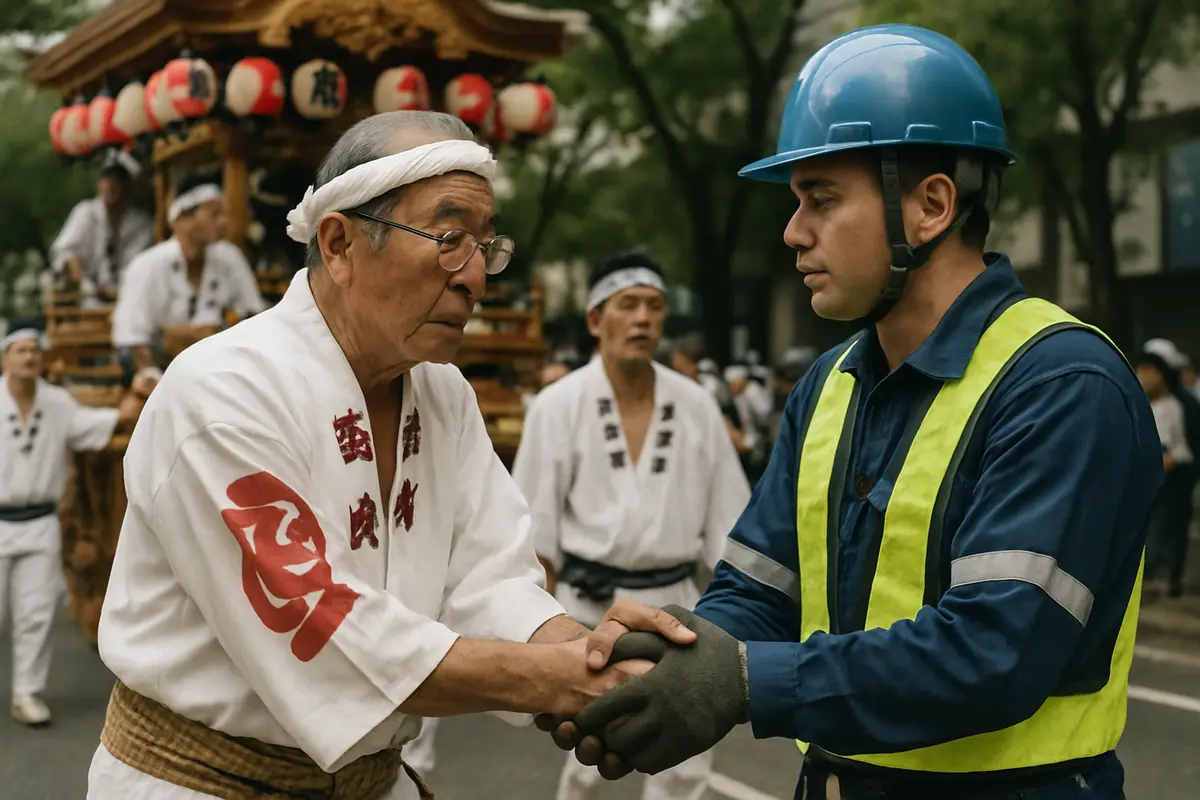
この画像はAIで生成され、学習目的で使用されています。
This image is AI-generated and used for educational purposes.
Discussion
to rate or comment.
No comments yet.