あき
N5

(あき)

autumn; fall

暑いあつい
N5

(あつい)

hot

N5

(ひ)

day

続くつづく
N4

(つづく)

to continue

今年ことし
N5

(ことし)

this year

がつ
N5

(がつ)

month (counter)

東京とうきょう
N5

(とうきょう)

Tokyo

気温きおん
N3

(きおん)

temperature (air)

N4

(ど)

degree

高いたかい
N5

(たかい)

expensive; high

いま
N5

(いま)

now

多いおおい
N5

(おおい)

many

去年きょねん
N5

(きょねん)

last year

名古屋なごや
N3

(なごや)

Nagoya

大阪おおさか
N5

(おおさか)

Osaka

同じおなじ
N5

(おなじ)

same

気象庁きしょうちょう
N1

(きしょうちょう)

Japan Meteorological Agency

うみ
N5

(うみ)

sea, ocean

みず
N5

(みず)

water

温度おんど
N3

(おんど)

temperature

理由りゆう
N3

(りゆう)

reason; cause

一つひとつ
N5

(ひとつ)

one (thing)

言ういう
N5

(いう)

to say

日本にほん
N5

(にほん)

Japan

近くちかく
N5

(ちかく)

nearby

いつもいつも
N5

(いつも)

always, usually

とし
N5

(とし)

year

ぐらいぐらい
N5

(ぐらい)

about, approximately

暖かいあたたかい
N4

(あたたかい)

warm

空気くうき
N4

(くうき)

air

うえ
N5

(うえ)

top, above

長いながい
N5

(ながい)

long

残るのこる
N3

(のこる)

to remain / to stay behind

専門家せんもんか
N2

(せんもんか)

expert, specialist

初めはじめ
N4

(はじめ)

beginning; start

話すはなす
N5

(はなす)

to speak, talk

学校がっこう
N5

(がっこう)

school

会社かいしゃ
N5

(かいしゃ)

company

たくさんたくさん
N5

(たくさん)

a lot / many

飲むのむ
N5

(のむ)

to drink

よる
N5

(よる)

night

あまりあまり
N5

(あまり)

not very / not much (with negative)

下がるさがる
N4

(さがる)

To fall; to go down

病院びょういん
N5

(びょういん)

hospital

からだ
N4

(からだ)

body

調子ちょうし
N3

(ちょうし)

condition, state

悪いわるい
N5

(わるい)

bad

ひと
N5

(ひと)

person / people

増えるふえる
N3

(ふえる)

to increase; to grow

N4

(し)

city

寝るねる
N5

(ねる)

to sleep

エアコンえあこん
N4

(えあこん)

air conditioner

使うつかう
N5

(つかう)

to use

~ても
N4

even if; even though

Used to express concession or hypothetical situation.

雨が降っても行きます。

I'll go even if it rains.

高くても買います。

Even if it's expensive, I'll buy it.

~ている
N5

is doing, has been doing (ongoing state/action)

Expresses a continuing action or resulting state. Formed with て-form + いる. Can describe an action in progress or a state resulting from a past change.

今、ご飯を食べています。

I am eating rice now.

東京に住んでいます。

I live in Tokyo.

ドアが開いています。

The door is open.

~より
N5

than / more than

Indicates comparison. Used to say prices rose on average 2.8% compared to last year.

去年より寒い。

Colder than last year.

彼より背が高い。

Taller than him.

~くなる
N4

to become (い-adjective)

Expresses a change of state for い-adjectives. Drop the final い and add くなる. Indicates something has changed or will change to a new state.

寒くなりました。

It has gotten cold.

日本語が上手になりました。

My Japanese has gotten better.

値段が高くなりました。

The price became expensive.

~こと
N5

nominalizer (the act of ~)

Turns a verb phrase into a noun. Here 話を聞くこと (the act of listening to a speech).

日本に行くことが好きだ。

I like going to Japan.

勉強することは大切だ。

Studying is important.

~ように
N4

so that ~

Indicates a goal or desired outcome. Here: so that trainees reach the Specified Skilled Worker level.

分かるように説明します。

I'll explain so you understand.

聞こえるように大きい声で話す。

Speak loudly so it can be heard.

~でしょう
N4

Probably ~; it seems that ~

Expresses conjecture or probability. More formal than ~だろう. Often used in news and weather reports.

明日は雨が降るでしょう。

It will probably rain tomorrow.

そのため
N3

therefore; for that reason

Connects cause and result — because of more investors and profits, more people buy stocks.

そのため、株を買う人が増えた

Therefore, more people bought stocks.

雨だ。そのため、試合は中止だ

It's raining. For that reason, the match is cancelled.

~ません
N5

does not ~ (polite negative)

ません is the polite negative form of verbs. It negates the action in a formal/polite context.

今日は学校に行きません。

I won't go to school today.

~てください
N5

please do ...

Polite request form. Formed with て-form + ください. Used to ask someone to perform an action.

ここに名前を書いてください。

Please write your name here.

もう一度言ってください。

Please say it once more.

窓を開けてください。

Please open the window.

1

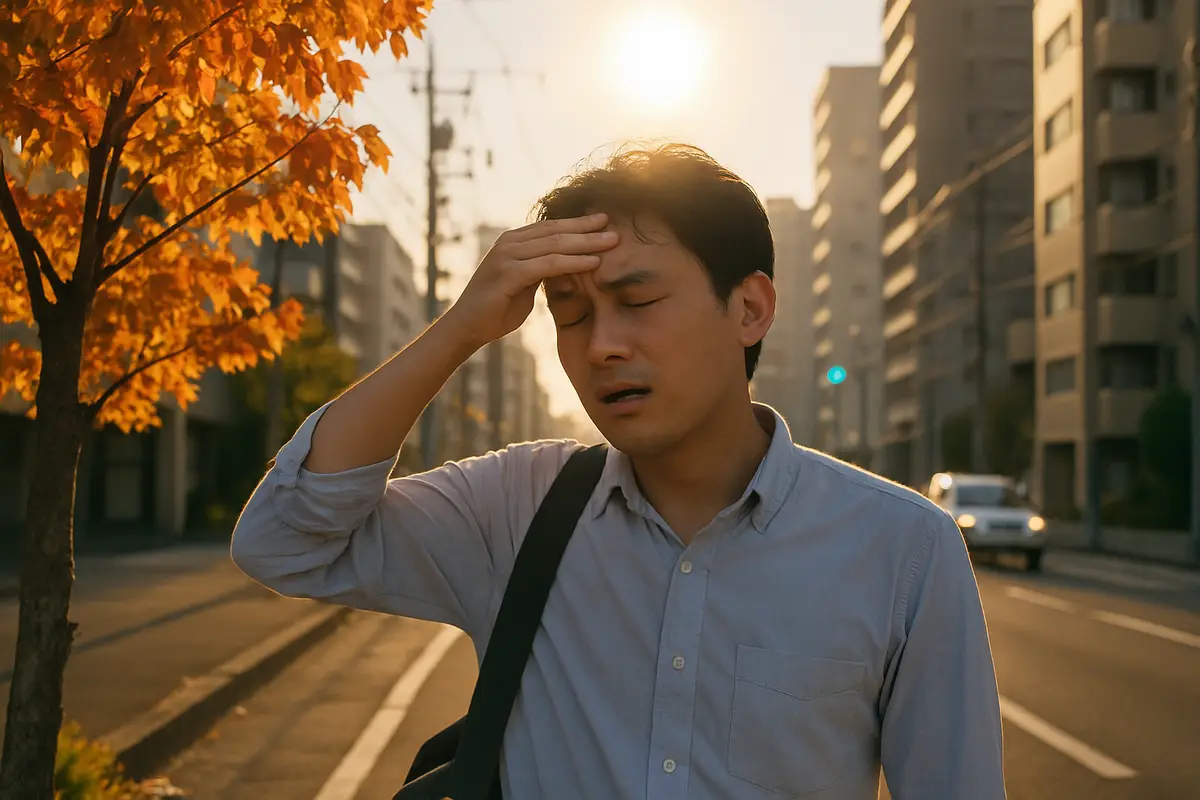
秋になっても暑い日が続く

Hot days continue even though it is now autumn

2

今年の9月は、暑い日が続いています。

This September, hot days are continuing.

3

東京では、気温が30度より高くなる日が今も多いです。

In Tokyo, there are still many days when the temperature rises above 30 degrees.

4

去年の9月より暑い日が多くなりました。

There are now more hot days than in September last year.

5

名古屋や大阪でも、同じように暑い日が続いています。

In Nagoya and Osaka as well, hot days are continuing in the same way.

6

気象庁は、海の水の温度が高いことが理由の一つだと言っています。

The Japan Meteorological Agency says that one reason is the high temperature of the sea water.

7

日本の近くの海は、いつもの年より2度ぐらい暖かいです。

The sea near Japan is about 2 degrees warmer than in a normal year.

8

そのため、暑い空気が日本の上に長く残っています。

For that reason, hot air is staying over Japan for a long time.

9

専門家は「10月の初めまで、暑い日が続くでしょう」と話しています。

Experts say, "The hot days will probably continue until the beginning of October."

10

学校や会社では、水をたくさん飲むように言っています。

Schools and companies are telling people to drink plenty of water.

11

夜も気温があまり下がりません。

At night, too, the temperature does not drop much.

12

病院には、体の調子が悪くなった人が増えています。

More and more people who have started to feel unwell are coming to hospitals.

13

市は「寝るときもエアコンを使ってください」と言っています。

The city says, "Please use your air conditioner while you sleep, too."

あきになってもあつつづ1

2026年09月17日 19:11

著者: jpreader

秋になっても暑い日が続く

この画像はAIで生成され、学習目的で使用されています。

This image is AI-generated and used for educational purposes.

今年ことしの9がつは、あつつづています2東京とうきょうでは、気温きおんが30よりたかくなるいまおおいです3去年きょねんの9がつよりあつおおくなりました4名古屋なごや大阪おおさかでも、おなようにあつつづています5

気象庁きしょうちょうは、うみみず温度おんどたかこと理由りゆうひとつだとています6日本にほんちかくのうみは、いつもとしより2ぐらいあたたかいです7そのためあつ空気くうき日本にほんうえながのこています8専門家せんもんかは「10がつはじめまで、あつつづでしょう」とはなています9

学校がっこう会社かいしゃでは、みずたくさんようにています10よる気温きおんあまりがりません11病院びょういんには、からだ調子ちょうしわるくなったひとています12は「るときもエアコン使つかてください」とています13

Discussion

00

to rate or comment.

No comments yet.