(だいがく)
university; college
(せいせい)
generation, generative (as in generative AI)
(えーあい)
AI; artificial intelligence
(とりいれる)
to take in; to absorb
(ふえる)
to increase; to grow
(もんぶかがくしょう)
Ministry of Education, Culture, Sports, Science and Technology
(ちょうさ)
investigation; survey
(こくない)
domestic; within the country
(はんすう)
half the number, half of them
(いじょう)
more than; beyond this
(ほうしん)
policy, course of action
(こうひょう)
official announcement, making public
(そのまま)
as it is, unchanged
(ていしゅつ)
submission, handing in
(いっぽう)
on the other hand / meanwhile
(しりょう)
materials, documents
(さがす)
to search for; to look for
(かんがえ)
idea; thought; plan
(せいり)
sorting out, organizing
(みとめる)
to approve; to recognize; to acknowledge
(せんもんか)
expert, specialist
(でる)
to come out; to occur
(こまる)
to be troubled; to be in difficulty
(ただしい)
correct; right; proper
(そだてる)
to raise, to bring up, to grow
(してき)
pointing out, indication
(ふくむ)
to contain / to hold (within)
(かくにん)
confirmation, checking
(みにつける)
to acquire, to learn (a skill or habit)
(こんご)
from now on; in the future
(かだい)
issue, problem, challenge
is doing, has been doing (ongoing state/action)
Expresses a continuing action or resulting state. Formed with て-form + いる. Can describe an action in progress or a state resulting from a past change.
今、ご飯を食べています。
I am eating rice now.
東京に住んでいます。
I live in Tokyo.
ドアが開いています。
The door is open.
when ~
Indicates the time when something happened — when he was in junior high school.
中学生のとき病気になりました。
When I was a junior-high student I got sick.
子どものとき日本にいました。
I was in Japan when I was a child.
because, due to
Gives the reason for a statement, typically at end of sentence.
遅れたのは電車が止まったためです。
I was late because the train stopped.
休んだのは病気のためです。
I rested because of illness.
according to ...
Cites a source of information. The noun before によると is the source. Often followed by a reported statement.
天気予報によると、明日は雨です。
According to the weather forecast, it will rain tomorrow.
ニュースによると、地震がありました。
According to the news, there was an earthquake.
先生によると、テストは来週です。
According to the teacher, the test is next week.
about / regarding / concerning
Used to indicate the topic of discussion or consideration. Here it introduces the topic the team will think about.
日本について話します。
I will talk about Japan.
この問題について考える。
Think about this problem.
nominalizer (the act of ~)
Turns a verb phrase into a noun. Here 話を聞くこと (the act of listening to a speech).
日本に行くことが好きだ。
I like going to Japan.
勉強することは大切だ。
Studying is important.
doing things like ~ and ~
Lists representative actions among several. Implies there are other actions too. Used twice in this article.
週末は本を読んだり映画を見たりします。
On weekends I do things like read books and watch movies.
歌ったり踊ったりして楽しんだ。
We had fun singing and dancing.
(question marker)
Embedded/indirect question marker. Here used to express not knowing what kind of person.
何を食べたのかわからない
I don't know what he ate.
to request that someone do ~
A formal indirect request used in news writing: 提出するよう求めています means students are being asked to submit it.
早く出すよう求めています。
They are asking for it to be submitted early.
参加するよう伝えました。
I told them to take part.
just with ~ alone (is not enough)
Expresses that acting by themselves alone is insufficient to handle the bear problem.
一人だけでは無理です。
It's impossible alone.
お金だけでは幸せになれない。
You can't be happy with just money.
to make/let someone do (causative)
Causative form. Here 避難させて (make people evacuate).
子供を勉強させる。
To make the child study.
友達を待たせた。
I made my friend wait.
to become
Expresses a change of state; Kawai became the new commissioner of the Sports Agency.
新しい長官になりました。
He became the new commissioner.
目が見えなくなりました。
He became unable to see.
1
大学が生成AIの使い方を学生に教える
Universities teach students how to use generative AI
2
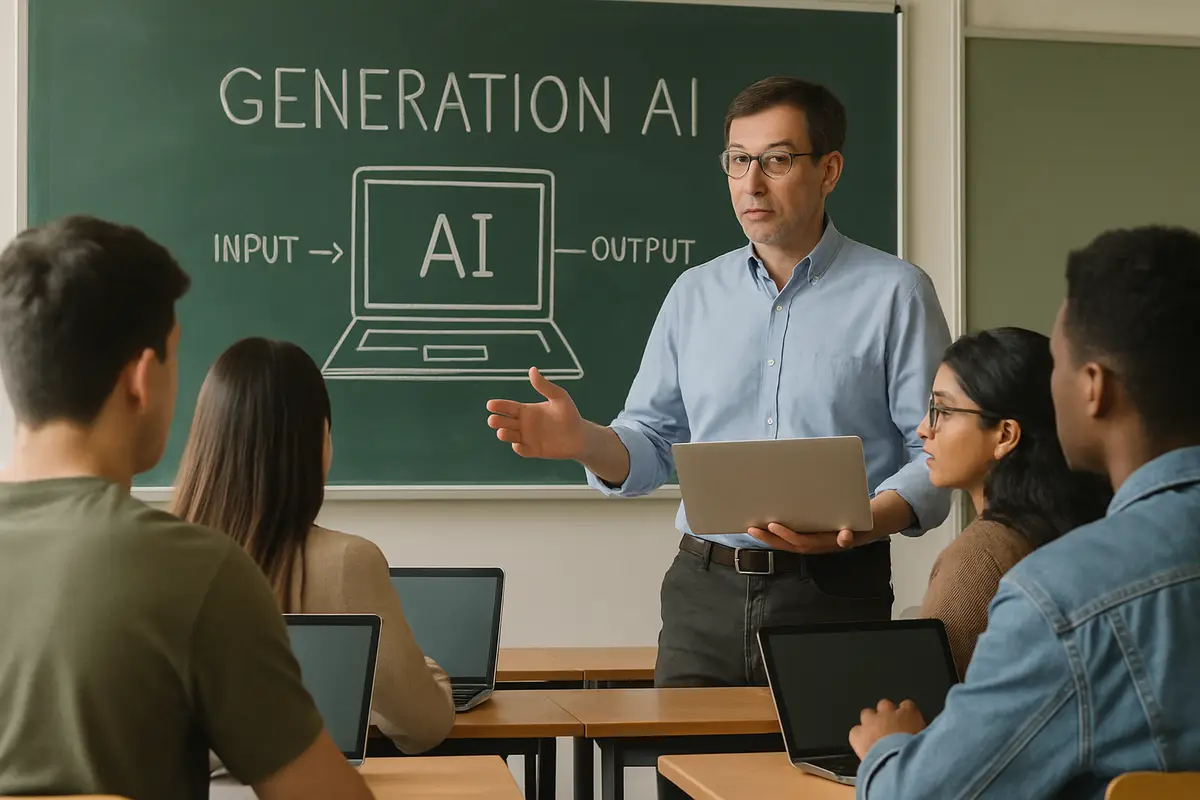
生成AIを授業にどう取り入れるか、多くの大学が対応を急いでいます。
Many universities are hurrying to work out how to bring generative AI into their classes.
3
レポートを書くときにAIを使う学生が増えているためです。
This is because more and more students use AI when they write reports.
4
文部科学省の調査によると、国内の大学の半数以上が、AIの利用について方針を決めて公表しています。
According to a survey by the Ministry of Education, more than half of the universities in Japan have set and published a policy on the use of AI.
5
ある大学では、AIが作った文章をそのまま提出することを禁止する一方で、資料を探したり、考えを整理したりする目的での利用は認めています。
At one university, handing in text written by AI unchanged is banned, while using AI to look for materials or to organize ideas is allowed.
6
学生には、どの場面でAIを使ったのかを記録して提出するよう求めています。
Students are asked to record and hand in which situations they used AI in.
7
専門家は「AIを禁止するだけでは、社会に出たときに困ります。
An expert says, "If you simply ban AI, students will be in trouble when they go out into society.
8
正しく使う力を育てることが大切です」と指摘しています。
It is important to develop the ability to use it correctly," pointing out the problem.
9
ただ、AIが示す情報には誤りが含まれることもあります。
However, the information AI gives sometimes contains mistakes.
10
内容を自分で確認する習慣をどう身につけさせるかが、今後の課題になっています。
How to get students into the habit of checking the content themselves has become the challenge going forward.
Discussion
to rate or comment.
No comments yet.