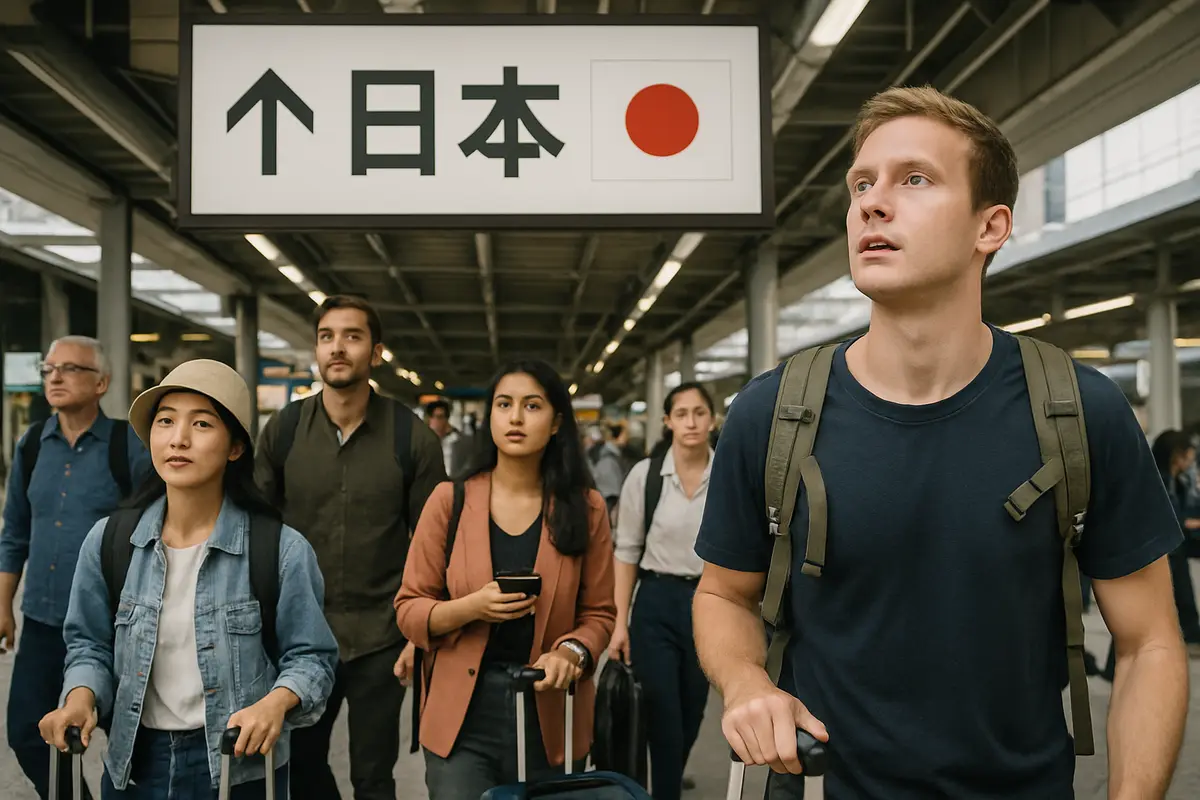
今年、日本に来る外国人がとても増えています2。空港や駅では、外国のことばをよく聞きます3。ホテルもたくさんの人でいっぱいです4。
外国人は、東京や京都だけではなく、小さい町にも行きます5。田舎の店や旅館でも、外国のお客さんが多くなりました6。町の人は英語のメニューを作ったり、絵の地図を用意したりしています7。
人が増えて、うれしいことも多いです8。でも、電車がこんでいて、困る人もいます9。国や町は、みんなが楽しく過ごせる方法を考えています10。
(にほん)
Japan
(くる)
to come
(がいこくじん)
foreigner
(ふえる)
to increase; to grow
(ことし)
this year
(とても)
very; extremely
(くうこう)
airport
(えき)
station
(がいこく)
foreign country
(ことば)
language / words
(よく)
often, well, frequently
(きく)
to listen, hear
(ほてる)
hotel
(たくさん)
a lot / many
(ひと)
person / people
(いっぱい)
full; a lot
(とうきょう)
Tokyo
(きょうと)
Kyoto
(ちいさい)
small
(まち)
town
(いく)
to go
(いなか)
countryside; rural area
(みせ)
shop, store
(りょかん)
Japanese inn
(おきゃくさん)
guest / spectator / customer
(おおい)
many
(えいご)
English (language)
(めにゅー)
menu
(つくる)
to make
(え)
picture, drawing
(ちず)
map
(ようい)
preparation; readiness
(うれしい)
happy; glad
(でんしゃ)
electric train
(こむ)
to be crowded
(こまる)
to be troubled; to be in difficulty
(くに)
country; the government
(みんな)
Everyone; everybody
(たのしい)
fun, enjoyable
(すごす)
to spend (time)
(ほうほう)
method; way
(かんがえる)
to think; to consider
is doing, has been doing (ongoing state/action)
Expresses a continuing action or resulting state. Formed with て-form + いる. Can describe an action in progress or a state resulting from a past change.
今、ご飯を食べています。
I am eating rice now.
東京に住んでいます。
I live in Tokyo.
ドアが開いています。
The door is open.
Not only ~ but also
Expresses that something is not limited to one thing. Not only Tokyo and Kyoto, but various other places too.
日本語だけでなく、英語も話せます。
I can speak not only Japanese but also English.
to become (い-adjective)
Expresses a change of state for い-adjectives. Drop the final い and add くなる. Indicates something has changed or will change to a new state.
寒くなりました。
It has gotten cold.
日本語が上手になりました。
My Japanese has gotten better.
値段が高くなりました。
The price became expensive.
doing things like ~ and ~
Lists representative actions among several. Implies there are other actions too. Used twice in this article.
週末は本を読んだり映画を見たりします。
On weekends I do things like read books and watch movies.
歌ったり踊ったりして楽しんだ。
We had fun singing and dancing.
can do / be able to do (potential form)
The potential form changes the final -u of a verb to -eru. 過ごす becomes 過ごせる, so 楽しく過ごせる方法 means "a way that lets everyone spend their time enjoyably."
日本語が話せます。
I can speak Japanese.
ここでは写真が撮れません。
You cannot take photos here.
日本に来る外国人が増えている
The number of foreigners coming to Japan is increasing
今年、日本に来る外国人がとても増えています。
This year, the number of foreigners coming to Japan has increased a great deal.
空港や駅では、外国のことばをよく聞きます。
At airports and train stations, you often hear foreign languages.
ホテルもたくさんの人でいっぱいです。
Hotels are also full of many people.
外国人は、東京や京都だけではなく、小さい町にも行きます。
Foreign visitors go not only to Tokyo and Kyoto but to small towns as well.
田舎の店や旅館でも、外国のお客さんが多くなりました。
Even at countryside shops and inns, foreign customers have become more numerous.
町の人は英語のメニューを作ったり、絵の地図を用意したりしています。
The townspeople are doing things like making English menus and preparing picture maps.
人が増えて、うれしいことも多いです。
With more people coming, there are many happy things too.
でも、電車がこんでいて、困る人もいます。
However, the trains are crowded, and some people find it a problem.
国や町は、みんなが楽しく過ごせる方法を考えています。
The national government and towns are thinking about ways for everyone to spend their time enjoyably.
2026年09月18日 19:12
著者: jpreader
この画像はAIで生成され、学習目的で使用されています。
This image is AI-generated and used for educational purposes.
今年、日本に来る外国人がとても増えています2。空港や駅では、外国のことばをよく聞きます3。ホテルもたくさんの人でいっぱいです4。
外国人は、東京や京都だけではなく、小さい町にも行きます5。田舎の店や旅館でも、外国のお客さんが多くなりました6。町の人は英語のメニューを作ったり、絵の地図を用意したりしています7。
人が増えて、うれしいことも多いです8。でも、電車がこんでいて、困る人もいます9。国や町は、みんなが楽しく過ごせる方法を考えています10。
Discussion
to rate or comment.
No comments yet.