Expresses a continuing action or resulting state. Formed with て-form + いる. Can describe an action in progress or a state resulting from a past change.
今、ご飯を食べています。
I am eating rice now.
東京に住んでいます。
I live in Tokyo.
ドアが開いています。
The door is open.
~続ける
N4
to continue doing ...
Verb stem + 続ける expresses continuing an action. The て-form あげ続ける means 'continue giving'. A common compound verb pattern.
3時間、走り続けました。
I kept running for 3 hours.
毎日、勉強し続けています。
I keep studying every day.
彼は話し続けた。
He kept on talking.
~によると
N3
according to ...
Cites a source of information. The noun before によると is the source. Often followed by a reported statement.
天気予報によると、明日は雨です。
According to the weather forecast, it will rain tomorrow.
ニュースによると、地震がありました。
According to the news, there was an earthquake.
先生によると、テストは来週です。
According to the teacher, the test is next week.
~になる
N5
to become
Expresses a change of state; Kawai became the new commissioner of the Sports Agency.
新しい長官になりました。
He became the new commissioner.
目が見えなくなりました。
He became unable to see.
~も少なくない
N3
there are not a few ~, quite a few ~
A double negative used in news writing to say a number is significant without giving a figure. Here it means quite a few bridges are still closed.
反対する人も少なくありません。
There are quite a few people who oppose it.
同じ問題を持つ町も少なくない。
There are not a few towns with the same problem.
~として
N3
as / in the role of
Marks the role, capacity, or status in which something is treated. Used here as 特別な史跡として (as a special historic site).
先生として働く。
To work as a teacher.
プレゼントとしてもらった。
I received it as a present.
~せる(使役形)
N4
to make/let something do (causative form)
Godan verbs form the causative by changing -u to -aseru. 走る becomes 走らせる, so 新幹線を自動で走らせる技術 is technology that makes the Shinkansen run automatically.
先生は学生に本を読ませました。
The teacher made the students read a book.
機械を自動で動かせる。
The machine can be made to move automatically.
~ことで
N3
By doing; through the act of
Indicates that the preceding action serves as a means or cause for what follows. 'アメリカとウクライナが一緒に開発することで' means 'by developing together'.
運動することで、健康になります。
By exercising, you become healthy.
~ながら
N4
while doing ...
Verb stem + ながら indicates doing two things simultaneously. The action before ながら is the secondary action; the main action follows.
音楽を聞きながら勉強します。
I study while listening to music.
歩きながら話しましょう。
Let's talk while walking.
テレビを見ながらごはんを食べます。
I eat while watching TV.
~ことができる
N4
can do ..., to be able to ...
Verb dictionary form + ことができる expresses ability or possibility. More formal than the potential verb form. Common in written Japanese and announcements.
日本語を話すことができます。
I can speak Japanese.
ここで写真を撮ることができます。
You can take photos here.
インターネットで予約することができます。
You can make a reservation on the internet.
~に向けて
N3
toward, directed at, addressing
Indicates the target or direction of an action. Often used when someone speaks to an audience or works toward a goal. Formed with noun + に向けて.
学生に向けて話をしました。
I gave a talk addressing the students.
試験に向けて勉強しています。
I am studying for the exam.
世界に向けてメッセージを送った。
They sent a message to the world.
1
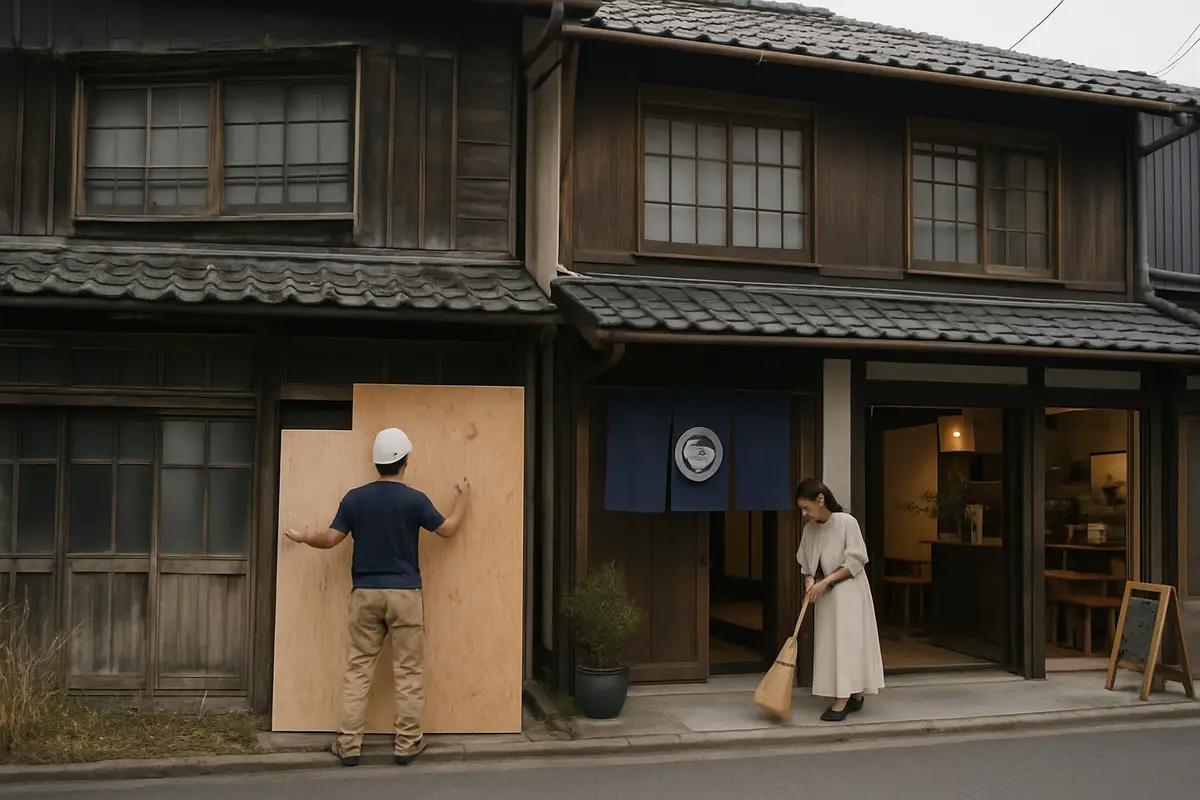
増える空き家を宿や店に生かす
Putting the growing number of vacant houses to use as inns and shops
2
全国で誰も住んでいない空き家が増え続けています。
Across the country, the number of vacant houses where nobody lives keeps increasing.
3
総務省の調査によると、住宅のおよそ七軒に一軒が空き家になっています。
According to a survey by the Ministry of Internal Affairs and Communications, roughly one in seven homes is vacant.
4
持ち主が遠くに住んでいて、管理が行き届かない例も少なくありません。
There are quite a few cases where the owner lives far away and the property is not properly looked after.
5
こうした空き家を、宿泊施設や飲食店として生まれ変わらせる動きが各地で始まっています。
Efforts to turn such vacant houses into lodging facilities and restaurants are starting in many parts of the country.
By leaving the old pillars and earthen walls as they are and renewing only the plumbing, the character of the building can be preserved while keeping costs down.
7
ただし、改修には専門の職人が必要で、人手の確保が課題になっています。
However, the renovations require specialist craftsmen, and securing enough workers has become a challenge.
8
自治体は補助金を用意し、移住を考える若い世代に向けて情報を発信しています。
Local governments are offering subsidies and sending out information aimed at younger people who are considering moving there.
増える空き家を宿や店に生かす1
2026年09月18日 19:22
著者: jpreader
この画像はAIで生成され、学習目的で使用されています。
This image is AI-generated and used for educational purposes.
Putting the growing number of vacant houses to use as inns and shops
2
Across the country, the number of vacant houses where nobody lives keeps increasing.
3
According to a survey by the Ministry of Internal Affairs and Communications, roughly one in seven homes is vacant.
4
There are quite a few cases where the owner lives far away and the property is not properly looked after.
5
Efforts to turn such vacant houses into lodging facilities and restaurants are starting in many parts of the country.
6
By leaving the old pillars and earthen walls as they are and renewing only the plumbing, the character of the building can be preserved while keeping costs down.
7
However, the renovations require specialist craftsmen, and securing enough workers has become a challenge.
8
Local governments are offering subsidies and sending out information aimed at younger people who are considering moving there.
Discussion
to rate or comment.
No comments yet.