荷物にもつ
N4

(にもつ)

luggage; package; cargo

玄関げんかん
N3

(げんかん)

entrance, front door

置くおく
N5

(おく)

to place, put

配達はいたつ
N2

(はいたつ)

delivery

人気にんき
N4

(にんき)

popularity

いま
N5

(いま)

now

買い物かいもの
N5

(かいもの)

shopping

インターネットいんたーねっと
N4

(いんたーねっと)

Internet

ひと
N5

(ひと)

person / people

多いおおい
N5

(おおい)

many

届けるとどける
N3

(とどける)

to deliver

仕事しごと
N5

(しごと)

work, job

とてもとても
N5

(とても)

very; extremely

忙しいいそがしい
N5

(いそがしい)

busy

いえ
N5

(いえ)

house

持つもつ
N5

(もつ)

to have; to hold

帰るかえる
N5

(かえる)

to return home

そしてそして
N5

(そして)

and; and then

もう一度もういちど
N5

(もういちど)

once more; one more time

来るくる
N5

(くる)

to come

大変たいへん
N5

(たいへん)

tough, serious

そこでそこで
N3

(そこで)

and so, therefore

まえ
N5

(まえ)

before, previous

サービスさーびす
N3

(さーびす)

service

広がるひろがる
N3

(ひろがる)

to spread

受け取るうけとる
N3

(うけとる)

to receive; to accept

きゃく
N4

(きゃく)

Customer; guest

待つまつ
N5

(まつ)

to wait

二度にど
N4

(にど)

two degrees; twice

でもでも
N5

(でも)

but; however

心配しんぱい
N4

(しんぱい)

worry / concern

あめ
N5

(あめ)

rain

だれかだれか
N5

(だれか)

someone, somebody

行くいく
N5

(いく)

to go

会社かいしゃ
N5

(かいしゃ)

company

はこ
N4

(はこ)

box

使うつかう
N5

(つかう)

to use

方法ほうほう
N3

(ほうほう)

method; way

写真しゃしん
N5

(しゃしん)

photograph

送るおくる
N4

(おくる)

to send / to take (someone somewhere)

考えるかんがえる
N4

(かんがえる)

to think; to consider

~とき
N5

when ~

Indicates the time when something happened — when he was in junior high school.

中学生のとき病気になりました。

When I was a junior-high student I got sick.

子どものとき日本にいました。

I was in Japan when I was a child.

~ています
N5

is doing, has been doing (ongoing state/action)

Expresses a continuing action or resulting state. Formed with て-form + いる/います. Can describe an action in progress or a state that continues from a past change.

今、本を読んでいます。

I am reading a book now.

窓が開いています。

The window is open.

日本に住んでいます。

I live in Japan.

~なくても
N4

even without ~ / even if not ~

Negative te-form with も meaning even if not. Here 予約をしなくても (even without making a reservation).

行かなくてもいい。

You don't have to go.

食べなくても大丈夫。

It's OK even without eating.

~ことができます
N5

can ~ / be able to ~

Dictionary form plus ことができます expresses ability or possibility in a polite, slightly formal way. Here it states that the customer is able to receive the parcel without being at home.

荷物を受け取ることができます。

You can receive the package.

インターネットで買い物をすることができます。

You can do your shopping on the internet.

~なくてもいい
N4

it's okay not to ~; don't have to ~

Expresses that there is no obligation or necessity to do something.

何もしなくてもいいです。

You don't have to do anything.

~こともあります
N4

there are times when ~ / there is also ~

こともあります presents something that occurs in some cases. 心配なこともあります introduces the drawbacks after the list of merits.

でも、心配なこともあります。

However, there are also worrying points.

荷物がぬれることもあります。

There are times when the package gets wet.

~と
N4

when ..., if ... (natural consequence)

Conditional と indicating that when one thing happens, another naturally follows. States general truths, habitual results, or inevitable consequences.

春になると、桜が咲きます。

When spring comes, the cherry blossoms bloom.

このボタンを押すと、ドアが開きます。

If you press this button, the door opens.

~かもしれません
N4

might ~, perhaps ~

Expresses possibility.

明日雨が降るかもしれません。

It might rain tomorrow.

彼は来ないかもしれません。

He might not come.

1

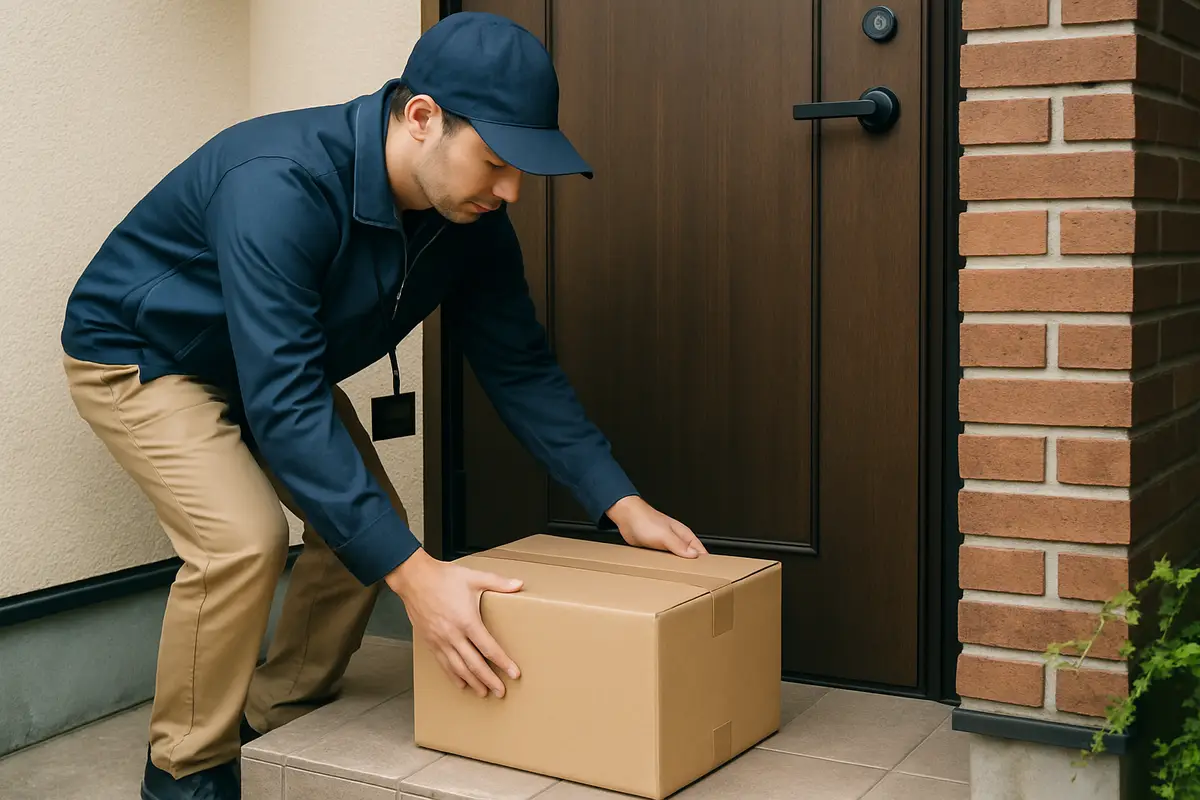
荷物を玄関に置く配達が人気

Deliveries that leave packages at the front door are popular

2

今、買い物をインターネットでする人が多いです。

These days, many people do their shopping on the internet.

3

荷物を届ける仕事はとても忙しいです。

The job of delivering packages is extremely busy.

4

家に人がいないとき、荷物は配達の人が持って帰ります。

When nobody is at home, the delivery person carries the package back.

5

そして、もう一度来ます。

Then they come again.

6

これは大変です。

This is hard work.

7

そこで、荷物を玄関の前に置くサービスが広がっています。

So a service that leaves packages in front of the entrance is spreading.

8

家に人がいなくても、荷物を受け取ることができます。

Even when nobody is at home, you can receive the package.

9

客は家で待たなくてもいいです。

Customers do not have to wait at home.

10

配達の人も二度来なくてもいいです。

The delivery person does not have to come twice either.

11

でも、心配なこともあります。

However, there are also worrying points.

12

雨がふると荷物がぬれます。

When it rains, the package gets wet.

13

だれかが持って行くかもしれません。

Someone might carry it off.

14

会社は箱を使う方法や、写真を送る方法を考えています。

Companies are considering methods such as using a box or sending a photo.

荷物にもつ玄関げんかん配達はいたつ人気にんき1

2026年09月19日 19:14

著者: jpreader

荷物を玄関に置く配達が人気

この画像はAIで生成され、学習目的で使用されています。

This image is AI-generated and used for educational purposes.

いまものインターネットでするひとおおいです2荷物にもつとどける仕事しごととてもいそがしいです3いえひとがいないとき荷物にもつ配達はいたつひとってかえります4そして、もう一度いちどます5。これは大変たいへんです6

そこで荷物にもつ玄関げんかんまえサービスひろがっています7いえひとがいなくても荷物にもつことができます8きゃくいえなくてもいいです9配達はいたつひと二度にどなくてもいいです10

でも心配しんぱいこともあります11あめがふる荷物にもつがぬれます12だれかってかもしれません13会社かいしゃはこ使つか方法ほうほうや、写真しゃしんおく方法ほうほうかんがています14

Discussion

00

to rate or comment.

No comments yet.