新しいあたらしい
N5

(あたらしい)

new

お札おさつ
N4

(おさつ)

banknote, paper money

使うつかう
N5

(つかう)

to use

ひと
N5

(ひと)

person / people

増えるふえる
N3

(ふえる)

to increase; to grow

ねん
N5

(ねん)

year

がつ
N5

(がつ)

month (counter)

日本にほん
N5

(にほん)

Japan

出るでる
N5

(でる)

to come out; to occur

一万円いちまんえん
N5

(いちまんえん)

ten thousand yen

五千円ごせんえん
N5

(ごせんえん)

five thousand yen

千円せんえん
N5

(せんえん)

one thousand yen

三つみっつ
N5

(みっつ)

three (things)

N5

(え)

picture, drawing

数字すうじ
N4

(すうじ)

number / numeral

大きいおおきい
N5

(おおきい)

big; large

N5

(め)

eye

悪いわるい
N5

(わるい)

bad

分かるわかる
N5

(わかる)

to understand, be clear

いま
N5

(いま)

now

多いおおい
N5

(おおい)

many

銀行ぎんこう
N5

(ぎんこう)

bank

みせ
N5

(みせ)

shop, store

たくさんたくさん
N5

(たくさん)

a lot / many

古いふるい
N5

(ふるい)

old (things)

機械きかい
N3

(きかい)

machine

まだまだ
N5

(まだ)

still; yet

えき
N5

(えき)

station

お金おかね
N5

(おかね)

money

かかるかかる
N5

(かかる)

to take (time/money), cost

時間じかん
N5

(じかん)

time

少しすこし
N5

(すこし)

a little

これからこれから
N4

(これから)

from now on

くに
N5

(くに)

country; the government

急ぐいそぐ
N4

(いそぐ)

to hurry, to rush

持つもつ
N5

(もつ)

to have; to hold

行くいく
N5

(いく)

to go

言ういう
N5

(いう)

to say

聞くきく
N5

(きく)

to listen, hear

~ました
N5

did ... (polite past)

Polite past tense of verbs. Formed with verb stem + ました. Used in formal or polite speech to describe completed actions.

昨日、映画を見ました。

I watched a movie yesterday.

朝ごはんを食べました。

I ate breakfast.

友達が来ました。

A friend came.

~です
N5

polite copula / is, am, are

Describes states such as the mother panda being healthy and the baby being small.

これは本です。

This is a book.

今日は寒いです。

It is cold today.

~くなる
N4

to become (い-adjective)

Expresses a change of state for い-adjectives. Drop the final い and add くなる. Indicates something has changed or will change to a new state.

寒くなりました。

It has gotten cold.

日本語が上手になりました。

My Japanese has gotten better.

値段が高くなりました。

The price became expensive.

~やすい
N4

easy to ~ / tends to ~

Used in 'うつりやすくて' meaning 'easily contagious / easy to catch'.

この本は読みやすい。

This book is easy to read.

忘れやすい。

Easy to forget.

~ません
N5

does not ~ (polite negative)

ません is the polite negative form of verbs. It negates the action in a formal/polite context.

今日は学校に行きません。

I won't go to school today.

~ている
N5

is doing, has been doing (ongoing state/action)

Expresses a continuing action or resulting state. Formed with て-form + いる. Can describe an action in progress or a state resulting from a past change.

今、ご飯を食べています。

I am eating rice now.

東京に住んでいます。

I live in Tokyo.

ドアが開いています。

The door is open.

~ので
N4

because ~ / since ~

Causal connector. Because JA is buying at higher prices, store prices will also rise.

雨が降ったので、家にいた。

Since it rained, I stayed home.

忙しいので、行けません。

Since I'm busy, I can't go.

~ます
N5

polite non-past tense

The polite non-past ~ます states what will happen — the funeral will continue.

葬式は続きます。

The funeral will continue.

明日行きます。

I will go tomorrow.

~なくてもいい
N4

it's okay not to ~; don't have to ~

Expresses that there is no obligation or necessity to do something.

何もしなくてもいいです。

You don't have to do anything.

~たら
N4

if ..., when ...

Conditional form indicating 'if' or 'when' something happens. Formed by adding ら to the た-form of a verb. Expresses a hypothetical or temporal condition.

雨が降ったら、行きません。

If it rains, I won't go.

お金があったら、旅行したいです。

If I had money, I'd like to travel.

終わったら、電話してください。

When you're done, please call me.

~てください
N5

please do ...

Polite request form. Formed with て-form + ください. Used to ask someone to perform an action.

ここに名前を書いてください。

Please write your name here.

もう一度言ってください。

Please say it once more.

窓を開けてください。

Please open the window.

1

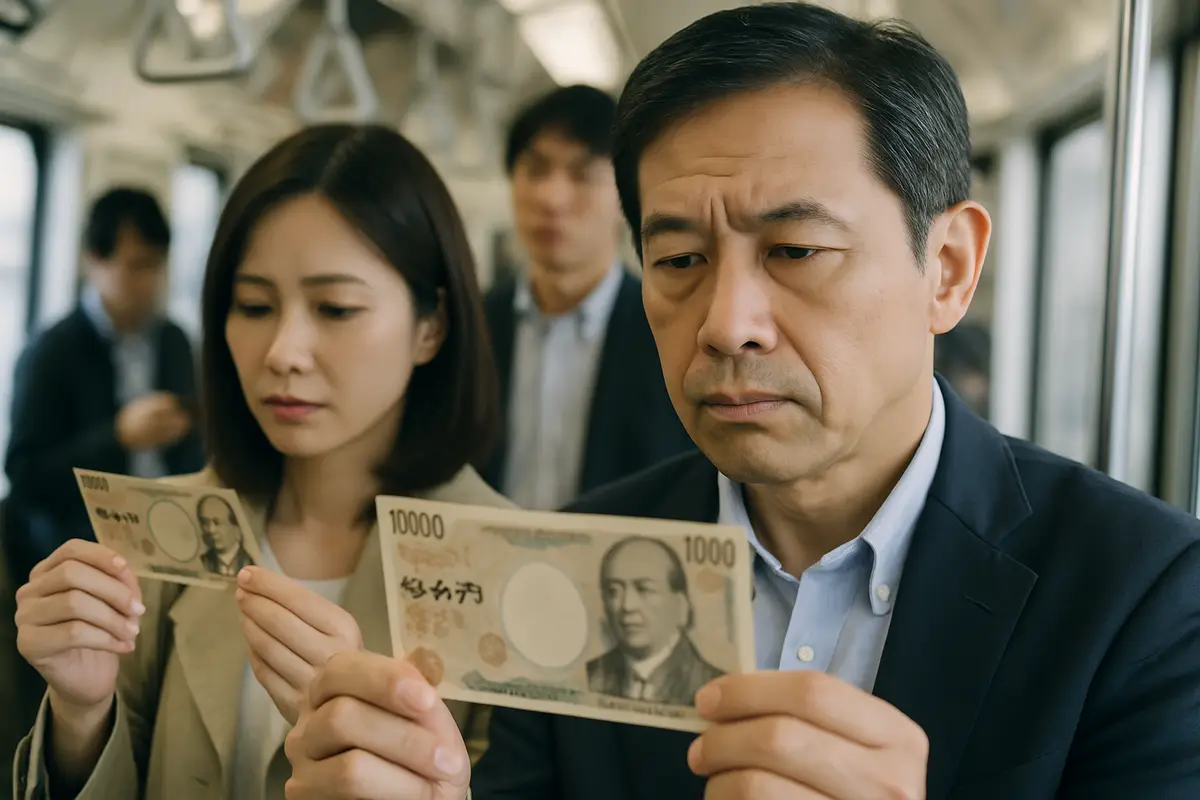
新しいお札を使う人が増えた

More and more people are using the new banknotes

2

2024年7月に、日本で新しいお札が出ました。

In July 2024, new banknotes were issued in Japan.

3

一万円と五千円と千円の三つです。

There are three of them: 10,000 yen, 5,000 yen and 1,000 yen.

4

絵や数字が大きくなりました。

The pictures and the numerals have become bigger.

5

目が悪い人にも分かりやすいです。

They are easy to make out even for people with poor eyesight.

6

今は、この新しいお札を使う人が多くなりました。

Now the number of people using these new banknotes has grown.

7

銀行や店では、新しいお札がたくさんあります。

At banks and shops there are plenty of the new banknotes.

8

しかし、古い機械はまだ新しいお札が使えません。

However, old machines still cannot accept the new banknotes.

9

駅や店の人は、機械を新しくしています。

Staff at stations and shops are updating their machines.

10

お金がかかるので、時間が少しかかります。

Because it costs money, it is taking a little time.

11

古いお札も、これから使えます。

The old banknotes can still be used from now on too.

12

国は「古いお札を急いで銀行に持って行かなくてもいいです」と言っています。

The government says, "You do not have to rush to take your old banknotes to the bank."

13

分からないことがあったら、銀行の人に聞いてください。

If there is anything you do not understand, please ask someone at the bank.

あたらしいさつ使つかひとえた1

2026年09月20日 19:17

著者: jpreader

新しいお札を使う人が増えた

この画像はAIで生成され、学習目的で使用されています。

This image is AI-generated and used for educational purposes.

2024ねん7がつに、日本にほんあたらしいさつました2一万円いちまんえん五千円ごせんえん千円せんえんみっです3数字すうじおおくなりました4わるひとにもかりやすいです5いまは、このあたらしいさつ使つかひとおおくなりました6

銀行ぎんこうみせでは、あたらしいさつたくさんあります7。しかし、ふる機械きかいまだあたらしいさつ使つかません8えきみせひとは、機械きかいあたらしくしています9かねがかかるので時間じかんすこかかります10

ふるさつも、これから使つかます11くには「ふるさついそいで銀行ぎんこうってなくてもいいです」とています12からないことがあったら銀行ぎんこうひとてください13

Discussion

00

to rate or comment.

No comments yet.