えき
N5

(えき)

station

ホームドアほーむどあ
N3

(ほーむどあ)

platform screen door

増えるふえる
N3

(ふえる)

to increase; to grow

電車でんしゃ
N5

(でんしゃ)

electric train

付けるつける
N4

(つける)

to attach

工事こうじ
N3

(こうじ)

construction work

進むすすむ
N3

(すすむ)

to advance, to progress

ホームほーむ
N4

(ほーむ)

station platform

線路せんろ
N3

(せんろ)

railway track

あいだ
N4

(あいだ)

interval, during

ドアどあ
N5

(どあ)

door

来るくる
N5

(くる)

to come

止まるとまる
N5

(とまる)

to stop

開くひらく
N4

(ひらく)

to open, to hold (event)

お客さんおきゃくさん
N5

(おきゃくさん)

guest / spectator / customer

落ちるおちる
N4

(おちる)

to fall; to drop; to strike (lightning)

N5

(め)

eye

見えるみえる
N4

(みえる)

to be visible, can see

ひと
N5

(ひと)

person / people

お酒おさけ
N5

(おさけ)

alcohol, sake

飲むのむ
N5

(のむ)

to drink

事故じこ
N3

(じこ)

accident; incident

今までいままで
N4

(いままで)

until now / so far

何回なんかい
N5

(なんかい)

how many times / many times

あるある
N4

(ある)

a certain (some)

少ないすくない
N5

(すくない)

few, scarce

くに
N5

(くに)

country; the government

多いおおい
N5

(おおい)

many

さき
N5

(さき)

ahead, future

でもでも
N5

(でも)

but; however

お金おかね
N5

(おかね)

money

たくさんたくさん
N5

(たくさん)

a lot / many

かかるかかる
N5

(かかる)

to take (time/money), cost

小さいちいさい
N5

(ちいさい)

small

まだまだ
N5

(まだ)

still; yet

鉄道てつどう
N3

(てつどう)

railway; railroad

会社かいしゃ
N5

(かいしゃ)

company

これからこれから
N4

(これから)

from now on

少しずつすこしずつ
N4

(すこしずつ)

little by little

増やすふやす
N4

(ふやす)

to increase (something)

話すはなす
N5

(はなす)

to speak, talk

~ている
N5

is doing, has been doing (ongoing state/action)

Expresses a continuing action or resulting state. Formed with て-form + いる. Can describe an action in progress or a state resulting from a past change.

今、ご飯を食べています。

I am eating rice now.

東京に住んでいます。

I live in Tokyo.

ドアが開いています。

The door is open.

~とき
N5

when ~

Indicates the time when something happened — when he was in junior high school.

中学生のとき病気になりました。

When I was a junior-high student I got sick.

子どものとき日本にいました。

I was in Japan when I was a child.

~ません
N5

does not ~ (polite negative)

ません is the polite negative form of verbs. It negates the action in a formal/polite context.

今日は学校に行きません。

I won't go to school today.

~くなる
N4

to become (い-adjective)

Expresses a change of state for い-adjectives. Drop the final い and add くなる. Indicates something has changed or will change to a new state.

寒くなりました。

It has gotten cold.

日本語が上手になりました。

My Japanese has gotten better.

値段が高くなりました。

The price became expensive.

~たい
N5

want to ~

Verb stem + たい to express desire.

日本に行きたい。

I want to go to Japan.

水を飲みたいです。

I want to drink water.

1

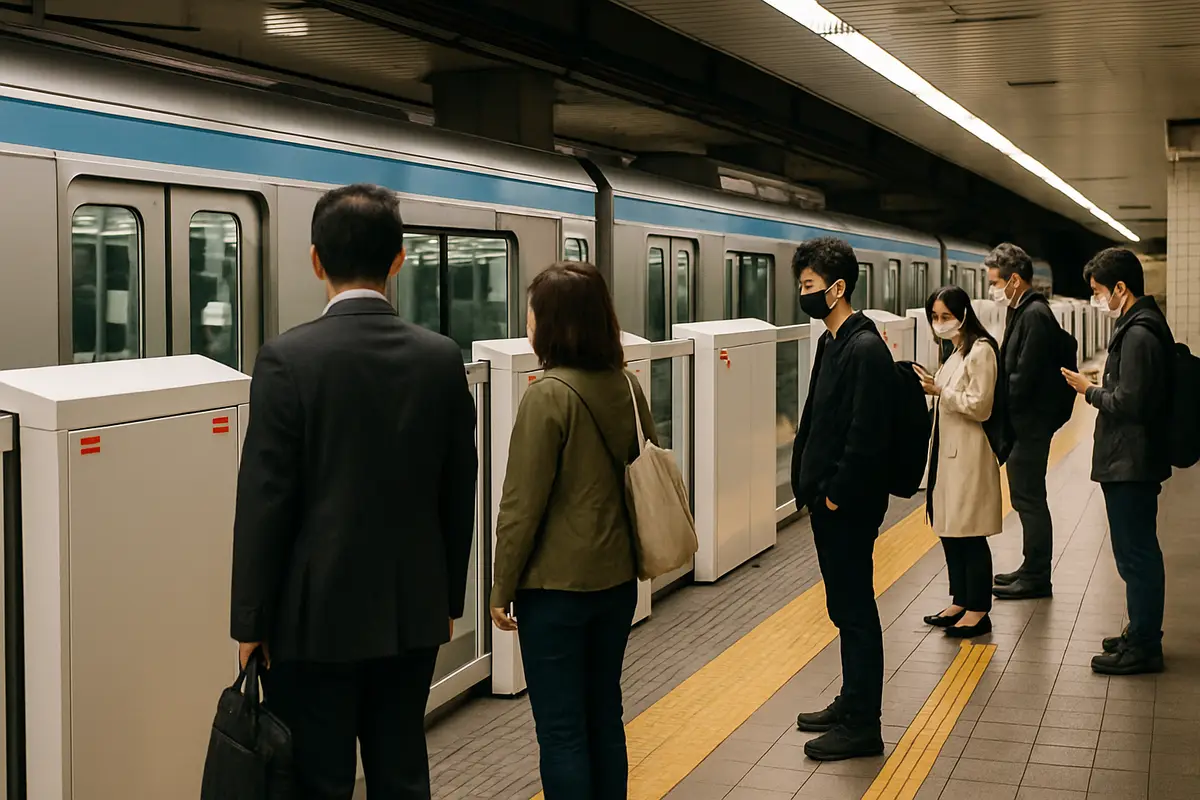
駅のホームドアが増えている

Platform screen doors are increasing at train stations

2

電車の駅に「ホームドア」を付ける工事が進んでいます。

Work to install "platform doors" at train stations is moving forward.

3

ホームドアは、ホームと線路の間にあるドアです。

Platform doors are doors that sit between the platform and the tracks.

4

電車が来て、止まったときだけ開きます。

They open only when a train has arrived and come to a stop.

5

ホームドアがあると、お客さんが線路に落ちません。

When there are platform doors, passengers do not fall onto the tracks.

6

目が見えない人や、お酒を飲んだ人が落ちる事故が、今まで何回もありました。

Until now there have been many accidents in which people who cannot see, or people who had been drinking, fell onto the tracks.

7

事故は、ホームドアを付けた駅で少なくなりました。

Accidents have become fewer at stations where platform doors were installed.

8

国は、お客さんが多い駅から先に付けています。

The government is installing them first at stations with many passengers.

9

でも、お金がたくさんかかります。

However, it costs a lot of money.

10

小さい駅には、まだホームドアがありません。

Small stations still do not have platform doors.

11

鉄道の会社は、「これからも少しずつ増やしたい」と話しています。

The railway companies say, "We want to keep increasing them little by little."

えきホームドアている1

2026年09月21日 19:12

著者: jpreader

駅のホームドアが増えている

この画像はAIで生成され、学習目的で使用されています。

This image is AI-generated and used for educational purposes.

電車でんしゃえきに「ホームドア」をける工事こうじすすでいます2ホームドアは、ホーム線路せんろあいだにあるドアです3電車でんしゃて、まったときだけひらます4

ホームドアがあると、きゃくさん線路せんろません5ないひとや、さけんだひとちる事故じこが、いままで何回なんかいありました6事故じこは、ホームドアけたえきすくくなりました7くには、きゃくさんおおえきからさきています8

でも、おかねたくさんかかります9ちいさいえきには、まだホームドアありません10鉄道てつどう会社かいしゃは、「これからすこしずつやしたい」とはなています11

Discussion

00

to rate or comment.

No comments yet.