自転車に乗るとき、ヘルメットをかぶる人が増えています2。日本では2023年から、自転車に乗るすべての人がヘルメットをかぶるように決まりました3。
警察が調べたところ、ヘルメットをかぶる人は前より多くなりました4。特に子どもと高齢者が多いです5。しかし、まだかぶらない人もたくさんいます6。
自転車の事故では、頭をけがする人が多いです7。ヘルメットをかぶると、大きなけがが少なくなります8。学校や会社でも、ヘルメットを使うように話しています9。
(じてんしゃ)
bicycle
(のる)
to ride, board
(へるめっと)
helmet
(ひと)
person / people
(ふえる)
to increase; to grow
(にほん)
Japan
(ねん)
year
(すべて)
all, everything
(きまる)
to be decided
(けいさつ)
police
(しらべる)
to investigate; to survey
(まえ)
before, previous
(おおい)
many
(とくに)
especially / particularly
(こども)
child
(こうれいしゃ)
elderly person
(しかし)
however, but
(たくさん)
a lot / many
(じこ)
accident; incident
(あたま)
head
(けが)
injury
(おおきな)
big (attrib.)
(すくない)
few, scarce
(がっこう)
school
(かいしゃ)
company
(つかう)
to use
(はなす)
to speak, talk
is doing, has been doing (ongoing state/action)
Expresses a continuing action or resulting state. Formed with て-form + いる/います. Can describe an action in progress or a state that continues from a past change.
今、本を読んでいます。
I am reading a book now.
窓が開いています。
The window is open.
日本に住んでいます。
I live in Japan.
because ~
Provides a reason or cause.
疲れたから休む。
I'll rest because I'm tired.
寒いから帰る。
I'm going home because it's cold.
so that ~
Indicates a goal or desired outcome. Here: so that trainees reach the Specified Skilled Worker level.
分かるように説明します。
I'll explain so you understand.
聞こえるように大きい声で話す。
Speak loudly so it can be heard.
than / more than
Indicates comparison. Used to say prices rose on average 2.8% compared to last year.
去年より寒い。
Colder than last year.
彼より背が高い。
Taller than him.
to become (い-adjective)
Expresses a change of state for い-adjectives. Drop the final い and add くなる. Indicates something has changed or will change to a new state.
寒くなりました。
It has gotten cold.
日本語が上手になりました。
My Japanese has gotten better.
値段が高くなりました。
The price became expensive.
and (non-exhaustive list)
や lists representative examples — Shikoku and Kyushu among other regions (四国や九州).
りんごやみかんを買った。
I bought apples and oranges (among others).
東京や大阪は大きい都市だ。
Tokyo and Osaka are big cities.
自転車のヘルメットをかぶる人が増えた
More people are wearing bicycle helmets
自転車に乗るとき、ヘルメットをかぶる人が増えています。
The number of people who wear a helmet when they ride a bicycle is increasing.
日本では2023年から、自転車に乗るすべての人がヘルメットをかぶるように決まりました。
In Japan, it was decided that from 2023 everyone who rides a bicycle should wear a helmet.
警察が調べたところ、ヘルメットをかぶる人は前より多くなりました。
When the police looked into it, more people were wearing helmets than before.
特に子どもと高齢者が多いです。
Children and elderly people are especially numerous.
しかし、まだかぶらない人もたくさんいます。
However, there are still many people who do not wear one.
自転車の事故では、頭をけがする人が多いです。
In bicycle accidents, many people injure their heads.
ヘルメットをかぶると、大きなけがが少なくなります。
If you wear a helmet, serious injuries become less common.
学校や会社でも、ヘルメットを使うように話しています。
Schools and companies are also telling people to use helmets.
2026年09月22日 19:19
著者: jpreader
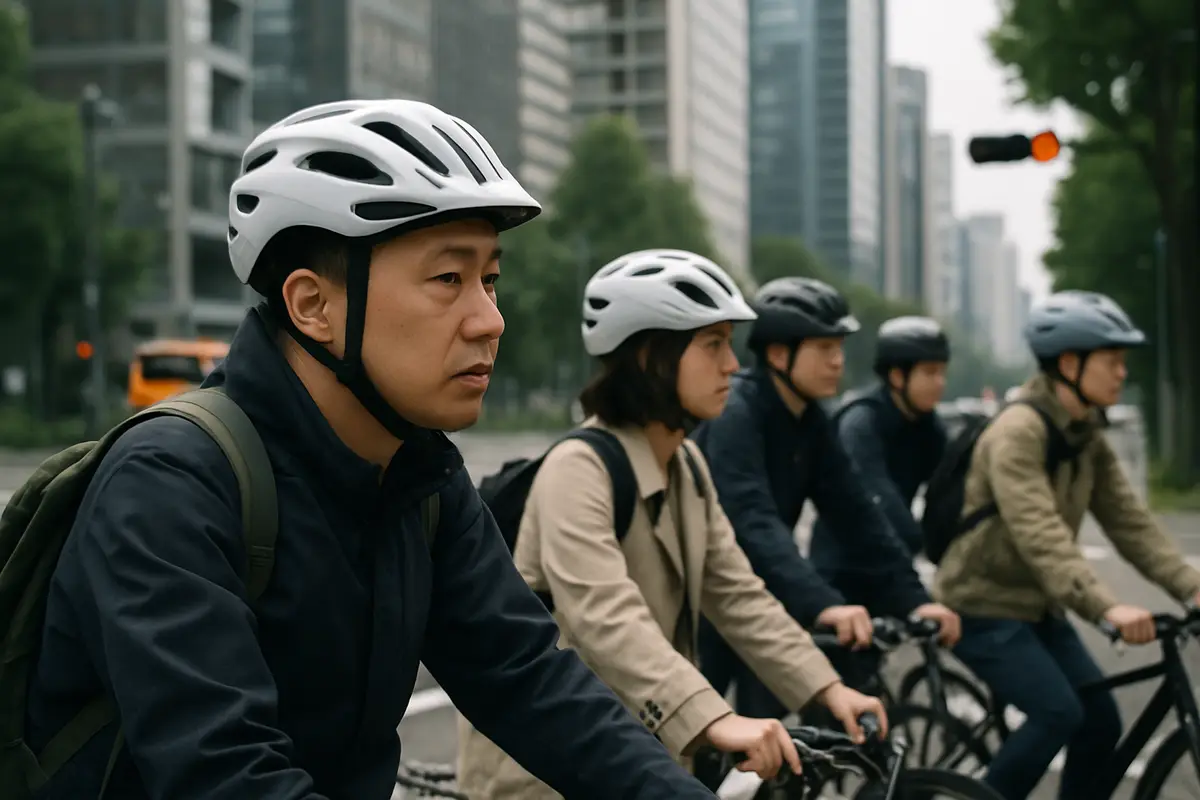
この画像はAIで生成され、学習目的で使用されています。
This image is AI-generated and used for educational purposes.
自転車に乗るとき、ヘルメットをかぶる人が増えています2。日本では2023年から、自転車に乗るすべての人がヘルメットをかぶるように決まりました3。
警察が調べたところ、ヘルメットをかぶる人は前より多くなりました4。特に子どもと高齢者が多いです5。しかし、まだかぶらない人もたくさんいます6。
自転車の事故では、頭をけがする人が多いです7。ヘルメットをかぶると、大きなけがが少なくなります8。学校や会社でも、ヘルメットを使うように話しています9。
Discussion
to rate or comment.
No comments yet.