秋になり、今年とれた「新米」が店に並び始めた2。新米は水分が多く、やわらかくて香りがいいと言われている3。毎年この時期を楽しみにしている人も多い4。
一方で、米の値段に関心が集まっている5。ここ数年、米の値段は大きく上がり、家計への影響を心配する声が出ていた6。今年の新米がいくらで売られるのか、多くの消費者が注目している7。
米の値段は、天気や作る量、農家の数などによって変わる8。最近は、米を作る農家が年々減っていることも問題になっている9。国は、米を安定して届けるための方法を考えている10。
(しんまい)
new rice (this year's harvest)
(みせ)
shop, store
(ならぶ)
to line up
(あき)
autumn; fall
(ことし)
this year
(とれる)
to be harvested
(すいぶん)
moisture, water content
(おおい)
many
(やわらかい)
soft; tender
(かおり)
fragrance, aroma
(いい)
good
(いう)
to say
(まいとし)
every year
(じき)
period, time, season
(たのしみ)
pleasure, looking forward to
(ひと)
person / people
(こめ)
Rice (uncooked)
(ねだん)
price
(かんしん)
interest; concern
(あつまる)
to gather; to come together
(すうねん)
several years
(おおきい)
big; large
(あがる)
to rise / to go up
(かけい)
household finances
(えいきょう)
Influence; impact; effect
(しんぱい)
worry / concern
(こえ)
voice
(でる)
to come out; to occur
(いくら)
how much
(うる)
to sell
(しょうひしゃ)
consumer
(ちゅうもく)
attention, notice
(てんき)
weather
(つくる)
to make
(りょう)
Quantity; amount; volume
(のうか)
farmer / farm household
(かず)
number, count
(かわる)
to change
(さいきん)
recently
(ねんねん)
year by year / annually
(へる)
to decrease / to diminish
(もんだい)
problem
(くに)
country; the government
(あんてい)
stability, stable
(とどける)
to deliver
(ほうほう)
method; way
(かんがえる)
to think; to consider
start doing ~
Compound verb form expressing the start of an action; sending scallops has started.
ホタテを送り始めました。
They have started sending scallops.
雨が降り始めた。
The rain started falling.
to become
Expresses a change of state; Kawai became the new commissioner of the Sports Agency.
新しい長官になりました。
He became the new commissioner.
目が見えなくなりました。
He became unable to see.
it is said that ~
Passive form expressing common knowledge or reputation. It is said that aquaculture of nodoguro is difficult.
難しいと言われています。
It is said to be difficult.
日本語は難しいと言われています。
It is said that Japanese is difficult.
to look forward to
Set expression meaning 'look forward to'. '楽しみにしています' means 'I'm looking forward to it'.
旅行を楽しみにしています。
I'm looking forward to the trip.
会えるのを楽しみにしています。
I look forward to seeing you.
on the other hand
Introduces the opposing concern: 一方で、心配する声もある.
一方で、心配する声もある。
On the other hand, there are also voices of concern.
便利だが、一方で危険もある。
It's convenient, but on the other hand there is danger.
is doing, has been doing (ongoing state/action)
Expresses a continuing action or resulting state. Formed with て-form + いる. Can describe an action in progress or a state resulting from a past change.
今、ご飯を食べています。
I am eating rice now.
東京に住んでいます。
I live in Tokyo.
ドアが開いています。
The door is open.
was doing, had been doing
Past progressive or past continuous state. Formed with て-form + いた. Describes an action or state that was ongoing in the past.
昨日は雨が降っていた。
It was raining yesterday.
子供の頃、毎日泳いでいた。
When I was a child, I used to swim every day.
彼女は3年間日本に住んでいた。
She had been living in Japan for 3 years.
(question marker)
Embedded/indirect question marker. Here used to express not knowing what kind of person.
何を食べたのかわからない
I don't know what he ate.
誰が来るのか
who will come
by means of / through
Expresses the means by which something is achieved — through sport, everyone can live together.
スポーツによって一緒に生きていけます。
Through sports we can live together.
インターネットによって情報が広がります。
Information spreads via the Internet.
in order to, for the purpose of
Expresses purpose. Formed with verb dictionary form + ための + noun, or noun + のための + noun. Modifies the following noun to indicate its purpose.
試験のための勉強をしています。
I am studying for the exam.
健康のために運動します。
I exercise for my health.
日本語を勉強するための本を買いました。
I bought a book for studying Japanese.
新米が店に並び始める
New rice begins to appear in stores
秋になり、今年とれた「新米」が店に並び始めた。
Autumn has arrived, and this year's newly harvested rice, called shinmai, has begun to appear in stores.
新米は水分が多く、やわらかくて香りがいいと言われている。
New rice is said to be moist, soft and fragrant.
毎年この時期を楽しみにしている人も多い。
Many people look forward to this time every year.
一方で、米の値段に関心が集まっている。
At the same time, attention is focused on the price of rice.
ここ数年、米の値段は大きく上がり、家計への影響を心配する声が出ていた。
Over the past few years, rice prices rose sharply, and there had been concerns about the impact on household budgets.
今年の新米がいくらで売られるのか、多くの消費者が注目している。
Many consumers are watching to see how much this year's new rice will sell for.
米の値段は、天気や作る量、農家の数などによって変わる。
The price of rice changes depending on factors such as the weather, the amount grown and the number of farmers.
最近は、米を作る農家が年々減っていることも問題になっている。
Recently, the number of rice farmers falling year after year has also become a problem.
国は、米を安定して届けるための方法を考えている。
The government is considering ways to deliver a stable supply of rice.
2026年09月23日 19:13
著者: jpreader
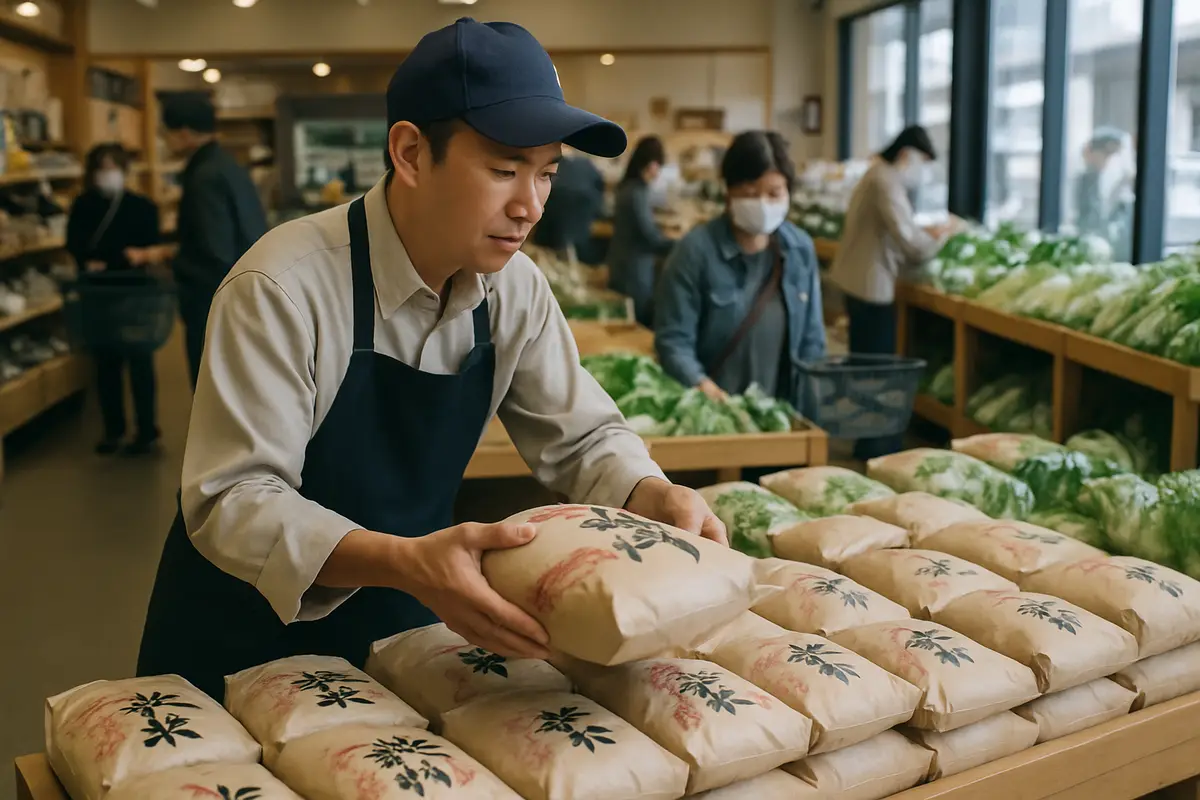
この画像はAIで生成され、学習目的で使用されています。
This image is AI-generated and used for educational purposes.
秋になり、今年とれた「新米」が店に並び始めた2。新米は水分が多く、やわらかくて香りがいいと言われている3。毎年この時期を楽しみにしている人も多い4。
一方で、米の値段に関心が集まっている5。ここ数年、米の値段は大きく上がり、家計への影響を心配する声が出ていた6。今年の新米がいくらで売られるのか、多くの消費者が注目している7。
米の値段は、天気や作る量、農家の数などによって変わる8。最近は、米を作る農家が年々減っていることも問題になっている9。国は、米を安定して届けるための方法を考えている10。
Discussion
to rate or comment.
No comments yet.