明日、9月25日は「中秋の名月」です2。この日の夜は、月がとてもきれいに見えます3。日本では、昔からこの日に月を見ます4。これを「お月見」と言います5。
お月見の日、多くの家では、白い団子とすすきを窓の近くに置きます6。店では、月の形のお菓子もたくさん売っています7。子どもたちも、団子を食べて月を見ます8。
月は夜、東の空に出ます9。天気がいい所では、家の窓からも見ることができます10。明日の夜は、多くの人が空を見るでしょう11。
(あした)
tomorrow
(ちゅうしゅうのめいげつ)
the harvest moon (full moon of mid-autumn)
(くがつ)
September
(よる)
night
(つき)
month
(きれい)
pretty, clean
(みえる)
to be visible, can see
(にほん)
Japan
(むかし)
long ago, past
(みる)
to see, watch
(おつきみ)
moon viewing
(おおく)
many, much
(いえ)
house
(しろい)
white
(だんご)
dango (round rice dumpling)
(すすき)
Japanese pampas grass (susuki)
(まど)
window
(ちかく)
nearby
(おく)
to place, put
(みせ)
shop, store
(かたち)
shape, form
(おかし)
sweets / snacks / confectionery
(たくさん)
a lot / many
(うる)
to sell
(こども)
child
(たべる)
to eat
(ひがし)
east
(そら)
sky
(でる)
to come out; to occur
(てんき)
weather
(いい)
good
(ところ)
place; area
(ひと)
person / people
from (starting point)
Indicates the origin or source. 建物の中から means 'from inside the building'.
かばんの中から鍵が出てきた。
A key came out from inside the bag.
called/named ~
Used to introduce or name something. In this article, 「鳥貴族」という店 means 'a store called Torikizoku'.
田中という人を知っていますか。
Do you know a person called Tanaka?
これは寿司という料理です。
This is a dish called sushi.
is doing, has been doing (ongoing state/action)
Expresses a continuing action or resulting state. Formed with て-form + いる. Can describe an action in progress or a state resulting from a past change.
今、ご飯を食べています。
I am eating rice now.
東京に住んでいます。
I live in Tokyo.
ドアが開いています。
The door is open.
can do ..., to be able to ...
Verb dictionary form + ことができる expresses ability or possibility. More formal than the potential verb form. Common in written Japanese and announcements.
日本語を話すことができます。
I can speak Japanese.
ここで写真を撮ることができます。
You can take photos here.
インターネットで予約することができます。
You can make a reservation on the internet.
Probably ~; it seems that ~
Expresses conjecture or probability. More formal than ~だろう. Often used in news and weather reports.
明日は雨が降るでしょう。
It will probably rain tomorrow.
明日は中秋の名月
Tomorrow is the harvest moon
明日、9月25日は「中秋の名月」です。
Tomorrow, September 25, is the night of the harvest moon.
この日の夜は、月がとてもきれいに見えます。
On the night of this day, the moon looks very beautiful.
日本では、昔からこの日に月を見ます。
In Japan, people have looked at the moon on this day since long ago.
これを「お月見」と言います。
This is called "otsukimi" (moon viewing).
お月見の日、多くの家では、白い団子とすすきを窓の近くに置きます。
On moon-viewing day, many homes put white dango and pampas grass near a window.
店では、月の形のお菓子もたくさん売っています。
Stores are also selling lots of moon-shaped sweets.
子どもたちも、団子を食べて月を見ます。
Children also eat dango and look at the moon.
月は夜、東の空に出ます。
The moon rises in the eastern sky at night.
天気がいい所では、家の窓からも見ることができます。
Where the weather is good, you can see it even from a window at home.
明日の夜は、多くの人が空を見るでしょう。
Tomorrow night, many people will probably look up at the sky.
2026年09月24日 19:05
著者: jpreader
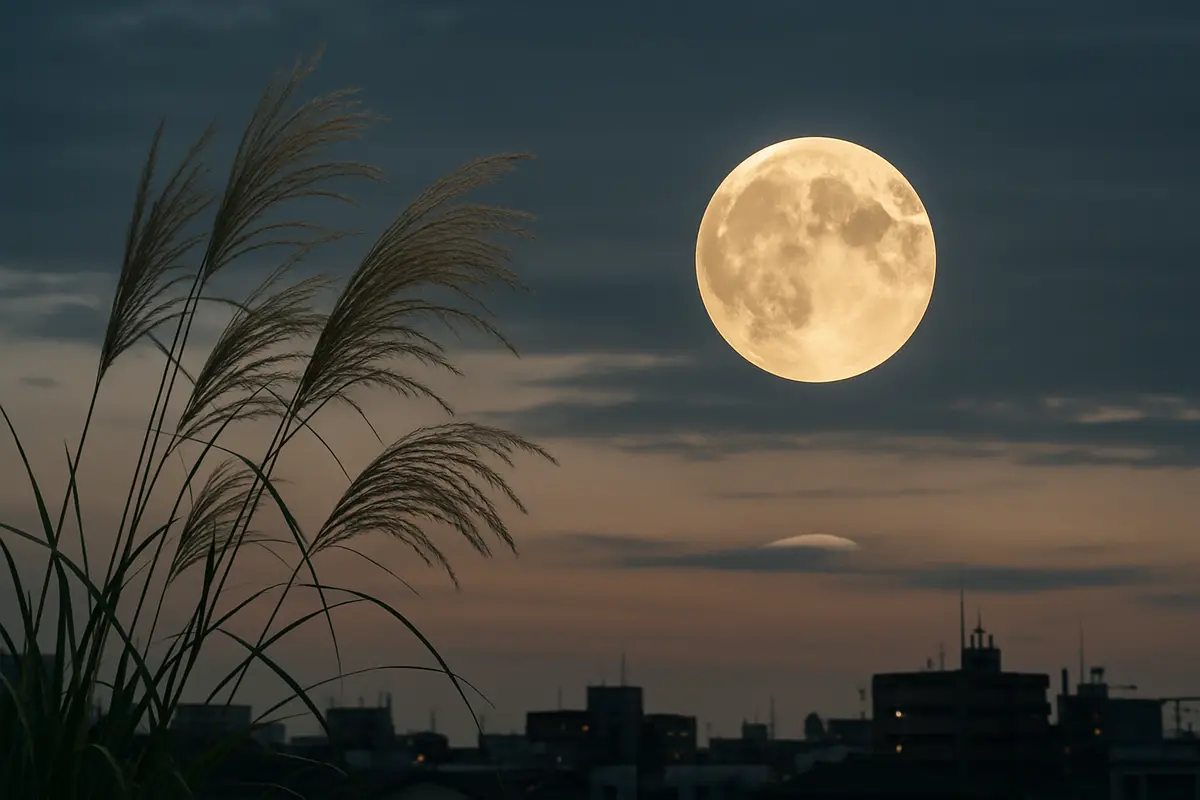
この画像はAIで生成され、学習目的で使用されています。
This image is AI-generated and used for educational purposes.
明日、9月25日は「中秋の名月」です2。この日の夜は、月がとてもきれいに見えます3。日本では、昔からこの日に月を見ます4。これを「お月見」と言います5。
お月見の日、多くの家では、白い団子とすすきを窓の近くに置きます6。店では、月の形のお菓子もたくさん売っています7。子どもたちも、団子を食べて月を見ます8。
月は夜、東の空に出ます9。天気がいい所では、家の窓からも見ることができます10。明日の夜は、多くの人が空を見るでしょう11。
Discussion
to rate or comment.
No comments yet.