インフルエンザいんふるえんざ
N3

(いんふるえんざ)

influenza, flu

予防接種よぼうせっしゅ
N1

(よぼうせっしゅ)

vaccination, inoculation

始まるはじまる
N5

(はじまる)

to begin

ふゆ
N5

(ふゆ)

winter

流行りゅうこう
N2

(りゅうこう)

epidemic / trend

備えるそなえる
N3

(そなえる)

to prepare; to provide against

各地かくち
N2

(かくち)

various places, everywhere

さい
N5

(さい)

years old

以上いじょう
N3

(いじょう)

more than; beyond this

高齢者こうれいしゃ
N1

(こうれいしゃ)

elderly person

住むすむ
N5

(すむ)

to live; to reside

N4

(し)

city

まち
N5

(まち)

town

費用ひよう
N3

(ひよう)

expense, cost

一部いちぶ
N3

(いちぶ)

part, portion

補助ほじょ
N2

(ほじょ)

subsidy, assistance

最近さいきん
N4

(さいきん)

recently

注射ちゅうしゃ
N3

(ちゅうしゃ)

injection, shot

はな
N5

(はな)

nose

ワクチンわくちん
N2

(わくちん)

vaccine

使うつかう
N5

(つかう)

to use

子どもこども
N5

(こども)

child

対象たいしょう
N2

(たいしょう)

target, subject (of eligibility)

痛いいたい
N5

(いたい)

painful

苦手にがて
N3

(にがて)

not good at, poor at

受けるうける
N3

(うける)

to receive

効果こうか
N3

(こうか)

effect

出るでる
N5

(でる)

to come out; to occur

週間しゅうかん
N5

(しゅうかん)

week; weekly

かかるかかる
N5

(かかる)

to take (time/money), cost

専門家せんもんか
N2

(せんもんか)

expert, specialist

まえ
N5

(まえ)

before, previous

中旬ちゅうじゅん
N2

(ちゅうじゅん)

middle of a month

接種せっしゅ
N1

(せっしゅ)

inoculation, vaccination

済ませるすませる
N3

(すませる)

to finish, to get done with

手洗いてあらい
N3

(てあらい)

hand washing

マスクますく
N3

(ますく)

mask

毎日まいにち
N5

(まいにち)

every day

対策たいさく
N2

(たいさく)

countermeasure

大切たいせつ
N5

(たいせつ)

important

~から(起点)
N5

from (starting point)

Indicates the origin or source. 建物の中から means 'from inside the building'.

かばんの中から鍵が出てきた。

A key came out from inside the bag.

~ている
N5

is doing, has been doing (ongoing state/action)

Expresses a continuing action or resulting state. Formed with て-form + いる. Can describe an action in progress or a state resulting from a past change.

今、ご飯を食べています。

I am eating rice now.

東京に住んでいます。

I live in Tokyo.

ドアが開いています。

The door is open.

~てもらう
N4

have someone do (for me)

Expresses receiving a favor/action from someone.

助けてもらって本当にありがとうございます。

Thank you so much for helping us.

教えてもらいました。

I had them teach me.

~場合がある
N3

there are cases where / sometimes

Indicates a possible downside: 給料が下がる場合もあります (there are cases where pay goes down).

給料が下がる場合もあります。

There are cases where pay goes down.

遅れる場合があります。

There are cases of being late.

~ではなく
N3

not ... but rather ...

Negative connective form of だ. Used to negate one thing and present an alternative. では + なく links to what follows as the true explanation.

これは犬ではなく、猫です。

This is not a dog, but a cat.

問題は時間ではなく、お金です。

The problem is not time, but money.

~ようになる
N4

come to / reach the point where

Indicates a change in state or ability.

運転できるようになった。

Trains became able to run.

日本語が話せるようになりました。

I became able to speak Japanese.

~ため(理由)
N4

because of ~ / since ~

Plain form + ため states a cause in formal writing. 知られていないため = 'because it is not well known'.

十分に知られていないため、食べ物が捨てられている。

Because it is not well known, food is being thrown away.

雨のため、試合は中止になった。

Because of the rain, the match was called off.

~やすい
N4

easy to ~ / tends to ~

Used in 'うつりやすくて' meaning 'easily contagious / easy to catch'.

この本は読みやすい。

This book is easy to read.

忘れやすい。

Easy to forget.

~と言われている
N3

it is said that ~

Passive form expressing common knowledge or reputation. It is said that aquaculture of nodoguro is difficult.

難しいと言われています。

It is said to be difficult.

日本語は難しいと言われています。

It is said that Japanese is difficult.

~までには
N3

by the time ~ / before ~

までには marks the point by which something must be reached; here it measures the long apprenticeship needed before a maker can go independent.

独立できるまでには長い年月がかかります。

It takes many years before you can go independent.

帰るまでには終わらせます。

I will finish it before I go home.

~までに
N4

by (a certain time)

Indicates a deadline — by February of next year, the company aims to restore shipping.

5時までに帰ります。

I'll be home by 5.

金曜日までに出してください。

Please submit it by Friday.

~ように呼びかける
N3

to call on (someone) to ...

正しい使い方を守るように呼びかけています expresses that experts are urging people to follow correct usage.

守るように呼びかけています。

They are urging people to follow (the rules).

注意するように言いました。

They told us to be careful.

~としている
N2

states that ~, takes the position that ~

A news-style ending used to report the ministry's official stance.

会社は問題ないとしている。

The company states that there is no problem.

国は来年始めるとしている。

The government says it will start next year.

1

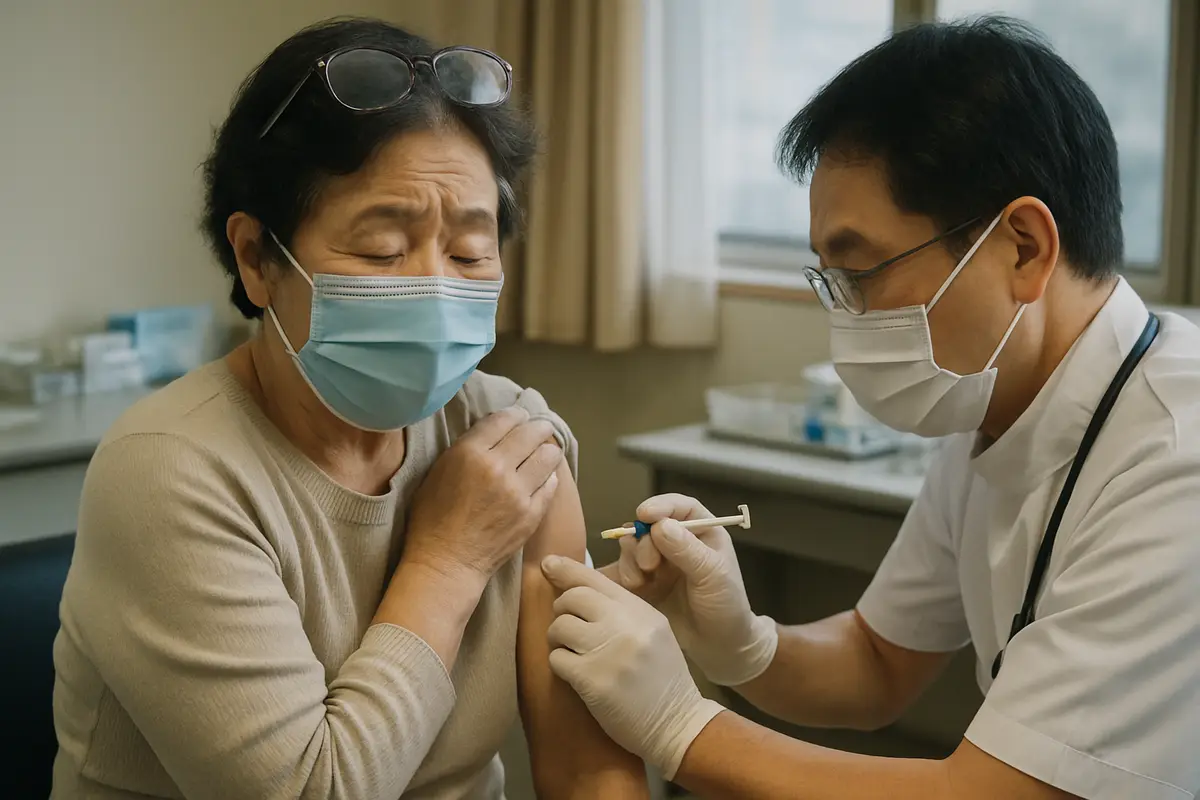
インフルエンザの予防接種が始まる

Flu vaccinations are starting

2

冬に流行するインフルエンザに備えて、10月から各地で予防接種が始まります。

To prepare for the flu that spreads in winter, vaccinations will begin in many areas from October.

3

65歳以上の高齢者などは、住んでいる市や町から費用の一部を補助してもらえる場合があります。

Older people aged 65 and over, among others, may be able to get part of the cost covered by the city or town where they live.

4

最近は、注射ではなく、鼻にスプレーするワクチンも使われるようになりました。

Recently, a vaccine that is sprayed into the nose instead of injected has also come into use.

5

2歳から18歳までの子どもが対象で、痛くないため、注射が苦手な子どもにも受けやすいと言われています。

It is for children aged 2 to 18, and because it doesn't hurt, it is said to be easy even for children who dislike shots.

6

ワクチンの効果が出るまでには、およそ2週間かかります。

It takes about two weeks for the vaccine to take effect.

7

専門家は、流行が始まる前の12月中旬までに接種を済ませるよう呼びかけています。

Experts are urging people to get vaccinated by mid-December, before the flu season begins.

8

また、手洗いやマスクなど、毎日の対策も大切だとしています。

They also say that everyday measures such as hand washing and wearing masks are important.

インフルエンザ予防接種よぼうせっしゅはじまる1

2026年09月24日 19:08

著者: jpreader

インフルエンザの予防接種が始まる

この画像はAIで生成され、学習目的で使用されています。

This image is AI-generated and used for educational purposes.

ふゆ流行りゅうこうするインフルエンザそなえて、10月じゅうがつから各地かくち予防接種よぼうせっしゅはじまります265ろくじゅうごさい以上いじょう高齢者こうれいしゃなどは、でいるまちから費用ひよう一部いちぶ補助ほじょてもらえる場合ばあいがあります3

最近さいきんは、注射ちゅうしゃではなくはなにスプレーするワクチン使つかわれるようになりました42にさいから18じゅうはっさいまでのども対象たいしょうで、いたくないため注射ちゅうしゃ苦手にがてどもにもやすいわれています5

ワクチン効果こうかまでには、およそ2週間にしゅうかんかかります6専門家せんもんかは、流行りゅうこうはじまるまえ12月じゅうにがつ中旬ちゅうじゅんまでに接種せっしゅませるようびかけています7。また、手洗てあらいやマスクなど、毎日まいにち対策たいさく大切たいせつとしています8

Discussion

00

to rate or comment.

No comments yet.