秋になって、日本の学校で運動会が始まりました2。運動会は、子どもたちが外でいろいろなスポーツをする日です3。今年も、たくさんの学校で運動会がありました4。
子どもたちは、走ったり、ダンスをしたりします5。赤いチームと白いチームに分かれて、みんなで一緒に頑張ります6。お父さんやお母さんも学校に来て、写真を撮ったり、応援したりします7。
最近は、暑い日が多いです8。それで、朝だけ運動会をする学校が増えています9。昼ご飯の前に終わる学校もあります10。
(がっこう)
school
(うんどうかい)
sports day, athletic meet
(ひらく)
to open, to hold (event)
(あき)
autumn; fall
(にほん)
Japan
(はじまる)
to begin
(こども)
child
(そと)
outside
(すぽーつ)
sport
(する)
to do
(ひ)
day
(ことし)
this year
(たくさん)
a lot / many
(はしる)
to run
(だんす)
dance
(あかい)
red
(ちーむ)
team
(しろい)
white
(わかれる)
to be divided; to split
(みんな)
Everyone; everybody
(いっしょ)
Together; at the same time
(がんばる)
to do one's best
(おとうさん)
father
(おかあさん)
mother
(くる)
to come
(しゃしん)
photograph
(とる)
to take (a photo)
(おうえん)
cheering; support
(さいきん)
recently
(あつい)
hot
(おおい)
many
(それで)
and so, therefore
(あさ)
morning
(ふえる)
to increase; to grow
(ひるごはん)
lunch
(まえ)
before, previous
(おわる)
to end
Passive form
The passive voice. 落とされて is the passive of 落とす (to drop). Indicates the bombs were dropped (by someone).
広島と長崎に原爆が落とされました。
Atomic bombs were dropped on Hiroshima and Nagasaki.
to become
Expresses a change of state; Kawai became the new commissioner of the Sports Agency.
新しい長官になりました。
He became the new commissioner.
目が見えなくなりました。
He became unable to see.
did ... (polite past)
Polite past tense of verbs. Formed with verb stem + ました. Used in formal or polite speech to describe completed actions.
昨日、映画を見ました。
I watched a movie yesterday.
朝ごはんを食べました。
I ate breakfast.
友達が来ました。
A friend came.
plural suffix (for people)
Pluralizing suffix attached to nouns referring to people.
子どもたち
children
私たち
we
polite copula / is, am, are
Describes states such as the mother panda being healthy and the baby being small.
これは本です。
This is a book.
今日は寒いです。
It is cold today.
there was / there were (existence, past)
Used in the title and body to report that an earthquake occurred. ある becomes the past あった (plain) / ありました (polite).
地震がありました。
There was an earthquake.
会議があった。
There was a meeting.
doing things like ~ and ~
Lists representative actions among several. Implies there are other actions too. Used twice in this article.
週末は本を読んだり映画を見たりします。
On weekends I do things like read books and watch movies.
歌ったり踊ったりして楽しんだ。
We had fun singing and dancing.
polite non-past tense
The polite non-past ~ます states what will happen — the funeral will continue.
葬式は続きます。
The funeral will continue.
明日行きます。
I will go tomorrow.
and (non-exhaustive list)
や lists representative examples — Shikoku and Kyushu among other regions (四国や九州).
りんごやみかんを買った。
I bought apples and oranges (among others).
東京や大阪は大きい都市だ。
Tokyo and Osaka are big cities.
te-form for connecting clauses
The te-form connects sequential actions or clauses. Here it links 'started' with the following action.
朝起きて、朝ごはんを食べます。
I wake up in the morning and eat breakfast.
店に行って、パンを買いました。
I went to the store and bought bread.
only ~
Limiter particle. 女性だけが宇宙船に乗りました means 'only women boarded the spaceship.'
私だけが知っています。
Only I know.
水だけ飲みました。
I only drank water.
is doing, has been doing (ongoing state/action)
Expresses a continuing action or resulting state. Formed with て-form + いる. Can describe an action in progress or a state resulting from a past change.
今、ご飯を食べています。
I am eating rice now.
東京に住んでいます。
I live in Tokyo.
ドアが開いています。
The door is open.
学校で運動会が開かれる
Schools hold sports days
秋になって、日本の学校で運動会が始まりました。
Autumn has come, and sports days have begun at schools in Japan.
運動会は、子どもたちが外でいろいろなスポーツをする日です。
Sports day is a day when children play various sports outdoors.
今年も、たくさんの学校で運動会がありました。
This year too, many schools held sports days.
子どもたちは、走ったり、ダンスをしたりします。
The children do things like running and dancing.
赤いチームと白いチームに分かれて、みんなで一緒に頑張ります。
They split into a red team and a white team, and everyone does their best together.
お父さんやお母さんも学校に来て、写真を撮ったり、応援したりします。
Fathers and mothers also come to the school to take photos and cheer.
最近は、暑い日が多いです。
Recently, there have been many hot days.
それで、朝だけ運動会をする学校が増えています。
Because of that, more schools are holding sports day only in the morning.
昼ご飯の前に終わる学校もあります。
Some schools finish before lunch.
2026年09月27日 19:08
著者: jpreader
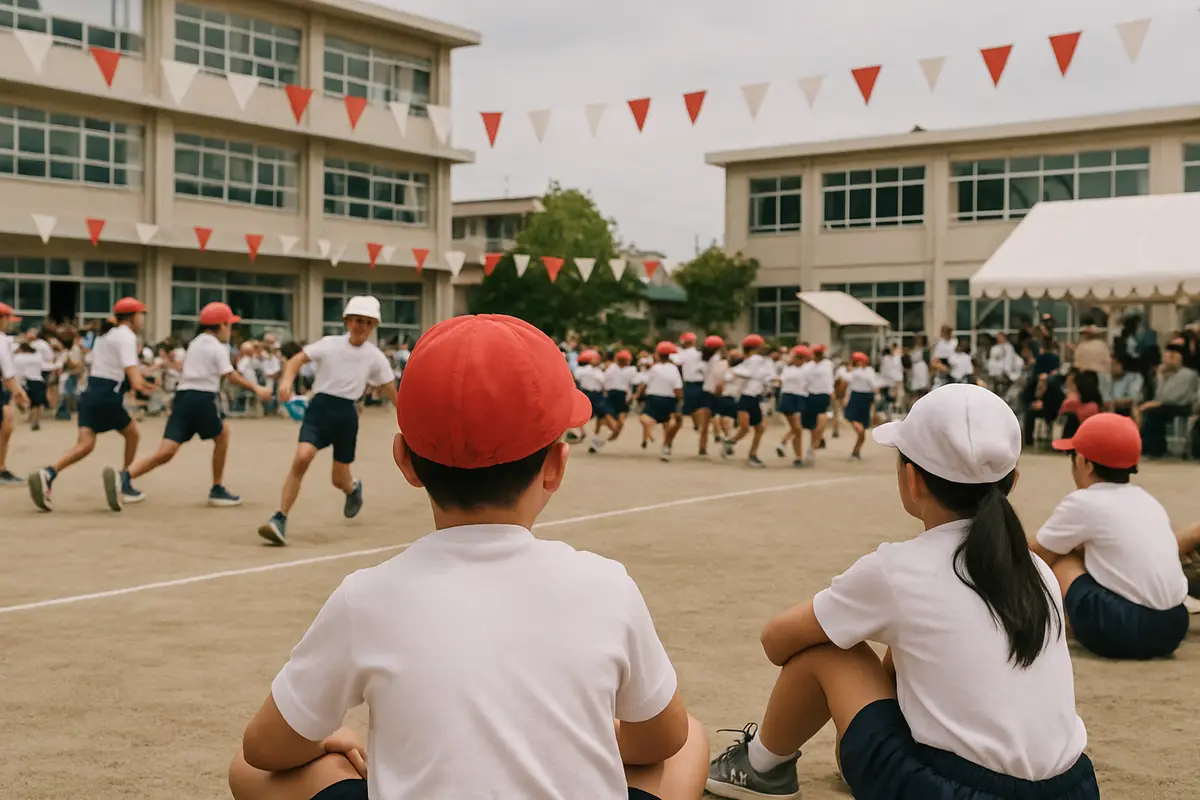
この画像はAIで生成され、学習目的で使用されています。
This image is AI-generated and used for educational purposes.
秋になって、日本の学校で運動会が始まりました2。運動会は、子どもたちが外でいろいろなスポーツをする日です3。今年も、たくさんの学校で運動会がありました4。
子どもたちは、走ったり、ダンスをしたりします5。赤いチームと白いチームに分かれて、みんなで一緒に頑張ります6。お父さんやお母さんも学校に来て、写真を撮ったり、応援したりします7。
最近は、暑い日が多いです8。それで、朝だけ運動会をする学校が増えています9。昼ご飯の前に終わる学校もあります10。
Discussion
to rate or comment.
No comments yet.