秋は「読書の秋」と言われます2。涼しくなって、本を読むのにちょうどいい季節だからです3。この時期、全国の図書館で、本に関係するイベントが開かれています4。
ある町の図書館では、子どものために、絵本を読む会を毎週開いています5。大人向けには、好きな本を紹介し合う会もあります6。参加した人は「ほかの人の話を聞いて、読みたい本が増えた」と話していました7。
最近は、スマホで短い文章を読む人が多くなりました8。図書館は、紙の本の楽しさを知ってもらいたいと考えています9。
(どくしょ)
reading (books)
(あき)
autumn; fall
(としょかん)
library
(いべんと)
event
(ふえる)
to increase; to grow
(すずしい)
cool, refreshing
(ほん)
book
(よむ)
to read
(ちょうど)
exactly, just
(きせつ)
Season
(じき)
period, time, season
(ぜんこく)
nationwide; the whole country
(かんけい)
relation
(ひらく)
to open, to hold (event)
(ある)
a certain (some)
(まち)
town
(こども)
child
(えほん)
picture book
(かい)
meeting; gathering
(まいしゅう)
every week
(おとな)
adult
(すき)
liked, favorite
(しょうかい)
introduction, presentation
(さんか)
participation
(ひと)
person / people
(ほか)
other
(はなし)
talk, story
(きく)
to listen, hear
(はなす)
to speak, talk
(さいきん)
recently
(すまほ)
smartphone
(みじかい)
short
(ぶんしょう)
text; document
(おおい)
many
(かみ)
paper
(たのしい)
fun, enjoyable
(しる)
to know, learn
(かんがえる)
to think; to consider
to be called / said to be
Passive of 言う, used to describe how something is referred to. 青いケシと言われる花 means 'a flower called the blue poppy'.
天才と言われる
is called a genius
名作と言われる映画
a film said to be a masterpiece
to become (い-adjective)
Expresses a change of state for い-adjectives. Drop the final い and add くなる. Indicates something has changed or will change to a new state.
寒くなりました。
It has gotten cold.
日本語が上手になりました。
My Japanese has gotten better.
値段が高くなりました。
The price became expensive.
it is because ~
Gives a reason at the end of a sentence. Used here to explain why gasoline prices dropped (government subsidies).
疲れた。たくさん歩いたからです。
I'm tired. It's because I walked a lot.
寒いからです。
It's because it's cold.
Passive form
The passive voice. 落とされて is the passive of 落とす (to drop). Indicates the bombs were dropped (by someone).
広島と長崎に原爆が落とされました。
Atomic bombs were dropped on Hiroshima and Nagasaki.
is doing, has been doing (ongoing state/action)
Expresses a continuing action or resulting state. Formed with て-form + いる. Can describe an action in progress or a state resulting from a past change.
今、ご飯を食べています。
I am eating rice now.
東京に住んでいます。
I live in Tokyo.
ドアが開いています。
The door is open.
for the purpose of / in order to
Used in テストのために ('for the purpose of testing') to explain why the E8 train was running.
健康のために運動します。
I exercise for my health.
仕事のために東京に行く。
I go to Tokyo for work.
intended for, aimed at
大人向け marks the book-introduction gatherings as meant for adults.
これは子ども向けの本です。
This is a book for children.
外国人向けのツアーがあります。
There are tours for foreigners.
to do together; mutually
Compound verb suffix indicating a reciprocal or mutual action.
友達と相談し合いました。
I discussed it together with my friend.
te-form for connecting clauses
The te-form connects sequential actions or clauses. Here it links 'started' with the following action.
朝起きて、朝ごはんを食べます。
I wake up in the morning and eat breakfast.
店に行って、パンを買いました。
I went to the store and bought bread.
want to ~
Verb stem + たい to express desire.
日本に行きたい。
I want to go to Japan.
水を飲みたいです。
I want to drink water.
quotative particle
Marks the content of what someone said or reported. Used with 言う here.
彼は行くと言いました。
He said he would go.
明日休みだと聞きました。
I heard tomorrow is a holiday.
-ness (turns an adjective into a noun)
Replacing the final い of an i-adjective with さ makes a noun. 暑い becomes 暑さ, 'the heat', which is the cause of the poor rice quality here.
山の高さを測る。
To measure the height of a mountain.
夏の暑さが厳しい。
The summer heat is severe.
want someone to ~ (for my/our benefit)
Combines てもらう (receive the favor of someone doing something) with たい (want). Expresses a desire for others to do something.
多くの人に見てもらいたいです。
We want many people to see it.
読書の秋、図書館でイベントが増える
Autumn, the season for reading: more events at libraries
秋は「読書の秋」と言われます。
Autumn is called "the autumn of reading."
涼しくなって、本を読むのにちょうどいい季節だからです。
That's because it gets cooler, making it just the right season for reading books.
この時期、全国の図書館で、本に関係するイベントが開かれています。
At this time of year, libraries across the country are holding book-related events.
ある町の図書館では、子どものために、絵本を読む会を毎週開いています。
At one town's library, they hold a picture-book reading session for children every week.
大人向けには、好きな本を紹介し合う会もあります。
For adults, there are also gatherings where people introduce their favorite books to one another.
参加した人は「ほかの人の話を聞いて、読みたい本が増えた」と話していました。
One participant said, "Hearing what other people said, I now have more books I want to read."
最近は、スマホで短い文章を読む人が多くなりました。
These days, more and more people read short texts on their smartphones.
図書館は、紙の本の楽しさを知ってもらいたいと考えています。
Libraries hope people will come to know the joy of paper books.
2026年09月27日 19:09
著者: jpreader
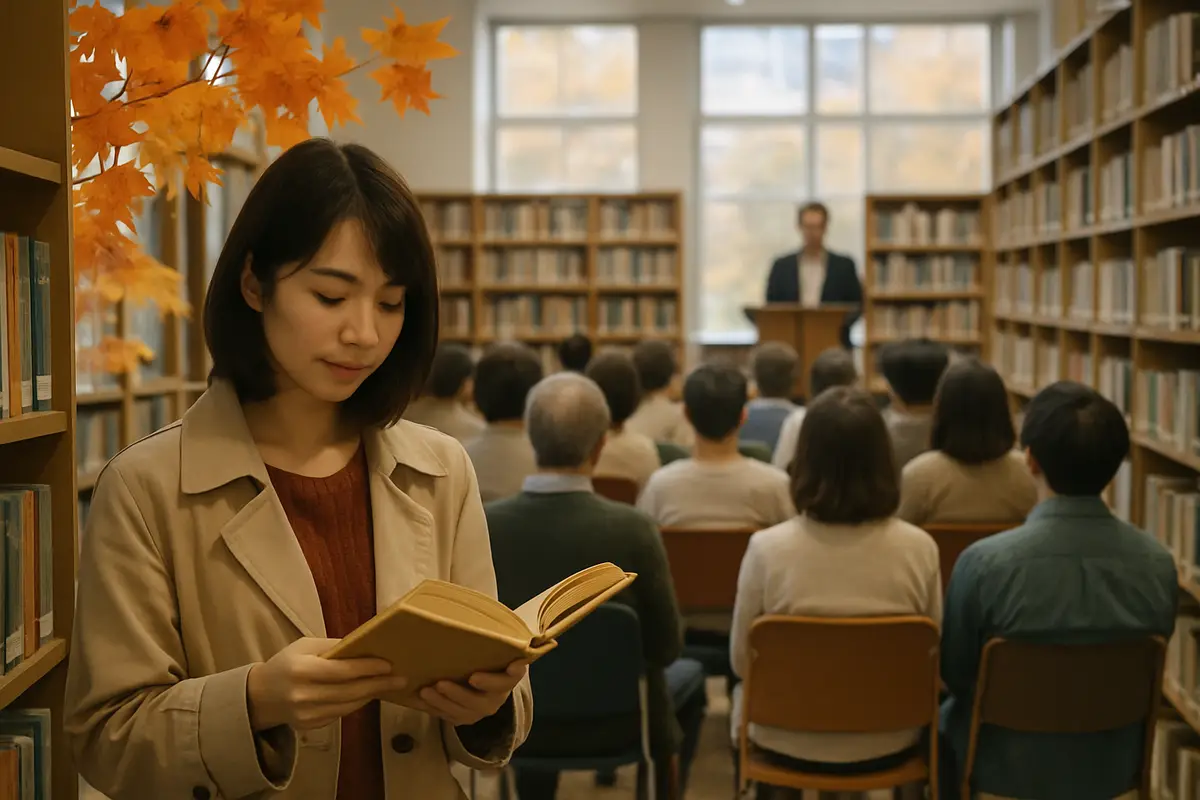
この画像はAIで生成され、学習目的で使用されています。
This image is AI-generated and used for educational purposes.
秋は「読書の秋」と言われます2。涼しくなって、本を読むのにちょうどいい季節だからです3。この時期、全国の図書館で、本に関係するイベントが開かれています4。
ある町の図書館では、子どものために、絵本を読む会を毎週開いています5。大人向けには、好きな本を紹介し合う会もあります6。参加した人は「ほかの人の話を聞いて、読みたい本が増えた」と話していました7。
最近は、スマホで短い文章を読む人が多くなりました8。図書館は、紙の本の楽しさを知ってもらいたいと考えています9。
Discussion
to rate or comment.
No comments yet.