(すてる)
to throw away; to discard
(くふう)
ingenuity; device; scheme
(しょくひんろす)
food loss, food waste
(でる)
to come out; to occur
(そのため)
therefore; for that reason
(かてい)
household; home; family
(とりくみ)
efforts, initiatives
(しょうみきげん)
best-before date
(しょうひん)
goods; merchandise; product
(ふえる)
to increase; to grow
(こまる)
to be troubled; to be in difficulty
(かくにん)
confirmation, checking
(のこる)
to remain / to stay behind
(せんもんか)
expert, specialist
(ひとりひとり)
each person, one by one
(へらす)
to reduce; to decrease
negative form: does not ~, will not ~
The plain negative 出ない in the headline and the polite negative 出ません in the article both say that Ohtani will not appear in the game.
オールスターゲームに出ない。
He will not play in the All-Star Game.
今年は出ません。
He will not take part this year.
even though ~ / although ~
Plain form + のに expresses that the result clashes with expectation. 食べられるのに捨てられてしまう = 'it is thrown away even though it can still be eaten'.
食べられるのに捨てられている。
It is thrown away even though it can still be eaten.
薬を飲んだのに、まだ熱がある。
Even though I took the medicine, I still have a fever.
completely / finish ~ing (often regretful)
Expresses completion, often with regret or unexpectedness. Here the rice sold out quickly.
すぐに全部売れてしまった。
It all sold out right away.
忘れてしまった。
I forgot (unfortunately).
Passive form
The passive voice. 落とされて is the passive of 落とす (to drop). Indicates the bombs were dropped (by someone).
広島と長崎に原爆が落とされました。
Atomic bombs were dropped on Hiroshima and Nagasaki.
is doing, has been doing (ongoing state/action)
Expresses a continuing action or resulting state. Formed with て-form + いる. Can describe an action in progress or a state resulting from a past change.
今、ご飯を食べています。
I am eating rice now.
東京に住んでいます。
I live in Tokyo.
ドアが開いています。
The door is open.
and (non-exhaustive list)
や lists representative examples — Shikoku and Kyushu among other regions (四国や九州).
りんごやみかんを買った。
I bought apples and oranges (among others).
東京や大阪は大きい都市だ。
Tokyo and Osaka are big cities.
in order to, for the purpose of
Expresses purpose. Formed with verb dictionary form + ための + noun, or noun + のための + noun. Modifies the following noun to indicate its purpose.
試験のための勉強をしています。
I am studying for the exam.
健康のために運動します。
I exercise for my health.
日本語を勉強するための本を買いました。
I bought a book for studying Japanese.
doing things like ~ and ~
Lists representative actions among several. Implies there are other actions too. Used twice in this article.
週末は本を読んだり映画を見たりします。
On weekends I do things like read books and watch movies.
歌ったり踊ったりして楽しんだ。
We had fun singing and dancing.
te-form for connecting clauses
The te-form connects sequential actions or clauses. Here it links 'started' with the following action.
朝起きて、朝ごはんを食べます。
I wake up in the morning and eat breakfast.
店に行って、パンを買いました。
I went to the store and bought bread.
just ~; only ~; in just ~
Emphasizes a limited amount, showing that the result was achieved with only that much.
1時間だけで全部食べた。
I ate everything in just one hour.
少しだけで十分です。
Just a little is enough.
is saying that ..., is talking about ...
Quotation と + 話している. Used to report what someone is saying in speech. Similar to と言っている but slightly more formal.
社長は新しい計画について話しています。
The president is talking about the new plan.
彼女は将来の夢について話していました。
She was talking about her future dreams.
1
食べ物を捨てない工夫が広がる
Ideas for not throwing away food are spreading
2
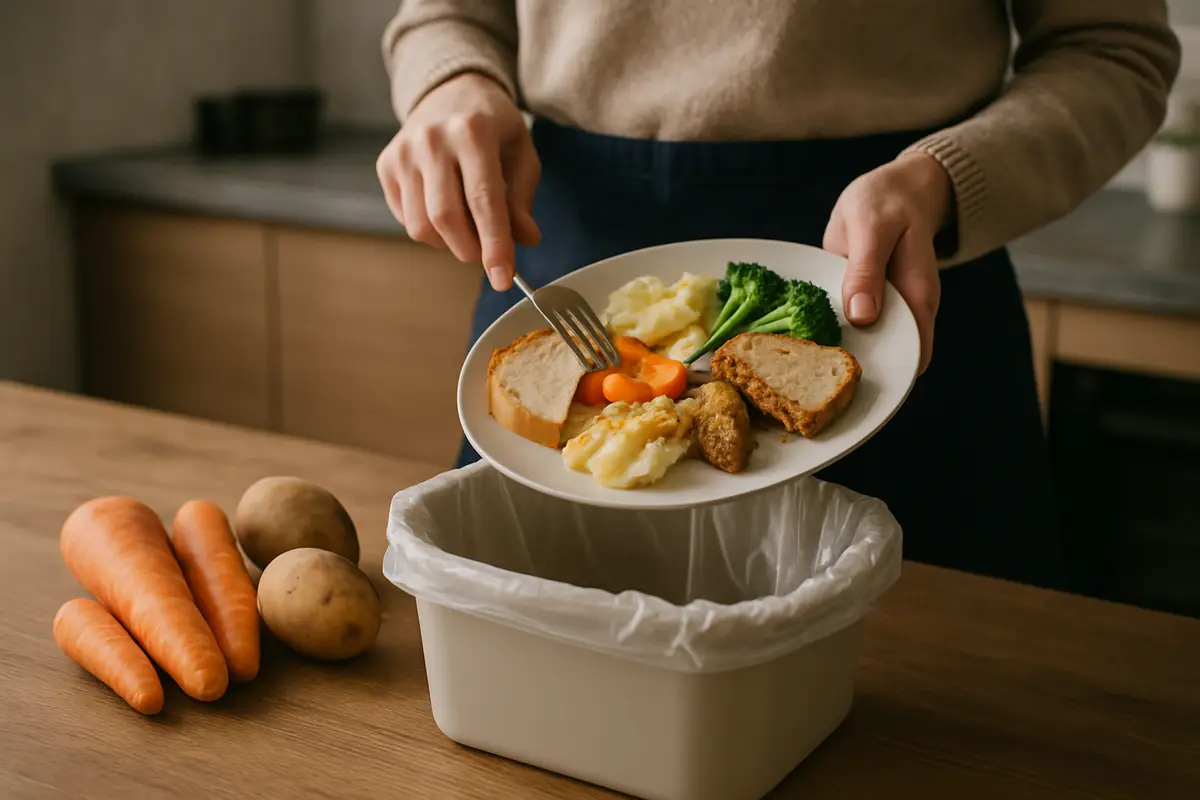
まだ食べられるのに捨てられてしまう食べ物は「食品ロス」と呼ばれています。
Food that is thrown away even though it can still be eaten is called "food loss."
3
日本では毎年、たくさんの食品ロスが出ていて、問題になっています。
In Japan, a lot of food loss is produced every year, and it has become a problem.
4
そのため、店や家庭で食べ物を無駄にしないための取り組みが広がっています。
For that reason, efforts to avoid wasting food are spreading in shops and homes.
5
スーパーやコンビニでは、賞味期限が近い商品を安く売ったり、アプリで知らせたりする店が増えました。
More supermarkets and convenience stores now sell products near their best-before date at lower prices or announce them through apps.
6
また、売れ残ったパンや野菜を集めて、困っている人に届ける活動もあります。
There are also activities that collect unsold bread and vegetables and deliver them to people in need.
7
家庭でも、買い物の前に冷蔵庫の中を確認したり、残った料理を別の料理に使ったりする人が増えています。
At home, too, more people are checking inside their refrigerators before shopping and using leftovers in other dishes.
8
専門家は「一人一人が少し気をつけるだけで、食品ロスは減らせる」と話しています。
Experts say, "Food loss can be reduced if each person is just a little careful."
Discussion
to rate or comment.
No comments yet.