9月から10月は、台風が多く来る季節です2。今年も、強い台風が日本の近くを通りました3。そのため、家で準備をする人が増えています4。
店では、水や電池、懐中電灯などがよく売れています5。窓が割れないように、テープを買う人もいます6。また、スマートフォンを充電しておくことも大切です7。
市や町は、「台風が来る前に、住んでいる所の危ない場所を調べておいてください」と話しています8。ハザードマップを見て、避難する場所を家族で決めておくと安心です9。
(たいふう)
typhoon
(そなえる)
to prepare; to provide against
(じゅんび)
preparation
(ひと)
person / people
(ふえる)
to increase; to grow
(おおい)
many
(くる)
to come
(きせつ)
Season
(ことし)
this year
(つよい)
strong
(にほん)
Japan
(ちかく)
nearby
(とおる)
to pass through
(そのため)
therefore; for that reason
(いえ)
house
(みせ)
shop, store
(みず)
water
(でんち)
battery
(かいちゅうでんとう)
flashlight
(よく)
often, well, frequently
(うれる)
to sell (well)
(まど)
window
(われる)
to crack / split
(かう)
to buy
(すまーとふぉん)
smartphone
(じゅうでん)
charging (a battery)
(たいせつ)
important
(し)
city
(まち)
town
(すむ)
to live; to reside
(ところ)
place; area
(あぶない)
dangerous
(ばしょ)
place
(しらべる)
to investigate; to survey
(はなす)
to speak, talk
(はざーどまっぷ)
hazard map
(みる)
to see, watch
(ひなん)
evacuation
(かぞく)
family
(きめる)
to decide
(あんしん)
relief / peace of mind
in preparation for
They practice in preparation for the real matches.
試合に備えて練習する。
Practice in preparation for the match.
地震に備えて準備する。
Prepare in case of an earthquake.
from (starting point)
Indicates the origin or source. 建物の中から means 'from inside the building'.
かばんの中から鍵が出てきた。
A key came out from inside the bag.
polite copula / is, am, are
Describes states such as the mother panda being healthy and the baby being small.
これは本です。
This is a book.
今日は寒いです。
It is cold today.
is doing, has been doing (ongoing state/action)
Expresses a continuing action or resulting state. Formed with て-form + いる. Can describe an action in progress or a state resulting from a past change.
今、ご飯を食べています。
I am eating rice now.
東京に住んでいます。
I live in Tokyo.
ドアが開いています。
The door is open.
and (non-exhaustive list)
や lists representative examples — Shikoku and Kyushu among other regions (四国や九州).
りんごやみかんを買った。
I bought apples and oranges (among others).
東京や大阪は大きい都市だ。
Tokyo and Osaka are big cities.
so that ... not, in order to prevent
Expresses a negative purpose - doing something so that something else does NOT happen. Formed with verb negative form + ように.
忘れないようにメモしました。
I took notes so I wouldn't forget.
遅れないように早く出ました。
I left early so I wouldn't be late.
風邪をひかないように気をつけてください。
Please be careful not to catch a cold.
Do ~ in advance (preparation)
Indicates doing something in advance for future readiness. Companies need to decide procedures in advance.
旅行の前にホテルを予約しておく。
I book a hotel in advance before the trip.
before ~
Indicates doing something before another action. Used to advise checking the store before ordering.
食べる前に手を洗います。
I wash my hands before eating.
寝る前に本を読む。
I read before sleeping.
please do ...
Polite request form. Formed with て-form + ください. Used to ask someone to perform an action.
ここに名前を書いてください。
Please write your name here.
もう一度言ってください。
Please say it once more.
窓を開けてください。
Please open the window.
te-form for connecting clauses
The te-form connects sequential actions or clauses. Here it links 'started' with the following action.
朝起きて、朝ごはんを食べます。
I wake up in the morning and eat breakfast.
店に行って、パンを買いました。
I went to the store and bought bread.
if / when (natural consequence)
Conditional と indicating a natural or expected result. 一緒に捨てると…火が出て means 'if you throw them away together, fire starts.'
ボタンを押すと、ドアが開きます。
When you press the button, the door opens.
春になると、桜が咲きます。
When spring comes, cherry blossoms bloom.
台風に備えて準備をする人が増える
More people are preparing for typhoons
9月から10月は、台風が多く来る季節です。
September to October is the season when many typhoons come.
今年も、強い台風が日本の近くを通りました。
This year, too, strong typhoons passed near Japan.
そのため、家で準備をする人が増えています。
Because of this, more people are making preparations at home.
店では、水や電池、懐中電灯などがよく売れています。
In shops, water, batteries, flashlights and other items are selling well.
窓が割れないように、テープを買う人もいます。
Some people buy tape so that their windows won't break.
また、スマートフォンを充電しておくことも大切です。
It is also important to charge your smartphone in advance.
市や町は、「台風が来る前に、住んでいる所の危ない場所を調べておいてください」と話しています。
Cities and towns are saying, "Before a typhoon comes, please check the dangerous places where you live."
ハザードマップを見て、避難する場所を家族で決めておくと安心です。
Looking at a hazard map and deciding on an evacuation place with your family in advance will give you peace of mind.
2026年09月28日 19:09
著者: jpreader
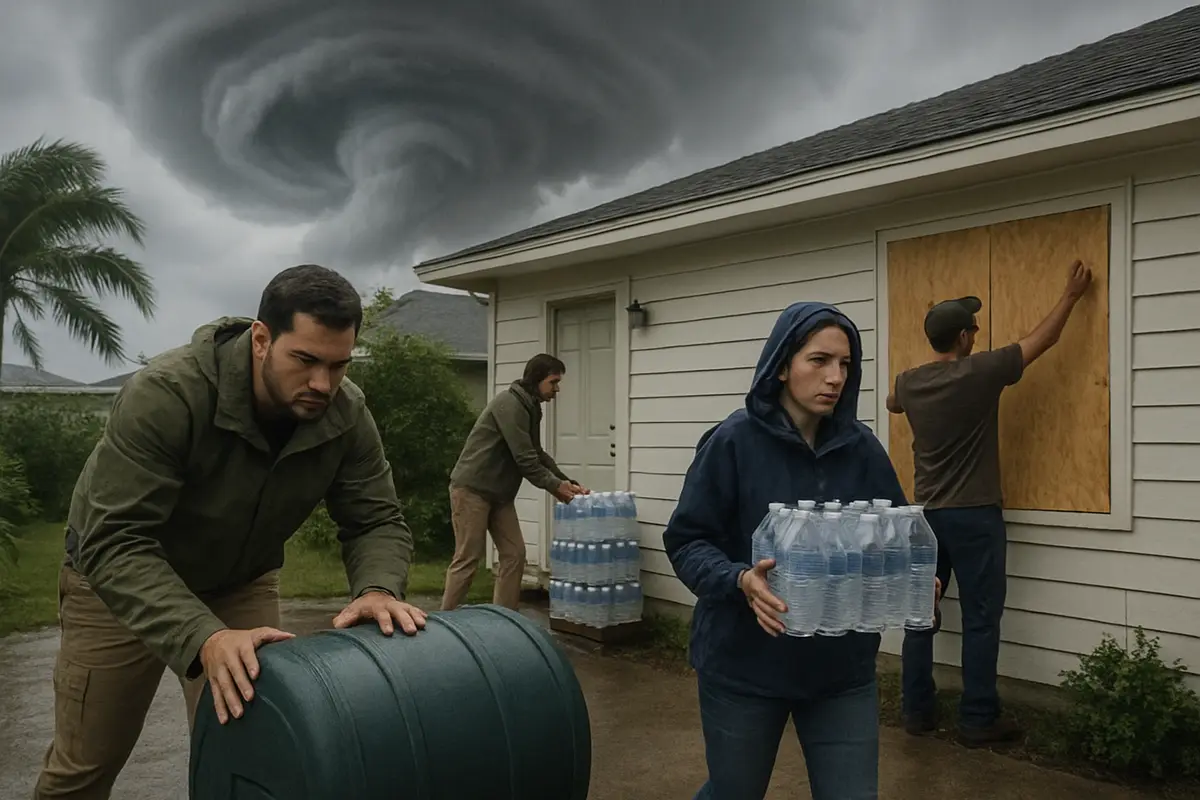
この画像はAIで生成され、学習目的で使用されています。
This image is AI-generated and used for educational purposes.
9月から10月は、台風が多く来る季節です2。今年も、強い台風が日本の近くを通りました3。そのため、家で準備をする人が増えています4。
店では、水や電池、懐中電灯などがよく売れています5。窓が割れないように、テープを買う人もいます6。また、スマートフォンを充電しておくことも大切です7。
市や町は、「台風が来る前に、住んでいる所の危ない場所を調べておいてください」と話しています8。ハザードマップを見て、避難する場所を家族で決めておくと安心です9。
Discussion
to rate or comment.
No comments yet.