文章を書いたり、質問に答えたりする人工知能を、仕事に使う会社が増えています2。会議の内容をまとめたり、メールの下書きを作ったりするときによく使われています3。作業の時間が短くなったという会社もあります4。
一方で、心配な点もあります5。人工知能が間違った情報を答えることがあるため、人が必ず確認する必要があります6。また、会社の大切な情報が外に出ないように、使い方のルールを決める会社も増えています7。
専門家は、「便利な道具ですが、最後に判断するのは人です」と話しています8。
(しごと)
work, job
(じんこうちのう)
artificial intelligence
(つかう)
to use
(かいしゃ)
company
(ふえる)
to increase; to grow
(ぶんしょう)
text; document
(かく)
to write
(しつもん)
question
(こたえる)
to answer
(かいぎ)
meeting; conference
(ないよう)
content; details
(めーる)
(したがき)
draft
(つくる)
to make
(よく)
often, well, frequently
(さぎょう)
work, operation
(じかん)
time
(みじかい)
short
(しんぱい)
worry / concern
(てん)
point, score
(まちがう)
to be wrong; to make a mistake
(じょうほう)
information
(ひと)
person / people
(かならず)
without fail, certainly
(かくにん)
confirmation, checking
(ひつよう)
necessary / needed
(たいせつ)
important
(そと)
outside
(でる)
to come out; to occur
(るーる)
rule
(きめる)
to decide
(せんもんか)
expert, specialist
(べんり)
convenient
(どうぐ)
tool, equipment
(さいご)
last, final
(はんだん)
judgement; decision
doing things like ~ and ~
Lists representative actions among several. Implies there are other actions too. Used twice in this article.
週末は本を読んだり映画を見たりします。
On weekends I do things like read books and watch movies.
歌ったり踊ったりして楽しんだ。
We had fun singing and dancing.
is doing, has been doing (ongoing state/action)
Expresses a continuing action or resulting state. Formed with て-form + いる. Can describe an action in progress or a state resulting from a past change.
今、ご飯を食べています。
I am eating rice now.
東京に住んでいます。
I live in Tokyo.
ドアが開いています。
The door is open.
passive form
Passive voice. 愛される means 'to be loved', describing the kind of store the worker aspires to create.
みんなに愛される人になりたい。
I want to be a person loved by everyone.
先生に褒められました。
I was praised by my teacher.
called/named ~
Used to introduce or name something. In this article, 「鳥貴族」という店 means 'a store called Torikizoku'.
田中という人を知っていますか。
Do you know a person called Tanaka?
これは寿司という料理です。
This is a dish called sushi.
on the other hand
Introduces the opposing concern: 一方で、心配する声もある.
一方で、心配する声もある。
On the other hand, there are also voices of concern.
便利だが、一方で危険もある。
It's convenient, but on the other hand there is danger.
because ~, due to ~
Gives the reason the benefit to students is large: specialists are the ones coaching.
雨が降ったため、中止になりました。
It was cancelled because it rained.
人が少ないため、時間がかかります。
It takes time because there are few people.
need to / necessary to
Expresses necessity. Here it states that congressional discussion is required by law for military attacks.
議会で話し合う必要がある。
It is necessary to discuss it in Congress.
勉強する必要があります。
You need to study.
so that ... not, in order to prevent
Expresses a negative purpose - doing something so that something else does NOT happen. Formed with verb negative form + ように.
忘れないようにメモしました。
I took notes so I wouldn't forget.
遅れないように早く出ました。
I left early so I wouldn't be late.
風邪をひかないように気をつけてください。
Please be careful not to catch a cold.
way of doing
Verb stem + 方 expresses the way or manner of doing something. 歩き方 means 'way of walking', one of the things buyers inspected.
この漢字の読み方を教えてください。
Please tell me how to read this kanji.
彼の話し方はやさしいです。
His way of speaking is gentle.
but / however (contrast)
Conjunctive particle used to connect two clauses with contrasting or unexpected information.
行きたいですが、時間がありません。
I want to go, but I don't have time.
nominalizing a verb phrase with の
Used in 「みんなの前で話をするのは初めてです」to nominalize the verb phrase so it can serve as the topic of the sentence.
日本語を勉強するのは楽しいです。
Studying Japanese is fun.
朝早く起きるのは大変です。
Waking up early is tough.
is saying that ..., is talking about ...
Quotation と + 話している. Used to report what someone is saying in speech. Similar to と言っている but slightly more formal.
社長は新しい計画について話しています。
The president is talking about the new plan.
彼女は将来の夢について話していました。
She was talking about her future dreams.
仕事に人工知能を使う会社が増える
More companies are using artificial intelligence at work
文章を書いたり、質問に答えたりする人工知能を、仕事に使う会社が増えています。
More and more companies are using AI that can write text and answer questions in their work.
会議の内容をまとめたり、メールの下書きを作ったりするときによく使われています。
It is often used for things like summarizing what was said in meetings and drafting emails.
作業の時間が短くなったという会社もあります。
Some companies say the time their work takes has become shorter.
一方で、心配な点もあります。
On the other hand, there are also points of concern.
人工知能が間違った情報を答えることがあるため、人が必ず確認する必要があります。
Because AI sometimes gives wrong information, a person always needs to check it.
また、会社の大切な情報が外に出ないように、使い方のルールを決める会社も増えています。
Also, more companies are setting rules for how to use it so that important company information doesn't get out.
専門家は、「便利な道具ですが、最後に判断するのは人です」と話しています。
Experts say, "It's a convenient tool, but in the end it is people who make the decisions."
2026年09月28日 19:10
著者: jpreader
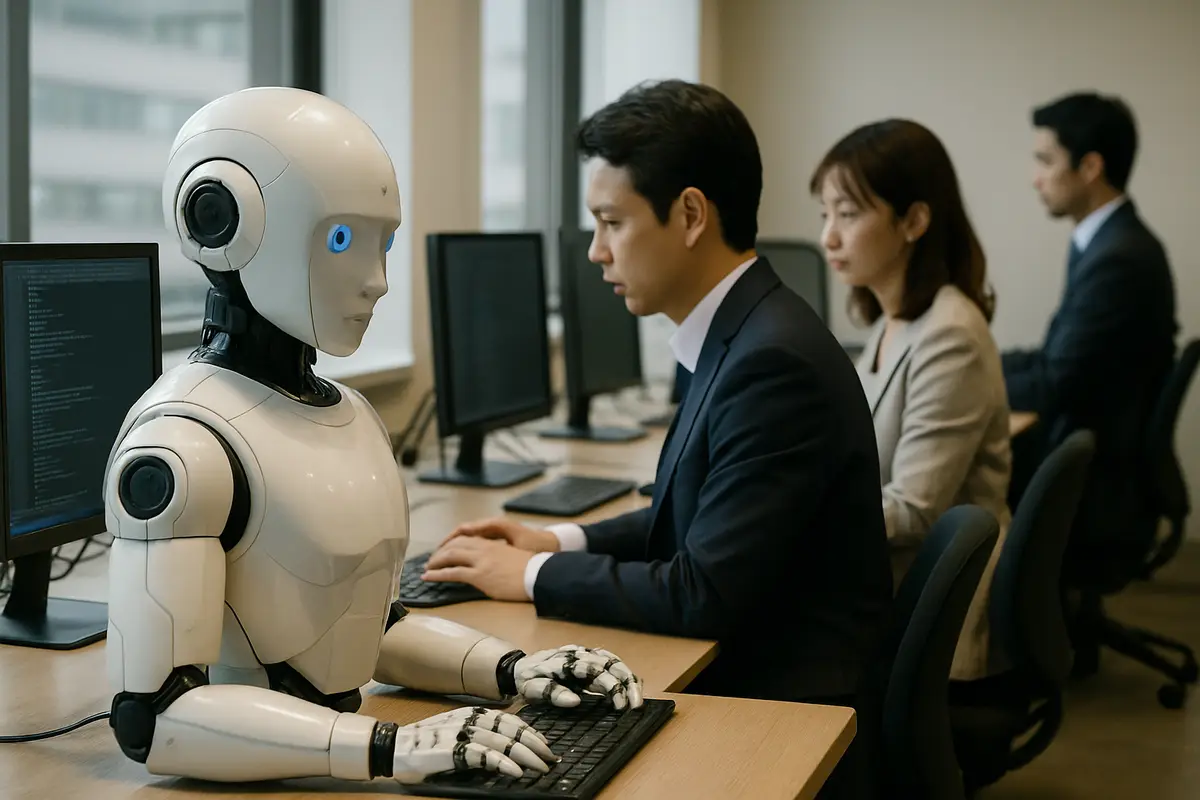
この画像はAIで生成され、学習目的で使用されています。
This image is AI-generated and used for educational purposes.
文章を書いたり、質問に答えたりする人工知能を、仕事に使う会社が増えています2。会議の内容をまとめたり、メールの下書きを作ったりするときによく使われています3。作業の時間が短くなったという会社もあります4。
一方で、心配な点もあります5。人工知能が間違った情報を答えることがあるため、人が必ず確認する必要があります6。また、会社の大切な情報が外に出ないように、使い方のルールを決める会社も増えています7。
専門家は、「便利な道具ですが、最後に判断するのは人です」と話しています8。
Discussion
to rate or comment.
No comments yet.