日本に来る外国人の旅行者が増えています2。今年は、たくさんの人が飛行機で日本に来ました3。東京や京都、大阪は、いつも人が多いです4。
旅行者は、日本の食べ物が好きです5。すしやラーメンを食べる人が多いです6。お寺や神社を見る人も多いです7。店では、英語や中国語で話す店員もいます8。
でも、問題もあります9。バスや電車がとても混んでいます10。町の人は「もう少し静かにしてほしい」と言っています11。国や町は、旅行者が少ない所にも行ってほしいと考えています12。
(にほん)
Japan
(くる)
to come
(がいこくじん)
foreigner
(りょこうしゃ)
traveler
(ふえる)
to increase; to grow
(ことし)
this year
(たくさん)
a lot / many
(ひと)
person / people
(ひこうき)
airplane
(とうきょう)
Tokyo
(きょうと)
Kyoto
(おおさか)
Osaka
(いつも)
always, usually
(おおい)
many
(たべもの)
food
(すき)
liked, favorite
(らーめん)
ramen (noodle soup)
(たべる)
to eat
(てら)
temple
(じんじゃ)
Shinto shrine
(みる)
to see, watch
(みせ)
shop, store
(えいご)
English (language)
(ちゅうごくご)
Chinese (language)
(はなす)
to speak, talk
(てんいん)
shop clerk
(でも)
but; however
(もんだい)
problem
(ばす)
bus
(でんしゃ)
electric train
(とても)
very; extremely
(こむ)
to be crowded / to be busy
(まち)
town
(もう)
already; again
(すこし)
a little
(しずか)
quiet
(いう)
to say
(くに)
country; the government
(すくない)
few, scarce
(ところ)
place; area
(いく)
to go
(かんがえる)
to think; to consider
come to do ~
Expresses purpose of coming. Please come to see (them).
食事に来ます。
I come to eat.
遊びに来ました。
I came to play.
is doing, has been doing (ongoing state/action)
Expresses a continuing action or resulting state. Formed with て-form + いる. Can describe an action in progress or a state resulting from a past change.
今、ご飯を食べています。
I am eating rice now.
東京に住んでいます。
I live in Tokyo.
ドアが開いています。
The door is open.
by means of / using
The particle で indicates the means by which something is done. Here, '宇宙船で' means 'by/using a spaceship'.
電車で行きます。
I go by train.
はしで食べます。
I eat with chopsticks.
did ... (polite past)
Polite past tense of verbs. Formed with verb stem + ました. Used in formal or polite speech to describe completed actions.
昨日、映画を見ました。
I watched a movie yesterday.
朝ごはんを食べました。
I ate breakfast.
友達が来ました。
A friend came.
~ and ~ (non-exhaustive list)
や connects nouns in a non-exhaustive list, implying there are other items not mentioned.
りんごやみかんを買いました。
I bought apples, oranges, and so on.
polite copula / is, am, are
Describes states such as the mother panda being healthy and the baby being small.
これは本です。
This is a book.
今日は寒いです。
It is cold today.
there are also (people who...)
Indicates that some people also do/feel something; there are also people who worry (心配する人もいます) and teachers who say so (言う先生もいます).
心配する人もいます。
There are also people who worry.
そう言う先生もいます。
There are also teachers who say so.
want (someone) to do ...
Expresses a wish for someone else to do something. Formed with て-form + ほしい. The person you want to act is marked with に.
静かにしてほしい。
I want you to be quiet.
もう少し待ってほしいです。
I'd like you to wait a bit more.
先生に説明してほしいです。
I want the teacher to explain.
also to/by ~
Combines に (direction/target) with も (also).
子どもにも人気だ。
It's popular with children too.
私にもください。
Please give me some too.
日本に来る外国人旅行者が増える
More foreign tourists are coming to Japan
日本に来る外国人の旅行者が増えています。
The number of foreign tourists coming to Japan is increasing.
今年は、たくさんの人が飛行機で日本に来ました。
This year, many people came to Japan by plane.
東京や京都、大阪は、いつも人が多いです。
Tokyo, Kyoto, and Osaka are always crowded with people.
旅行者は、日本の食べ物が好きです。
Tourists like Japanese food.
すしやラーメンを食べる人が多いです。
Many people eat sushi and ramen.
お寺や神社を見る人も多いです。
Many people also visit temples and shrines.
店では、英語や中国語で話す店員もいます。
In shops, there are also clerks who speak English or Chinese.
でも、問題もあります。
But there are also problems.
バスや電車がとても混んでいます。
Buses and trains are very crowded.
町の人は「もう少し静かにしてほしい」と言っています。
Local people say, "We want it to be a little quieter."
国や町は、旅行者が少ない所にも行ってほしいと考えています。
The government and towns want tourists to also visit places that have few tourists.
2026年09月29日 19:08
著者: jpreader
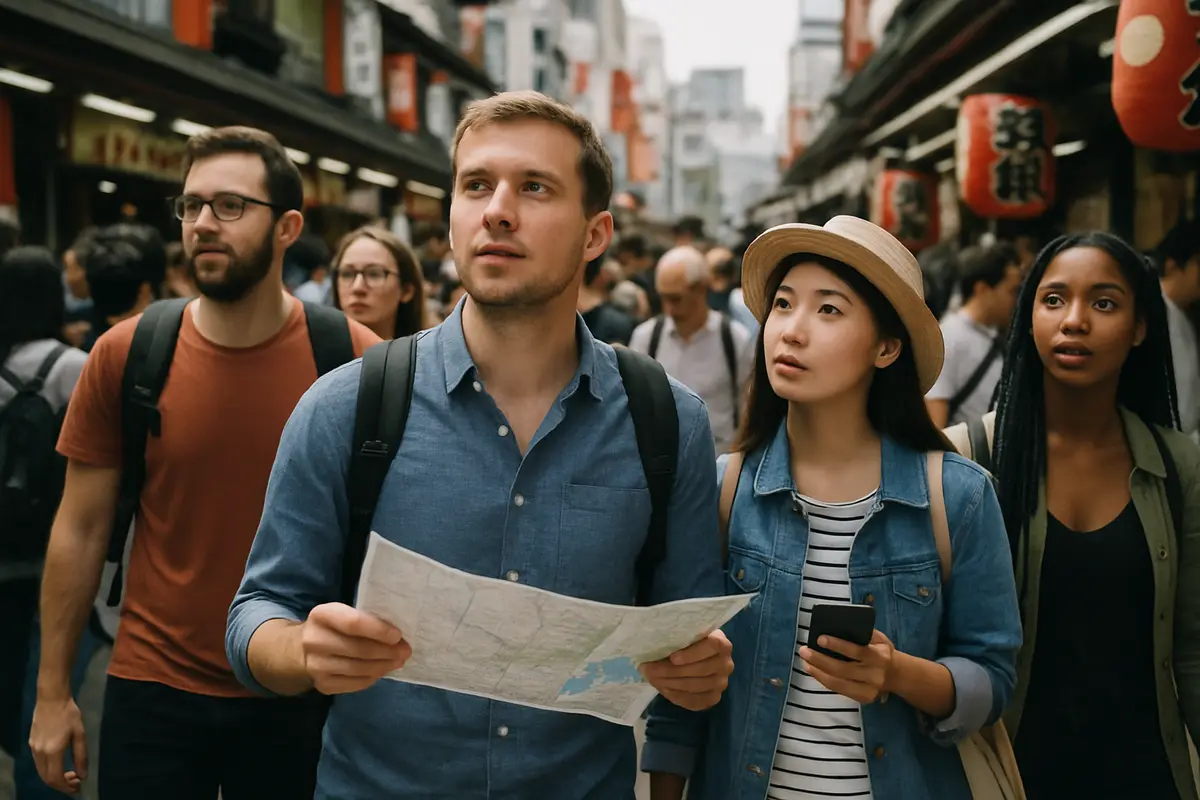
この画像はAIで生成され、学習目的で使用されています。
This image is AI-generated and used for educational purposes.
日本に来る外国人の旅行者が増えています2。今年は、たくさんの人が飛行機で日本に来ました3。東京や京都、大阪は、いつも人が多いです4。
旅行者は、日本の食べ物が好きです5。すしやラーメンを食べる人が多いです6。お寺や神社を見る人も多いです7。店では、英語や中国語で話す店員もいます8。
でも、問題もあります9。バスや電車がとても混んでいます10。町の人は「もう少し静かにしてほしい」と言っています11。国や町は、旅行者が少ない所にも行ってほしいと考えています12。
Discussion
to rate or comment.
No comments yet.