朝ごはんを食べない若い人が増えています2。特に二十代の人に多いです3。「朝は時間がない」「朝はおなかがすいていない」と言う人がたくさんいます4。仕事や学校の前に、何も食べない人もいます5。
医者は、朝ごはんはとても大切だと言っています6。朝ごはんを食べないと、午前中に頭がよく働きません7。体も元気になりません8。
時間がない人は、バナナやパン、牛乳だけでもいいです9。少しでも食べることが大切です10。毎日早く寝て、早く起きることもいいと、医者は話しています11。
(あさごはん)
breakfast
(たべる)
to eat
(わかい)
young
(ひと)
person / people
(ふえる)
to increase; to grow
(とくに)
especially / particularly
(にじゅうだい)
people in their twenties
(おおい)
many
(あさ)
morning
(じかん)
time
(おなか)
stomach; belly
(いう)
to say
(たくさん)
a lot / many
(しごと)
work, job
(がっこう)
school
(まえ)
before, previous
(いしゃ)
doctor
(たいせつ)
important
(ごぜんちゅう)
during the morning
(あたま)
head
(よく)
often, well, frequently
(はたらく)
to work
(からだ)
body
(げんき)
Healthy; energetic; lively
(ばなな)
banana
(ぎゅうにゅう)
milk
(すこし)
a little
(まいにち)
every day
(はやい)
early / fast
(ねる)
to sleep
(おきる)
to happen, occur
(はなす)
to speak, talk
negative form: does not ~, will not ~
The plain negative 出ない in the headline and the polite negative 出ません in the article both say that Ohtani will not appear in the game.
オールスターゲームに出ない。
He will not play in the All-Star Game.
今年は出ません。
He will not take part this year.
is doing, has been doing (ongoing state/action)
Expresses a continuing action or resulting state. Formed with て-form + いる. Can describe an action in progress or a state resulting from a past change.
今、ご飯を食べています。
I am eating rice now.
東京に住んでいます。
I live in Tokyo.
ドアが開いています。
The door is open.
there is no ~ / to not have ~
時間がない means 'there is no time' — the reason many people skip breakfast.
お金がない。
I have no money.
今日は宿題がない。
There is no homework today.
nothing / not anything
何も食べない means eating nothing at all before work or school.
朝から何も食べていない。
I haven't eaten anything since morning.
箱の中には何もない。
There is nothing in the box.
to say that ...
Quotation pattern. と marks the quoted content, followed by 言う (to say). Used for both direct and indirect speech.
先生は明日休みだと言いました。
The teacher said tomorrow is a day off.
母は早く帰ってきてと言った。
My mother said to come home early.
彼はもう行かないと言っています。
He says he won't go anymore.
if / when (natural consequence)
Conditional と indicating a natural or expected result. 一緒に捨てると…火が出て means 'if you throw them away together, fire starts.'
ボタンを押すと、ドアが開きます。
When you press the button, the door opens.
春になると、桜が咲きます。
When spring comes, cherry blossoms bloom.
does not ~ (polite negative)
ません is the polite negative form of verbs. It negates the action in a formal/polite context.
今日は学校に行きません。
I won't go to school today.
to become
Expresses a change of state; Kawai became the new commissioner of the Sports Agency.
新しい長官になりました。
He became the new commissioner.
目が見えなくなりました。
He became unable to see.
just ~ is fine / even only ~ is OK
牛乳だけでもいい says that even just milk is fine for people without time.
少しだけでもいいから手伝ってください。
Please help, even just a little.
五分だけでもいいです。
Even just five minutes is fine.
Even ~; also at ~
Particle でも after a noun means 'even' or 'also at.' 首相官邸の庭でも means 'even at the Prime Minister's residence garden.'
子供でもわかります。
Even a child can understand.
it is important that ~
Used to express importance of an action. Here cooperation between Japan and China is described as important.
毎日運動することが大切です。
It's important to exercise daily.
相手を理解することが大切だ。
It's important to understand the other person.
and then ~ (te-form linking actions)
The te-form links two actions in sequence without ending the sentence. 歩いてまく means "walk and (then) spray", and 写真を撮って、…調べる means "take photos and then check".
写真を撮って、農家に送ります。
I take a photo and send it to the farmer.
畑に行って、薬をまきました。
I went to the field and sprayed chemicals.
~ing also / the act of ~ too
早く起きることもいい adds getting up early as another good habit, with こと turning the verb into a noun.
歩くことも体にいいです。
Walking is also good for your body.
料理を作ることも好きです。
I also like cooking.
朝ごはんを食べない若い人が増えている
More young people are skipping breakfast
朝ごはんを食べない若い人が増えています。
The number of young people who don't eat breakfast is increasing.
特に二十代の人に多いです。
It is especially common among people in their twenties.
「朝は時間がない」「朝はおなかがすいていない」と言う人がたくさんいます。
Many people say, "I don't have time in the morning" or "I'm not hungry in the morning."
仕事や学校の前に、何も食べない人もいます。
Some people eat nothing at all before work or school.
医者は、朝ごはんはとても大切だと言っています。
Doctors say that breakfast is very important.
朝ごはんを食べないと、午前中に頭がよく働きません。
If you don't eat breakfast, your brain doesn't work well in the morning.
体も元気になりません。
Your body doesn't get energized either.
時間がない人は、バナナやパン、牛乳だけでもいいです。
For people without time, even just a banana, bread, or milk is fine.
少しでも食べることが大切です。
It is important to eat, even a little.
毎日早く寝て、早く起きることもいいと、医者は話しています。
Doctors say it is also good to go to bed early and get up early every day.
2026年10月01日 19:09
著者: jpreader
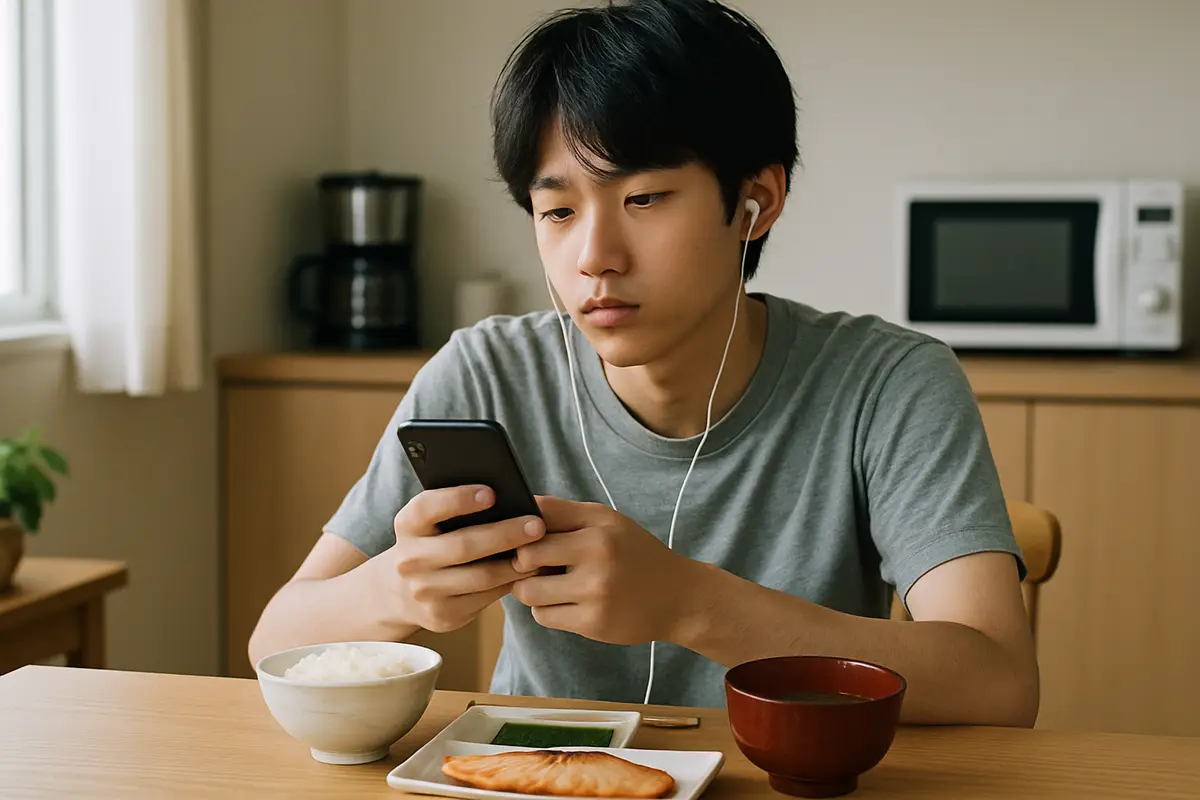
この画像はAIで生成され、学習目的で使用されています。
This image is AI-generated and used for educational purposes.
朝ごはんを食べない若い人が増えています2。特に二十代の人に多いです3。「朝は時間がない」「朝はおなかがすいていない」と言う人がたくさんいます4。仕事や学校の前に、何も食べない人もいます5。
医者は、朝ごはんはとても大切だと言っています6。朝ごはんを食べないと、午前中に頭がよく働きません7。体も元気になりません8。
時間がない人は、バナナやパン、牛乳だけでもいいです9。少しでも食べることが大切です10。毎日早く寝て、早く起きることもいいと、医者は話しています11。
Discussion
to rate or comment.
No comments yet.