千葉県の印旛沼で、外国から来た水草が増えています2。この水草は、とても早く大きくなります3。そして、水の上をおおうように広がります4。
印旛沼の水は、近くの田んぼで使われています5。水草が水といっしょに田んぼに入ると、稲が育ちにくくなります6。米が少ししかとれなくなるかもしれません7。
県や町は、水草を取る作業を続けています8。しかし、この水草は小さく切れても、また育ちます9。そのため、全部なくすのはむずかしいです10。県は、水草を見つけたら知らせてほしいと話しています11。
(いんばぬま)
Lake Inba (Inba-numa, a lake in Chiba)
(こめ)
Rice (uncooked)
(わるい)
bad
(みずくさ)
water plant, aquatic weed
(ひろがる)
to spread
(ちばけん)
Chiba Prefecture
(がいこく)
foreign country
(くる)
to come
(ふえる)
to increase; to grow
(とても)
very; extremely
(はやい)
early / fast
(おおきい)
big; large
(そして)
and; and then
(みず)
water
(うえ)
top, above
(おおう)
to cover
(ちかく)
nearby
(たんぼ)
rice paddy / rice field
(つかう)
to use
(いっしょに)
together
(はいる)
to enter, be contained in
(いね)
rice plant, paddy
(そだつ)
to grow up / to be raised
(すこし)
a little
(とれる)
to be harvested
(けん)
prefecture
(まち)
town
(とる)
to take
(さぎょう)
work, operation
(つづける)
to continue
(しかし)
however, but
(ちいさい)
small
(きれる)
to be cut, to break apart
(また)
again
(ぜんぶ)
All; everything; entirely
(なくす)
to eliminate, remove
(むずかしい)
difficult
(みつける)
to find; to discover
(しらせる)
to inform / notify
(はなす)
to speak, talk
might, maybe, possibly
Expresses possibility or uncertainty. Attached directly to the plain form of verbs, adjectives, or nouns. Less certain than でしょう.
明日は雨かもしれません。
It might rain tomorrow.
彼は来ないかもしれない。
He might not come.
この問題は難しいかもしれません。
This problem might be difficult.
is doing, has been doing (ongoing state/action)
Expresses a continuing action or resulting state. Formed with て-form + いる. Can describe an action in progress or a state resulting from a past change.
今、ご飯を食べています。
I am eating rice now.
東京に住んでいます。
I live in Tokyo.
ドアが開いています。
The door is open.
to become (い-adjective)
Expresses a change of state for い-adjectives. Drop the final い and add くなる. Indicates something has changed or will change to a new state.
寒くなりました。
It has gotten cold.
日本語が上手になりました。
My Japanese has gotten better.
値段が高くなりました。
The price became expensive.
in a way that ~, as if to ~
水の上をおおうように広がります describes how the weed spreads: in a way that covers the water surface.
雪が町をおおうように降った。
Snow fell as if to cover the town.
私が言うように書いてください。
Please write it the way I say.
passive form
The passive marks the subject as the one affected. 頭を打たれる means having your head struck by something.
落ちてきた物に頭を打たれます。
Your head gets struck by a falling object.
先生にほめられました。
I was praised by the teacher.
if / when (natural consequence)
Conditional と indicating a natural or expected result. 一緒に捨てると…火が出て means 'if you throw them away together, fire starts.'
ボタンを押すと、ドアが開きます。
When you press the button, the door opens.
春になると、桜が咲きます。
When spring comes, cherry blossoms bloom.
hard to ~; difficult to ~
Attached to a verb stem to describe difficulty — 'people who have difficulty hearing'.
読みにくい
hard to read
食べにくい
hard to eat
only ~ (negative emphasis)
Means 'only' with a negative verb, emphasizing how few/little. ヒットを3本しか打つことができませんでした means 'could only hit 3 hits'.
ヒットを3本しか打つことができませんでした
could only get 3 hits
100円しかありません
I only have 100 yen
to become no longer / to disappear
Indicates a change where something ceases to exist or can no longer be done. Here it describes that prayer gatherings can no longer be held in Hong Kong.
お金がなくなった。
The money is gone.
痛みがなくなりました。
The pain went away.
even if; even though
Used to express concession or hypothetical situation.
雨が降っても行きます。
I'll go even if it rains.
高くても買います。
Even if it's expensive, I'll buy it.
therefore; for that reason
Connects cause and result — because of more investors and profits, more people buy stocks.
そのため、株を買う人が増えた
Therefore, more people bought stocks.
雨だ。そのため、試合は中止だ
It's raining. For that reason, the match is cancelled.
The one that ~; what ~ is
Nominalizer の followed by the topic marker は, used to turn a clause into a noun phrase that serves as the topic of the sentence.
私が好きなのは寿司です。
What I like is sushi.
if ..., when ...
Conditional form indicating 'if' or 'when' something happens. Formed by adding ら to the た-form of a verb. Expresses a hypothetical or temporal condition.
雨が降ったら、行きません。
If it rains, I won't go.
お金があったら、旅行したいです。
If I had money, I'd like to travel.
終わったら、電話してください。
When you're done, please call me.
want (someone) to do ...
Expresses a wish for someone else to do something. Formed with て-form + ほしい. The person you want to act is marked with に.
静かにしてほしい。
I want you to be quiet.
もう少し待ってほしいです。
I'd like you to wait a bit more.
先生に説明してほしいです。
I want the teacher to explain.
印旛沼 米に悪い水草が広がるかもしれない
Lake Inba: a water weed harmful to rice may spread
千葉県の印旛沼で、外国から来た水草が増えています。
At Lake Inba in Chiba Prefecture, a water weed that came from abroad is increasing.
この水草は、とても早く大きくなります。
This weed grows big very quickly.
そして、水の上をおおうように広がります。
And it spreads as if to cover the surface of the water.
印旛沼の水は、近くの田んぼで使われています。
Water from Lake Inba is used in nearby rice paddies.
水草が水といっしょに田んぼに入ると、稲が育ちにくくなります。
When the weed gets into the paddies along with the water, the rice plants have a hard time growing.
米が少ししかとれなくなるかもしれません。
Only a little rice might be harvested.
県や町は、水草を取る作業を続けています。
The prefecture and towns are continuing the work of removing the weed.
しかし、この水草は小さく切れても、また育ちます。
However, even if this weed is cut into small pieces, it grows again.
そのため、全部なくすのはむずかしいです。
Because of that, getting rid of all of it is difficult.
県は、水草を見つけたら知らせてほしいと話しています。
The prefecture says it wants people to let it know if they find the weed.
2026年10月19日 12:23
著者: jpreader
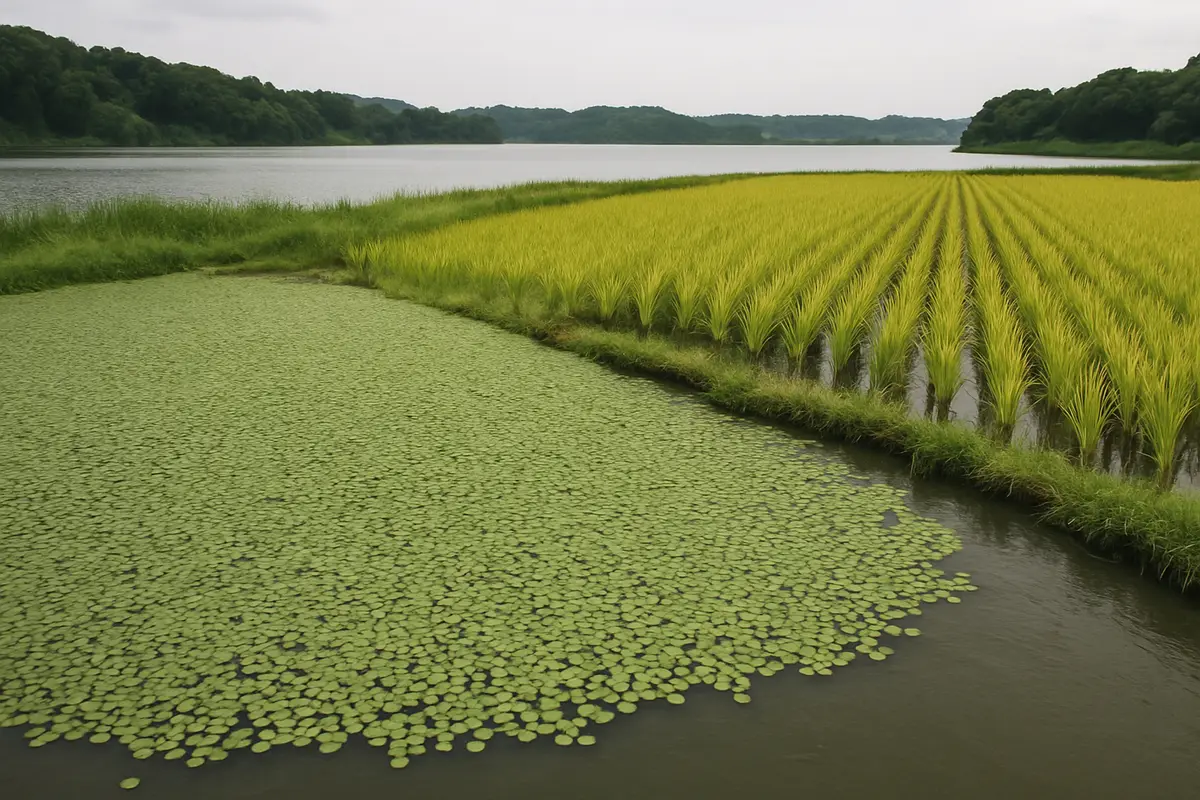
この画像はAIで生成され、学習目的で使用されています。
This image is AI-generated and used for educational purposes.
千葉県の印旛沼で、外国から来た水草が増えています2。この水草は、とても早く大きくなります3。そして、水の上をおおうように広がります4。
印旛沼の水は、近くの田んぼで使われています5。水草が水といっしょに田んぼに入ると、稲が育ちにくくなります6。米が少ししかとれなくなるかもしれません7。
県や町は、水草を取る作業を続けています8。しかし、この水草は小さく切れても、また育ちます9。そのため、全部なくすのはむずかしいです10。県は、水草を見つけたら知らせてほしいと話しています11。
Discussion
to rate or comment.
No comments yet.