今年の4月から、自転車の交通違反に「青切符」が使われるようになりました2。16歳以上の人が対象で、違反をすると反則金を払わなければなりません3。これまでは、注意だけで終わることが多かったです4。
例えば、スマートフォンを見ながら自転車に乗ると、反則金は1万2000円です5。傘をさしながら乗ったり、信号を守らなかったりした場合も、対象になります6。
自転車がかかわる事故は、まだ少なくありません7。警察は、自転車も車と同じようにルールを守って、安全に乗るように呼びかけています8。
(じてんしゃ)
bicycle
(いはん)
violation; infringement
(あおきっぷ)
"blue ticket" (traffic citation with a fine)
(はじまる)
to begin
(はんとし)
half a year
(ことし)
this year
(こうつういはん)
traffic violation
(つかう)
to use
(さい)
years old
(いじょう)
more than; beyond this
(ひと)
person / people
(たいしょう)
target, subject (of eligibility)
(はんそくきん)
fine (for a traffic violation)
(はらう)
to pay
(これまで)
until now / so far
(ちゅうい)
caution, warning
(だけ)
only, just
(おわる)
to end
(おおい)
many
(たとえば)
For example
(すまーとふぉん)
smartphone
(みる)
to see, watch
(のる)
to ride, board
(かさ)
umbrella
(さす)
to put up (an umbrella)
(しんごう)
traffic signal, traffic light
(まもる)
to protect
(ばあい)
case; situation
(かかわる)
to be involved in, to relate to
(じこ)
accident; incident
(まだ)
still; yet
(すくない)
few, scarce
(けいさつ)
police
(くるま)
car
(るーる)
rule
(あんぜん)
safety
(よびかける)
to call out; to appeal
passive form
The passive marks the subject as the one affected. 頭を打たれる means having your head struck by something.
落ちてきた物に頭を打たれます。
Your head gets struck by a falling object.
先生にほめられました。
I was praised by the teacher.
come to / reach the point where
Indicates a change in state or ability.
運転できるようになった。
Trains became able to run.
日本語が話せるようになりました。
I became able to speak Japanese.
if / when (natural consequence)
Conditional と indicating a natural or expected result. 一緒に捨てると…火が出て means 'if you throw them away together, fire starts.'
ボタンを押すと、ドアが開きます。
When you press the button, the door opens.
春になると、桜が咲きます。
When spring comes, cherry blossoms bloom.
must ~
Expresses strong obligation. Here the imperative to eliminate nuclear weapons.
核兵器をなくさなければなりません。
We must eliminate nuclear weapons.
行かなければなりません。
I must go.
often / frequently happens that ~
Used to indicate something happens often. Here かかることが多い (often happens that ~ catches it).
行くことが多い。
I often go.
while doing ...
Verb stem + ながら indicates doing two things simultaneously. The action before ながら is the secondary action; the main action follows.
音楽を聞きながら勉強します。
I study while listening to music.
歩きながら話しましょう。
Let's talk while walking.
テレビを見ながらごはんを食べます。
I eat while watching TV.
doing things like ~ and ~
Lists representative actions among several. Implies there are other actions too. Used twice in this article.
週末は本を読んだり映画を見たりします。
On weekends I do things like read books and watch movies.
歌ったり踊ったりして楽しんだ。
We had fun singing and dancing.
to become
Expresses a change of state; Kawai became the new commissioner of the Sports Agency.
新しい長官になりました。
He became the new commissioner.
目が見えなくなりました。
He became unable to see.
polite negative of i-adjectives
An i-adjective drops い and takes くありません for the polite negative. 少なくありません literally says "are not few" — a understated way of saying there are quite a lot of them.
軽い服装で山に入る人も少なくありません。
There are quite a few people who enter the mountains in light clothing.
この店は高くありません。
This shop is not expensive.
similarly to ~ / the same as ~
Used in '風邪と同じように' — symptoms come out the same way as a cold.
去年と同じように寒い。
Cold just like last year.
兄と同じように背が高い。
Tall just like my older brother.
(ask/urge someone) to ~
安全に乗るように呼びかけています reports the police urging cyclists to ride safely.
遅れないように言いました。
I told them not to be late.
ごみを持ち帰るように呼びかけています。
They are calling on people to take their trash home.
is doing, has been doing (ongoing state/action)
Expresses a continuing action or resulting state. Formed with て-form + いる. Can describe an action in progress or a state resulting from a past change.
今、ご飯を食べています。
I am eating rice now.
東京に住んでいます。
I live in Tokyo.
ドアが開いています。
The door is open.
自転車の違反に「青切符」 始まって半年
"Blue tickets" for bicycle violations: six months since the start
今年の4月から、自転車の交通違反に「青切符」が使われるようになりました。
Since April this year, "blue tickets" have been used for bicycle traffic violations.
16歳以上の人が対象で、違反をすると反則金を払わなければなりません。
They apply to people aged 16 and over, and anyone who commits a violation must pay a fine.
これまでは、注意だけで終わることが多かったです。
Until now, it often ended with just a warning.
例えば、スマートフォンを見ながら自転車に乗ると、反則金は1万2000円です。
For example, riding a bicycle while looking at a smartphone carries a fine of 12,000 yen.
傘をさしながら乗ったり、信号を守らなかったりした場合も、対象になります。
Cases such as riding while holding an umbrella or ignoring traffic signals are also covered.
自転車がかかわる事故は、まだ少なくありません。
Accidents involving bicycles are still not uncommon.
警察は、自転車も車と同じようにルールを守って、安全に乗るように呼びかけています。
The police are calling on cyclists to follow the rules just like cars and to ride safely.
2026年10月19日 12:25
著者: jpreader
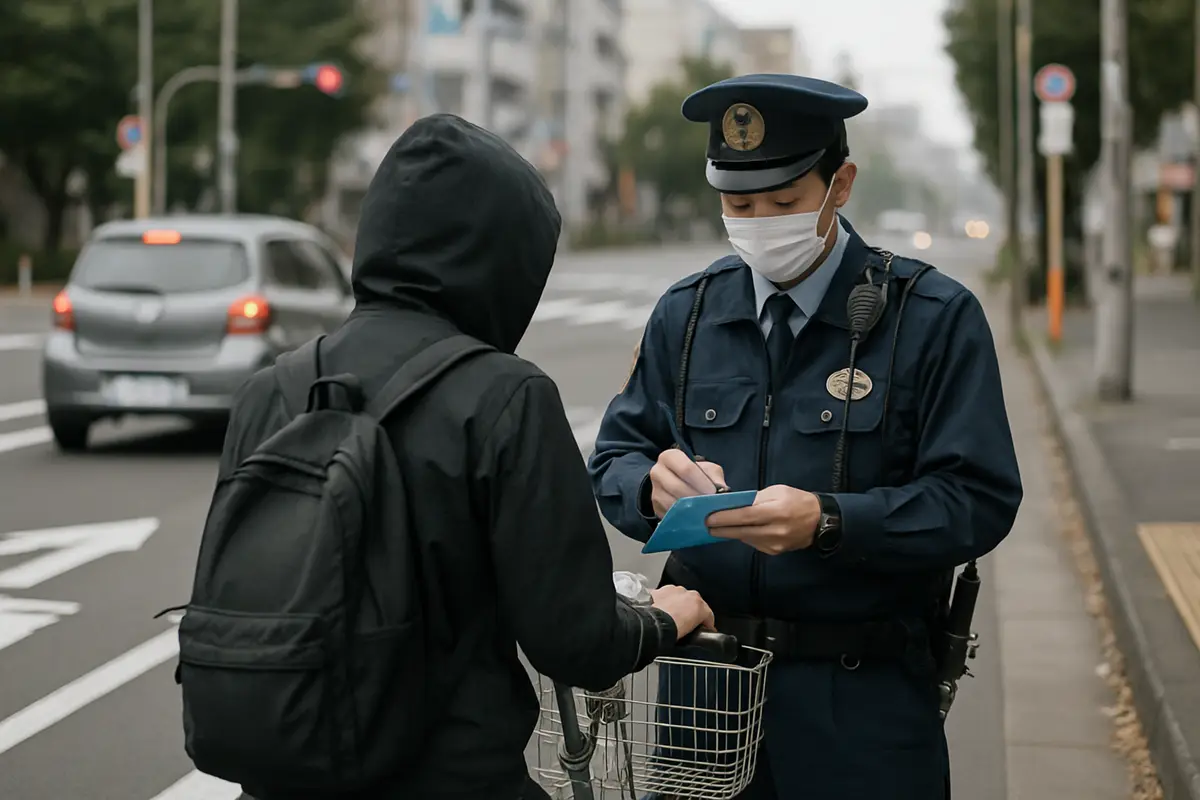
この画像はAIで生成され、学習目的で使用されています。
This image is AI-generated and used for educational purposes.
今年の4月から、自転車の交通違反に「青切符」が使われるようになりました2。16歳以上の人が対象で、違反をすると反則金を払わなければなりません3。これまでは、注意だけで終わることが多かったです4。
例えば、スマートフォンを見ながら自転車に乗ると、反則金は1万2000円です5。傘をさしながら乗ったり、信号を守らなかったりした場合も、対象になります6。
自転車がかかわる事故は、まだ少なくありません7。警察は、自転車も車と同じようにルールを守って、安全に乗るように呼びかけています8。
Discussion
to rate or comment.
No comments yet.