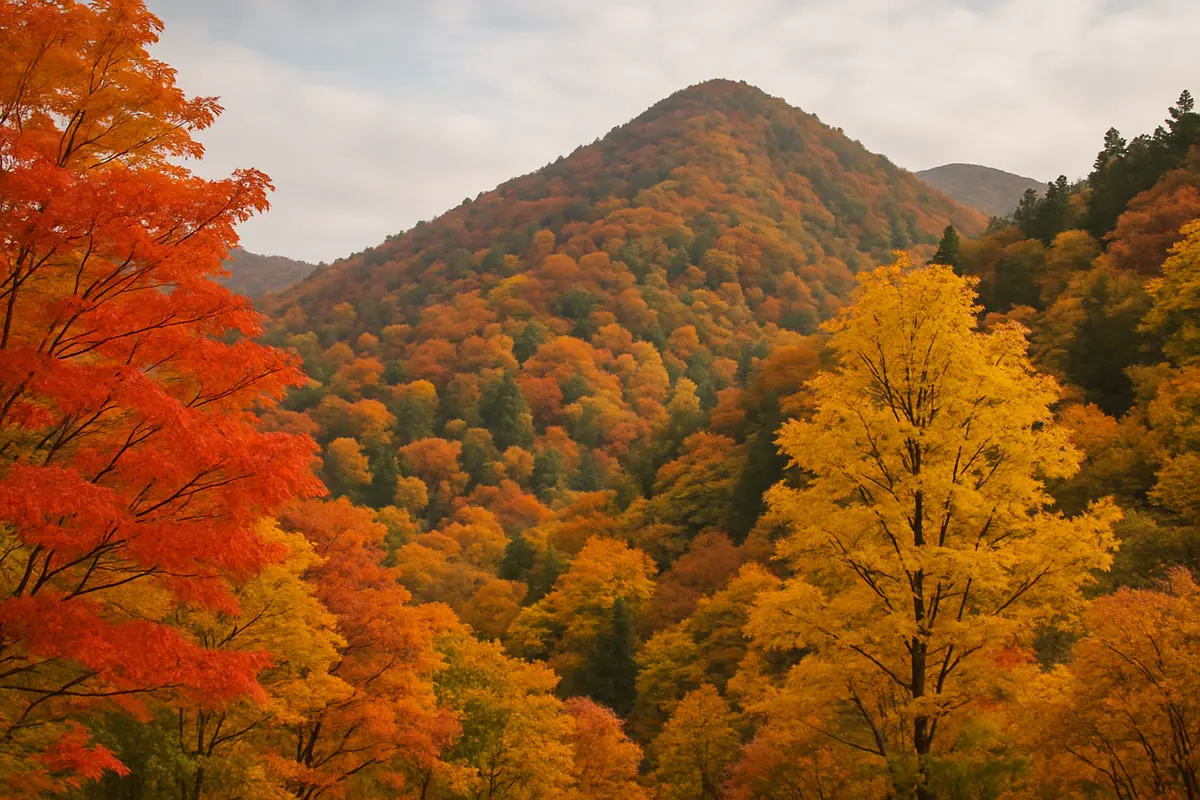
十月になって、寒い日が多くなりました2。北海道や東北の山では、木の葉が赤や黄色になっています3。とてもきれいです4。
週末は、たくさんの人が山へ行きました5。電車やバスも人が多かったです6。みんな、きれいな山の写真をとっていました7。山の上はとても寒いです8。朝と夜は、気温が五度より低い日もあります9。
これから、木の葉の色は南の方へ広がります10。東京や大阪では、十一月の終わりごろにきれいになります11。山へ行く人は、暖かい服を持って行ってください12。雨の日は、道に気をつけてください13。
(あき)
autumn; fall
(やま)
mountain
(き)
tree / wood
(は)
leaf
(あか)
red
(きいろ)
yellow
(じゅうがつ)
October
(さむい)
cold
(ひ)
day
(おおい)
many
(ほっかいどう)
Hokkaido
(とうほく)
Tohoku (region)
(とても)
very; extremely
(きれい)
pretty, clean
(しゅうまつ)
weekend
(たくさん)
a lot / many
(ひと)
person / people
(いく)
to go
(でんしゃ)
electric train
(バス)
bus
(みんな)
Everyone; everybody
(しゃしん)
photograph
(とる)
to take (in)
(うえ)
top, above
(あさ)
morning
(よる)
night
(きおん)
temperature (air)
(ご)
five
(ど)
degree
(ひくい)
low
(これから)
from now on
(いろ)
color
(みなみ)
south
(ほう)
direction, side
(ひろがる)
to spread
(とうきょう)
Tokyo
(おおさか)
Osaka
(じゅういちがつ)
November
(おわり)
end
(あたたかい)
warm
(ふく)
clothes
(もつ)
to have; to hold
(あめ)
rain
(みち)
road, street, path
(きをつける)
to be careful
~ and ~ (non-exhaustive list)
や connects nouns in a non-exhaustive list, implying there are other items not mentioned.
りんごやみかんを買いました。
I bought apples, oranges, and so on.
to become
Expresses a change of state; Kawai became the new commissioner of the Sports Agency.
新しい長官になりました。
He became the new commissioner.
目が見えなくなりました。
He became unable to see.
to become (い-adjective)
Expresses a change of state for い-adjectives. Drop the final い and add くなる. Indicates something has changed or will change to a new state.
寒くなりました。
It has gotten cold.
日本語が上手になりました。
My Japanese has gotten better.
値段が高くなりました。
The price became expensive.
did ... (polite past)
Polite past tense of verbs. Formed with verb stem + ました. Used in formal or polite speech to describe completed actions.
昨日、映画を見ました。
I watched a movie yesterday.
朝ごはんを食べました。
I ate breakfast.
友達が来ました。
A friend came.
is doing, has been doing (ongoing state/action)
Expresses a continuing action or resulting state. Formed with て-form + いる. Can describe an action in progress or a state resulting from a past change.
今、ご飯を食べています。
I am eating rice now.
東京に住んでいます。
I live in Tokyo.
ドアが開いています。
The door is open.
to / toward (direction/target)
津波への警戒 uses へ to mark the target of the alert (vigilance toward the tsunami).
津波への警戒が呼びかけられました
Vigilance against the tsunami was called for.
未来への希望
Hope for the future.
also / too
Used in '心配する人もいます' — there are ALSO people who are worried (in addition to happy people).
私も行きます。
I will go too.
彼も学生です。
He is also a student.
past tense of an i-adjective (polite)
An i-adjective drops い and takes かったです to describe the past politely. 多かったです tells us that libraries closing at 5 p.m. used to be the common case.
前は五時に閉まる店が多かったです。
In the past there were many shops that closed at five.
きのうのテストはむずかしかったです。
Yesterday's test was difficult.
この本はとてもおもしろかったです。
This book was very interesting.
than / more than
Indicates comparison. Used to say prices rose on average 2.8% compared to last year.
去年より寒い。
Colder than last year.
彼より背が高い。
Taller than him.
there are as many as ~
Emphasizes a large quantity. 'There are as many as 140 kinds'.
学生は100人もいます。
There are as many as 100 students.
10時間もかかった。
It took as much as 10 hours.
around ~; approximately (time)
Indicates an approximate time. Around the end of February.
2月の終わりごろからずっと4000円以上でした。
Since around the end of February, it had been above 4000 yen continuously.
3時ごろに会いましょう。
Let's meet around 3 o'clock.
please do ...
Polite request form. Formed with て-form + ください. Used to ask someone to perform an action.
ここに名前を書いてください。
Please write your name here.
もう一度言ってください。
Please say it once more.
窓を開けてください。
Please open the window.
秋の山 木の葉が赤や黄色に
Autumn mountains: the leaves turn red and yellow
十月になって、寒い日が多くなりました。
It is now October, and there are more cold days.
北海道や東北の山では、木の葉が赤や黄色になっています。
In the mountains of Hokkaido and Tohoku, the leaves are turning red and yellow.
とてもきれいです。
They are very beautiful.
週末は、たくさんの人が山へ行きました。
Over the weekend, many people went to the mountains.
電車やバスも人が多かったです。
The trains and buses were crowded too.
みんな、きれいな山の写真をとっていました。
Everyone was taking pictures of the beautiful mountains.
山の上はとても寒いです。
It is very cold at the top of the mountains.
朝と夜は、気温が五度より低い日もあります。
In the morning and at night, there are days when the temperature is below five degrees.
これから、木の葉の色は南の方へ広がります。
From now on, the leaf colors will spread toward the south.
東京や大阪では、十一月の終わりごろにきれいになります。
In Tokyo and Osaka, they will be beautiful around the end of November.
山へ行く人は、暖かい服を持って行ってください。
People going to the mountains, please bring warm clothes.
雨の日は、道に気をつけてください。
On rainy days, please be careful on the paths.
2026年10月19日 19:06
著者: jpreader
この画像はAIで生成され、学習目的で使用されています。
This image is AI-generated and used for educational purposes.
十月になって、寒い日が多くなりました2。北海道や東北の山では、木の葉が赤や黄色になっています3。とてもきれいです4。
週末は、たくさんの人が山へ行きました5。電車やバスも人が多かったです6。みんな、きれいな山の写真をとっていました7。山の上はとても寒いです8。朝と夜は、気温が五度より低い日もあります9。
これから、木の葉の色は南の方へ広がります10。東京や大阪では、十一月の終わりごろにきれいになります11。山へ行く人は、暖かい服を持って行ってください12。雨の日は、道に気をつけてください13。
Discussion
to rate or comment.
No comments yet.