寒くなる季節の前に、インフルエンザの予防接種が各地の病院で始まりました2。インフルエンザは毎年、冬に多くの人がかかる病気です3。熱が高くなったり、体が痛くなったりします4。
医者は「病気が広がる前に、早めに予防接種を受けてください」と話しています5。特に、お年寄りや小さい子どもは、病気が重くなることがあるので、注意が必要です6。
予防接種のほかにも、外から帰ったら手を洗うことや、よく寝ることが大切です7。せきが出る人は、マスクをするようにしてください8。
(いんふるえんざ)
influenza, flu
(よぼうせっしゅ)
vaccination, inoculation
(ことし)
this year
(はじまる)
to begin
(さむい)
cold
(きせつ)
Season
(かくち)
various places, everywhere
(びょういん)
hospital
(まいとし)
every year
(ふゆ)
winter
(おおい)
many
(ひと)
person / people
(かかる)
to take (time/money), cost
(びょうき)
illness, sickness
(ねつ)
fever; heat
(たかい)
expensive; high
(からだ)
body
(いたい)
painful
(いしゃ)
doctor
(ひろがる)
to spread
(はやめ)
early, ahead of time
(うける)
to receive
(とくに)
especially / particularly
(おとしより)
elderly person
(ちいさい)
small
(こども)
child
(おもい)
heavy
(ちゅうい)
caution, warning
(ひつよう)
necessary / needed
(そと)
outside
(かえる)
to return home
(て)
hand
(あらう)
to wash
(よく)
often, well, frequently
(ねる)
to sleep
(たいせつ)
important
(せき)
cough
(でる)
to come out; to occur
(ますく)
mask
also / too
Used in '心配する人もいます' — there are ALSO people who are worried (in addition to happy people).
私も行きます。
I will go too.
彼も学生です。
He is also a student.
to become (い-adjective)
Expresses a change of state for い-adjectives. Drop the final い and add くなる. Indicates something has changed or will change to a new state.
寒くなりました。
It has gotten cold.
日本語が上手になりました。
My Japanese has gotten better.
値段が高くなりました。
The price became expensive.
before ~
Indicates doing something before another action. Used to advise checking the store before ordering.
食べる前に手を洗います。
I wash my hands before eating.
寝る前に本を読む。
I read before sleeping.
did ... (polite past)
Polite past tense of verbs. Formed with verb stem + ました. Used in formal or polite speech to describe completed actions.
昨日、映画を見ました。
I watched a movie yesterday.
朝ごはんを食べました。
I ate breakfast.
友達が来ました。
A friend came.
doing things like ~ and ~
Lists representative actions among several. Implies there are other actions too. Used twice in this article.
週末は本を読んだり映画を見たりします。
On weekends I do things like read books and watch movies.
歌ったり踊ったりして楽しんだ。
We had fun singing and dancing.
please do ...
Polite request form. Formed with て-form + ください. Used to ask someone to perform an action.
ここに名前を書いてください。
Please write your name here.
もう一度言ってください。
Please say it once more.
窓を開けてください。
Please open the window.
to say that ~ (quotation)
と話しています reports what a company representative said.
先生は明日テストがあると話しました。
The teacher said there will be a test tomorrow.
彼は楽しかったと話していました。
He said it was fun.
is doing, has been doing (ongoing state/action)
Expresses a continuing action or resulting state. Formed with て-form + いる. Can describe an action in progress or a state resulting from a past change.
今、ご飯を食べています。
I am eating rice now.
東京に住んでいます。
I live in Tokyo.
ドアが開いています。
The door is open.
~ and ~ (non-exhaustive list)
や connects nouns in a non-exhaustive list, implying there are other items not mentioned.
りんごやみかんを買いました。
I bought apples, oranges, and so on.
there are times when ~
Indicates that something sometimes happens.
遅れることがある。
Sometimes I'm late.
間違えることがある。
There are times I make mistakes.
because ~ / since ~
Causal connector. Because JA is buying at higher prices, store prices will also rise.
雨が降ったので、家にいた。
Since it rained, I stayed home.
忙しいので、行けません。
Since I'm busy, I can't go.
besides ~, in addition to ~
伊豆諸島のほか adds other regions to the list besides the Izu Islands.
日本語のほか、英語も話せます。
Besides Japanese, I can speak English.
東京のほか、大阪でも開かれます。
It will be held in Osaka as well as Tokyo.
from (starting point)
Indicates the origin or source. 建物の中から means 'from inside the building'.
かばんの中から鍵が出てきた。
A key came out from inside the bag.
if ..., when ...
Conditional form indicating 'if' or 'when' something happens. Formed by adding ら to the た-form of a verb. Expresses a hypothetical or temporal condition.
雨が降ったら、行きません。
If it rains, I won't go.
お金があったら、旅行したいです。
If I had money, I'd like to travel.
終わったら、電話してください。
When you're done, please call me.
nominalizer (the act of ~)
Turns verbs into nouns — changing one's awareness (意識を変えること), not over-buying (買いすぎないこと), and using leftovers well (使うこと).
走ることが好きだ。
I like running.
話すことが大切だ。
Talking is important.
to make sure that, to ensure that
Expresses the goal of bringing about a certain state or preventing something. Formed with verb plain form + ようにする. Often used to describe efforts to ensure or prevent something.
毎日野菜を食べるようにしています。
I make sure to eat vegetables every day.
遅刻しないようにしてください。
Please make sure not to be late.
忘れないようにメモを書きました。
I wrote a note so I wouldn't forget.
インフルエンザの予防接種 今年も始まる
Flu vaccinations begin again this year
寒くなる季節の前に、インフルエンザの予防接種が各地の病院で始まりました。
Before the cold season, flu vaccinations have started at hospitals around the country.
インフルエンザは毎年、冬に多くの人がかかる病気です。
Influenza is an illness that many people catch every winter.
熱が高くなったり、体が痛くなったりします。
You may get a high fever or your body may ache.
医者は「病気が広がる前に、早めに予防接種を受けてください」と話しています。
Doctors say, "Please get vaccinated early, before the illness spreads."
特に、お年寄りや小さい子どもは、病気が重くなることがあるので、注意が必要です。
Elderly people and small children in particular need to be careful, because the illness can become serious.
予防接種のほかにも、外から帰ったら手を洗うことや、よく寝ることが大切です。
Besides vaccination, it is also important to wash your hands when you come home and to get plenty of sleep.
せきが出る人は、マスクをするようにしてください。
People who are coughing should make sure to wear a mask.
2026年10月19日 19:08
著者: jpreader
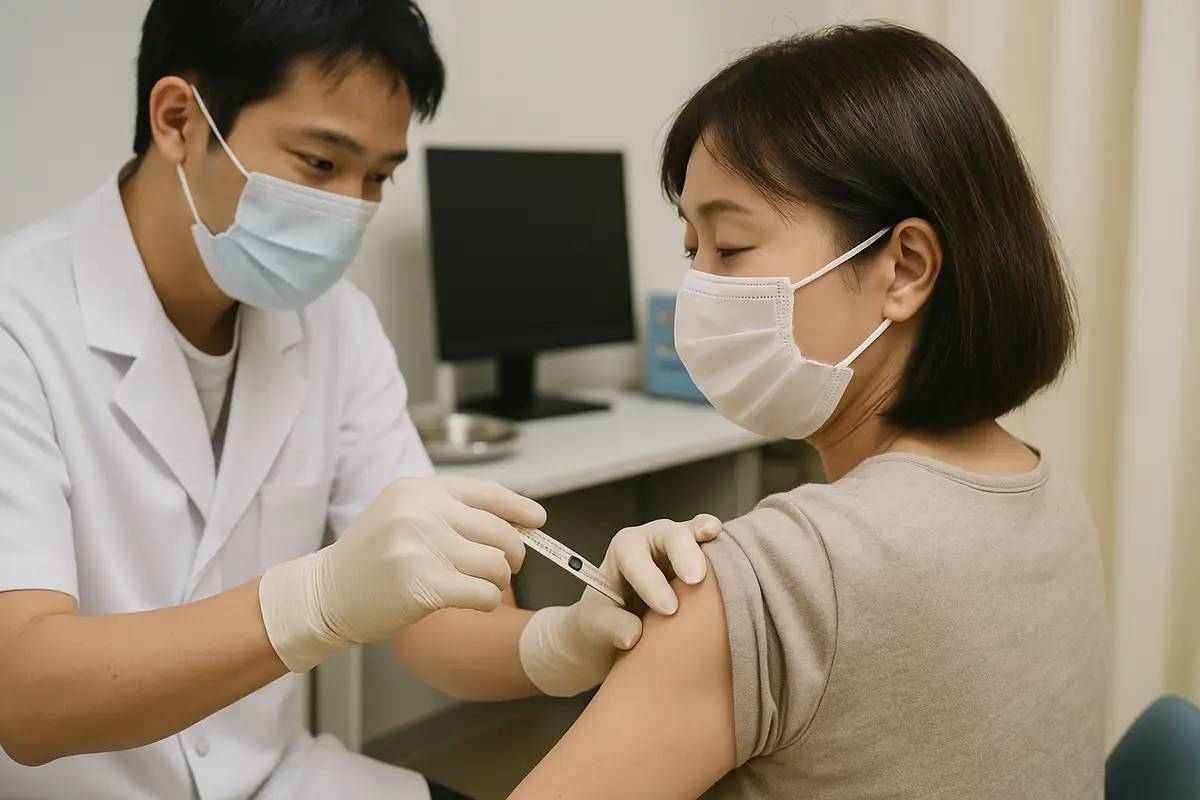
この画像はAIで生成され、学習目的で使用されています。
This image is AI-generated and used for educational purposes.
寒くなる季節の前に、インフルエンザの予防接種が各地の病院で始まりました2。インフルエンザは毎年、冬に多くの人がかかる病気です3。熱が高くなったり、体が痛くなったりします4。
医者は「病気が広がる前に、早めに予防接種を受けてください」と話しています5。特に、お年寄りや小さい子どもは、病気が重くなることがあるので、注意が必要です6。
予防接種のほかにも、外から帰ったら手を洗うことや、よく寝ることが大切です7。せきが出る人は、マスクをするようにしてください8。
Discussion
to rate or comment.
No comments yet.