愛知県と名古屋市で、「アジアパラ大会」が始まりました2。この大会は、体に障害がある選手たちのためのスポーツ大会です3。アジアの多くの国や地域から、選手が集まっています4。
大会では、車いすを使った競技や、目が見えにくい選手の競技など、いろいろな種目が行われます5。選手たちは、これまでの練習の成果を見せようと、一生懸命戦っています6。
会場には、たくさんの人が応援に来ています7。大会を手伝うボランティアも多く、町全体で選手を迎えています8。大会は数日間続く予定です9。
(あいち)
Aichi (prefecture)
(なごや)
Nagoya
(アジア)
Asia
(パラ)
Para (sports for athletes with disabilities)
(たいかい)
tournament, convention
(はじまる)
to begin
(あいちけん)
Aichi Prefecture
(なごやし)
Nagoya City
(からだ)
body
(しょうがい)
disability; impairment; obstacle
(せんしゅ)
player; athlete
(スポーツ)
sport
(おおく)
many, much
(くに)
country; the government
(ちいき)
region; area
(あつまる)
to gather; to come together
(くるまいす)
wheelchair
(つかう)
to use
(きょうぎ)
competition / sporting event
(め)
eye
(みえる)
to be visible, can see
(など)
et cetera, and so on
(いろいろ)
various
(しゅもく)
event / discipline (sports)
(おこなう)
to carry out, to perform
(これまで)
until now / so far
(れんしゅう)
practice, training
(せいか)
result, fruits (of effort)
(みせる)
to show; to display
(いっしょうけんめい)
with all one's might
(たたかう)
to fight, to battle
(かいじょう)
venue / site
(たくさん)
a lot / many
(ひと)
person / people
(おうえん)
cheering; support
(くる)
to come
(てつだう)
to help
(ボランティア)
volunteer
(まち)
town
(ぜんたい)
the whole / overall
(むかえる)
to go meet, welcome
(すうじつかん)
several days
(つづく)
to continue
by means of / using
The particle で indicates the means by which something is done. Here, '宇宙船で' means 'by/using a spaceship'.
電車で行きます。
I go by train.
はしで食べます。
I eat with chopsticks.
and (joining nouns)
と links two nouns into a complete pair. The article uses it to join the two areas the typhoon is passing: 沖縄と奄美, 沖縄県と鹿児島県, 沖縄県と奄美地方.
パンと牛乳を買いました。
I bought bread and milk.
東京と大阪に行きます。
I will go to Tokyo and Osaka.
there is / was ~
Used to report the occurrence of an earthquake — 'there was a magnitude 6 strong earthquake'.
地震がありました。
There was an earthquake.
試験があります。
There is a test.
plural suffix for people
高校生たち, 先生たち and 人たち mean groups of students, teachers and people.
子どもたちが遊んでいます。
The children are playing.
私たちは学生です。
We are students.
for (the sake of) ~
動物のための橋 is a bridge built for animals, the main topic of the article.
子どものための本です。
This is a book for children.
健康のために毎日歩きます。
I walk every day for my health.
polite copula / is, am, are
Describes states such as the mother panda being healthy and the baby being small.
これは本です。
This is a book.
今日は寒いです。
It is cold today.
and (non-exhaustive list)
や lists representative examples — Shikoku and Kyushu among other regions (四国や九州).
りんごやみかんを買った。
I bought apples and oranges (among others).
東京や大阪は大きい都市だ。
Tokyo and Osaka are big cities.
from (starting point)
Indicates the origin or source. 建物の中から means 'from inside the building'.
かばんの中から鍵が出てきた。
A key came out from inside the bag.
is doing, has been doing (ongoing state/action)
Expresses a continuing action or resulting state. Formed with て-form + いる. Can describe an action in progress or a state resulting from a past change.
今、ご飯を食べています。
I am eating rice now.
東京に住んでいます。
I live in Tokyo.
ドアが開いています。
The door is open.
in ~ / at ~ (topic marker for location/context)
Combination of で (location) and は (topic). Sets the context: in speed skating, in ski jumping, etc.
日本では桜が有名です。
In Japan, cherry blossoms are famous.
この店では魚を売っています。
This shop sells fish.
hard to ~; difficult to ~
Attached to a verb stem to describe difficulty — 'people who have difficulty hearing'.
読みにくい
hard to read
食べにくい
hard to eat
passive voice
連れて行かれて expresses the father being taken away by the police (passive).
先生に褒められた。
I was praised by the teacher.
雨に降られた。
I got rained on.
to try to / to attempt to
Shows the government attempting to promote it: 進めようとしている.
政府も進めようとしている。
The government is also trying to promote it.
ドアを開けようとした。
I tried to open the door.
in order to ~
Dictionary form + には indicates a condition required to achieve a goal. To deliver nengajō on Jan 1, you must mail by Dec 25.
駅に行くには、バスが便利です。
To get to the station, the bus is convenient.
上手になるには、練習が必要です。
To improve, practice is necessary.
also / too
Used in '心配する人もいます' — there are ALSO people who are worried (in addition to happy people).
私も行きます。
I will go too.
彼も学生です。
He is also a student.
plan to / is scheduled to
Indicates a scheduled plan or intent.
来月行く予定です。
I plan to go next month.
会議は3時からの予定です。
The meeting is scheduled from 3.
愛知・名古屋でアジアパラ大会が始まる
The Asian Para Games begin in Aichi and Nagoya
愛知県と名古屋市で、「アジアパラ大会」が始まりました。
The Asian Para Games have begun in Aichi Prefecture and Nagoya City.
この大会は、体に障害がある選手たちのためのスポーツ大会です。
These games are a sports competition for athletes with physical disabilities.
アジアの多くの国や地域から、選手が集まっています。
Athletes are gathering from many countries and regions across Asia.
大会では、車いすを使った競技や、目が見えにくい選手の競技など、いろいろな種目が行われます。
At the games, many kinds of events are held, such as wheelchair events and events for athletes who have difficulty seeing.
選手たちは、これまでの練習の成果を見せようと、一生懸命戦っています。
The athletes are competing as hard as they can, hoping to show the results of their training.
会場には、たくさんの人が応援に来ています。
Many people have come to the venues to cheer.
大会を手伝うボランティアも多く、町全体で選手を迎えています。
There are also many volunteers helping with the games, and the whole city is welcoming the athletes.
大会は数日間続く予定です。
The games are scheduled to last several days.
2026年10月20日 19:14
著者: jpreader
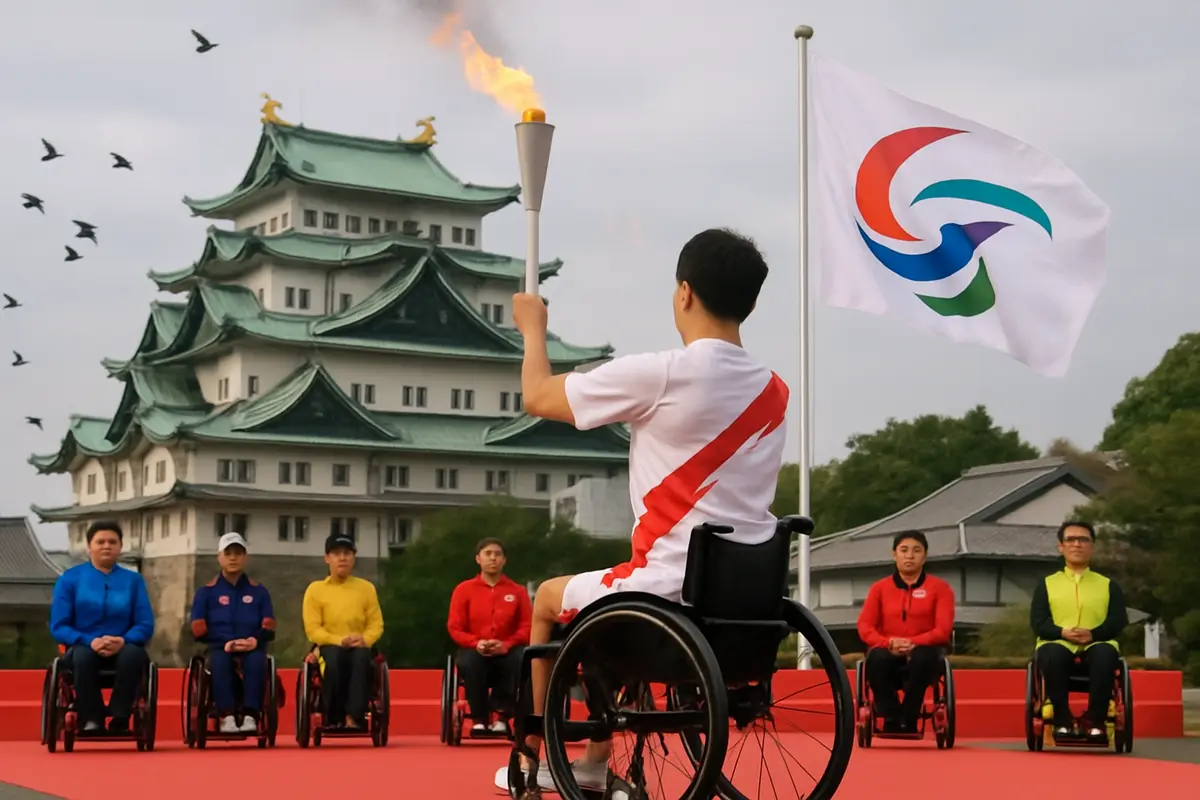
この画像はAIで生成され、学習目的で使用されています。
This image is AI-generated and used for educational purposes.
愛知県と名古屋市で、「アジアパラ大会」が始まりました2。この大会は、体に障害がある選手たちのためのスポーツ大会です3。アジアの多くの国や地域から、選手が集まっています4。
大会では、車いすを使った競技や、目が見えにくい選手の競技など、いろいろな種目が行われます5。選手たちは、これまでの練習の成果を見せようと、一生懸命戦っています6。
会場には、たくさんの人が応援に来ています7。大会を手伝うボランティアも多く、町全体で選手を迎えています8。大会は数日間続く予定です9。
Discussion
to rate or comment.
No comments yet.