愛媛県今治市で、秋のお祭りがありました2。このお祭りでは、「お供馬の走り込み」という行事をします3。昔からずっと続いている行事です4。
子どもたちがきれいな服を着て、馬に乗ります5。馬もきれいな飾りをつけています6。子どもたちは馬に乗って、神社の前の長い道を速く走ります7。
道の両側には、たくさんの人が来ていました8。みんな大きな声で子どもたちを応援しました9。町の人たちは、この行事をとても大切にしています10。
(いまばりし)
Imabari City
(むかし)
long ago, past
(つづく)
to continue
(うま)
horse
(ぎょうじ)
event, ceremony, function
(えひめけん)
Ehime Prefecture
(あき)
autumn; fall
(おまつり)
festival; celebration
(おともうま)
escort horses (decorated festival horses)
(はしりこみ)
running in (a horse run toward the shrine)
(ずっと)
continuously; all along
(こども)
child
(きれい)
pretty, clean
(ふく)
clothes
(きる)
to wear, to put on (upper body/full body)
(のる)
to ride, board
(かざり)
decoration, ornament
(つける)
to attach / put on
(じんじゃ)
Shinto shrine
(まえ)
before, previous
(ながい)
long
(みち)
road, street, path
(はやい)
fast
(はしる)
to run
(りょうがわ)
both sides
(たくさん)
a lot / many
(ひと)
person / people
(くる)
to come
(みんな)
Everyone; everybody
(おおきな)
big (attrib.)
(こえ)
voice
(おうえん)
cheering; support
(まち)
town
(とても)
very; extremely
(たいせつ)
important
by means of / using
The particle で indicates the means by which something is done. Here, '宇宙船で' means 'by/using a spaceship'.
電車で行きます。
I go by train.
はしで食べます。
I eat with chopsticks.
from (starting point)
Indicates the origin or source. 建物の中から means 'from inside the building'.
かばんの中から鍵が出てきた。
A key came out from inside the bag.
there is / was ~
Used to report the occurrence of an earthquake — 'there was a magnitude 6 strong earthquake'.
地震がありました。
There was an earthquake.
試験があります。
There is a test.
in ~ / at ~ (topic marker for location/context)
Combination of で (location) and は (topic). Sets the context: in speed skating, in ski jumping, etc.
日本では桜が有名です。
In Japan, cherry blossoms are famous.
この店では魚を売っています。
This shop sells fish.
called/named ~
Used to introduce or name something. In this article, 「鳥貴族」という店 means 'a store called Torikizoku'.
田中という人を知っていますか。
Do you know a person called Tanaka?
これは寿司という料理です。
This is a dish called sushi.
is doing, has been doing (ongoing state/action)
Expresses a continuing action or resulting state. Formed with て-form + いる. Can describe an action in progress or a state resulting from a past change.
今、ご飯を食べています。
I am eating rice now.
東京に住んでいます。
I live in Tokyo.
ドアが開いています。
The door is open.
polite copula / is, am, are
Describes states such as the mother panda being healthy and the baby being small.
これは本です。
This is a book.
今日は寒いです。
It is cold today.
plural suffix for people
高校生たち, 先生たち and 人たち mean groups of students, teachers and people.
子どもたちが遊んでいます。
The children are playing.
私たちは学生です。
We are students.
and (then) — linking actions
服を着て and 馬に乗って link one action to the next.
朝ごはんを食べて、学校に行きます。
I eat breakfast and go to school.
家に帰って、テレビを見ました。
I went home and watched TV.
also / too
Used in '心配する人もいます' — there are ALSO people who are worried (in addition to happy people).
私も行きます。
I will go too.
彼も学生です。
He is also a student.
in order to ~
Dictionary form + には indicates a condition required to achieve a goal. To deliver nengajō on Jan 1, you must mail by Dec 25.
駅に行くには、バスが便利です。
To get to the station, the bus is convenient.
上手になるには、練習が必要です。
To improve, practice is necessary.
今治市で昔から続く馬の行事
A horse event in Imabari City that has continued since long ago
愛媛県今治市で、秋のお祭りがありました。
In Imabari City, Ehime Prefecture, there was an autumn festival.
このお祭りでは、「お供馬の走り込み」という行事をします。
At this festival, they hold an event called "Otomouma no Hashirikomi".
昔からずっと続いている行事です。
It is an event that has continued since long ago.
子どもたちがきれいな服を着て、馬に乗ります。
The children put on beautiful clothes and ride horses.
馬もきれいな飾りをつけています。
The horses also wear beautiful decorations.
子どもたちは馬に乗って、神社の前の長い道を速く走ります。
The children ride the horses and run fast along the long road in front of the shrine.
道の両側には、たくさんの人が来ていました。
Many people had come to both sides of the road.
みんな大きな声で子どもたちを応援しました。
Everyone cheered the children on in loud voices.
町の人たちは、この行事をとても大切にしています。
The people of the town treasure this event very much.
2026年10月21日 19:12
著者: jpreader
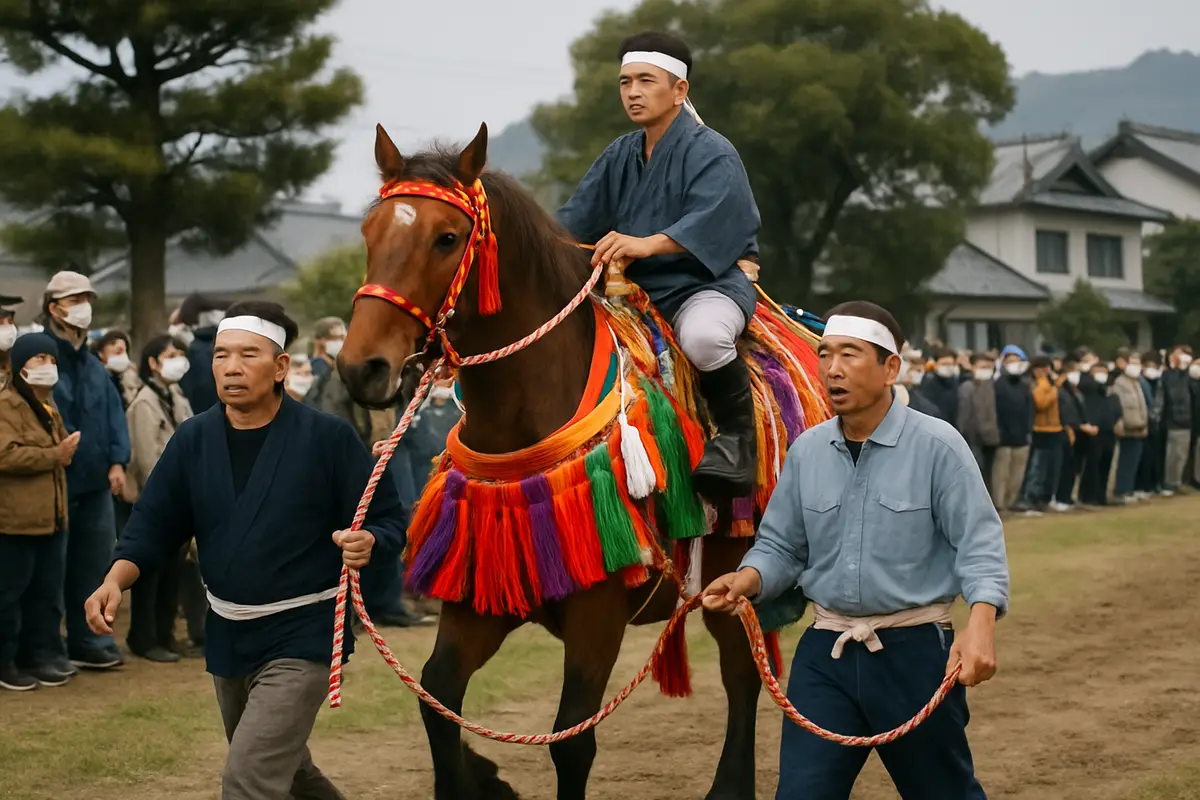
この画像はAIで生成され、学習目的で使用されています。
This image is AI-generated and used for educational purposes.
愛媛県今治市で、秋のお祭りがありました2。このお祭りでは、「お供馬の走り込み」という行事をします3。昔からずっと続いている行事です4。
子どもたちがきれいな服を着て、馬に乗ります5。馬もきれいな飾りをつけています6。子どもたちは馬に乗って、神社の前の長い道を速く走ります7。
道の両側には、たくさんの人が来ていました8。みんな大きな声で子どもたちを応援しました9。町の人たちは、この行事をとても大切にしています10。
Discussion
to rate or comment.
No comments yet.