日本の宇宙機関は、新しい探査機をロケットで打ち上げました2。探査機は、これから約一年かけて火星の近くまで飛んでいく予定です3。
火星のまわりには、二つの小さな星が回っています4。探査機はその一つの「フォボス」に下りて、表面の砂や石を集めます5。そして、それを地球に持って帰る計画です6。
研究者たちは、フォボスがどのようにできたのかを調べたいと考えています7。持って帰った砂や石を調べると、火星や地球の水の歴史についても、新しいことが分かるかもしれません8。
(にほん)
Japan
(たんさき)
space probe
(かせい)
Mars (planet)
(つき)
month
(しらべる)
to investigate; to survey
(しゅっぱつ)
departure
(うちゅう)
space; universe
(きかん)
agency / organization
(あたらしい)
new
(ロケット)
rocket
(うちあげる)
to launch (a rocket)
(これから)
from now on
(やく)
approximately, about
(いちねん)
one year
(かける)
to build (a bridge)
(ちかく)
nearby
(とぶ)
to fly
(まわり)
surroundings, vicinity
(ふたつ)
two
(ちいさな)
small / little
(ほし)
star
(まわる)
to go around; to turn
(ひとつ)
one (thing)
(フォボス)
Phobos (moon of Mars)
(おりる)
to come down, descend
(ひょうめん)
surface
(すな)
Sand
(いし)
stone
(あつめる)
to collect
(そして)
and; and then
(ちきゅう)
Earth, the globe
(もつ)
to have; to hold
(かえる)
to return home
(けいかく)
plan
(けんきゅうしゃ)
researcher
(どのように)
how, in what way
(できる)
to be able; to be made
(みず)
water
(れきし)
history
(わかる)
to understand, be clear
by means of / using
Particle で indicating means or instrument. 宇宙船で means 'by spaceship.' パラシュートを使って is a related expression.
バスで学校に行きます。
I go to school by bus.
はしでごはんを食べます。
I eat rice with chopsticks.
until / as far as
Indicates an end point in space or time. Here it expresses how far the balls flew.
駅まで歩きます。
I walk to the station.
遠くまで飛びました。
It flew far away.
to go on doing / continue to (from now)
In '増えていく' – 'will continue to increase (into the future)'. Indicates continuing trend going forward.
これから寒くなっていく。
From now on, it will become colder.
日本語を勉強していきたい。
I want to continue studying Japanese.
plan to / is scheduled to
Indicates a scheduled plan or intent.
来月行く予定です。
I plan to go next month.
会議は3時からの予定です。
The meeting is scheduled from 3.
in order to ~
Dictionary form + には indicates a condition required to achieve a goal. To deliver nengajō on Jan 1, you must mail by Dec 25.
駅に行くには、バスが便利です。
To get to the station, the bus is convenient.
上手になるには、練習が必要です。
To improve, practice is necessary.
is doing, has been doing (ongoing state/action)
Expresses a continuing action or resulting state. Formed with て-form + いる. Can describe an action in progress or a state resulting from a past change.
今、ご飯を食べています。
I am eating rice now.
東京に住んでいます。
I live in Tokyo.
ドアが開いています。
The door is open.
and (non-exhaustive list)
や lists representative examples — Shikoku and Kyushu among other regions (四国や九州).
りんごやみかんを買った。
I bought apples and oranges (among others).
東京や大阪は大きい都市だ。
Tokyo and Osaka are big cities.
polite copula / is, am, are
Describes states such as the mother panda being healthy and the baby being small.
これは本です。
This is a book.
今日は寒いです。
It is cold today.
plural suffix for people
高校生たち, 先生たち and 人たち mean groups of students, teachers and people.
子どもたちが遊んでいます。
The children are playing.
私たちは学生です。
We are students.
embedded question (whether/how ~)
どうしていくのか、まだわかりません: it is not yet known how (the world) will proceed.
なぜ遅れたのか、教えてください。
Please tell me why you were late.
どこへ行くのかわからない。
I don't know where he's going.
want to ~
Verb stem + たい to express desire.
日本に行きたい。
I want to go to Japan.
水を飲みたいです。
I want to drink water.
to think/consider that ~
Expresses thought or opinion. 問題だと考えています means 'consider it a problem'.
大きい問題だと考えています
consider it a big problem
重要だと考える
consider it important
if / when (natural consequence)
Conditional と indicating a natural or expected result. 一緒に捨てると…火が出て means 'if you throw them away together, fire starts.'
ボタンを押すと、ドアが開きます。
When you press the button, the door opens.
春になると、桜が咲きます。
When spring comes, cherry blossoms bloom.
about / regarding / concerning
Used to indicate the topic of discussion or consideration. Here it introduces the topic the team will think about.
日本について話します。
I will talk about Japan.
この問題について考える。
Think about this problem.
also / too
Used in '心配する人もいます' — there are ALSO people who are worried (in addition to happy people).
私も行きます。
I will go too.
彼も学生です。
He is also a student.
might, maybe, possibly
Expresses possibility or uncertainty. Attached directly to the plain form of verbs, adjectives, or nouns. Less certain than でしょう.
明日は雨かもしれません。
It might rain tomorrow.
彼は来ないかもしれない。
He might not come.
この問題は難しいかもしれません。
This problem might be difficult.
日本の探査機が火星の月を調べに出発
Japanese probe sets off to study the moons of Mars
日本の宇宙機関は、新しい探査機をロケットで打ち上げました。
Japan's space agency launched a new probe on a rocket.
探査機は、これから約一年かけて火星の近くまで飛んでいく予定です。
The probe is scheduled to fly to the vicinity of Mars over about a year from now.
火星のまわりには、二つの小さな星が回っています。
Two small moons go around Mars.
探査機はその一つの「フォボス」に下りて、表面の砂や石を集めます。
The probe will land on one of them, Phobos, and collect sand and rocks from its surface.
そして、それを地球に持って帰る計画です。
Then the plan is to bring them back to Earth.
研究者たちは、フォボスがどのようにできたのかを調べたいと考えています。
Researchers want to find out how Phobos was formed.
持って帰った砂や石を調べると、火星や地球の水の歴史についても、新しいことが分かるかもしれません。
By studying the sand and rocks brought back, we may also learn new things about the history of water on Mars and Earth.
2026年10月21日 19:15
著者: jpreader
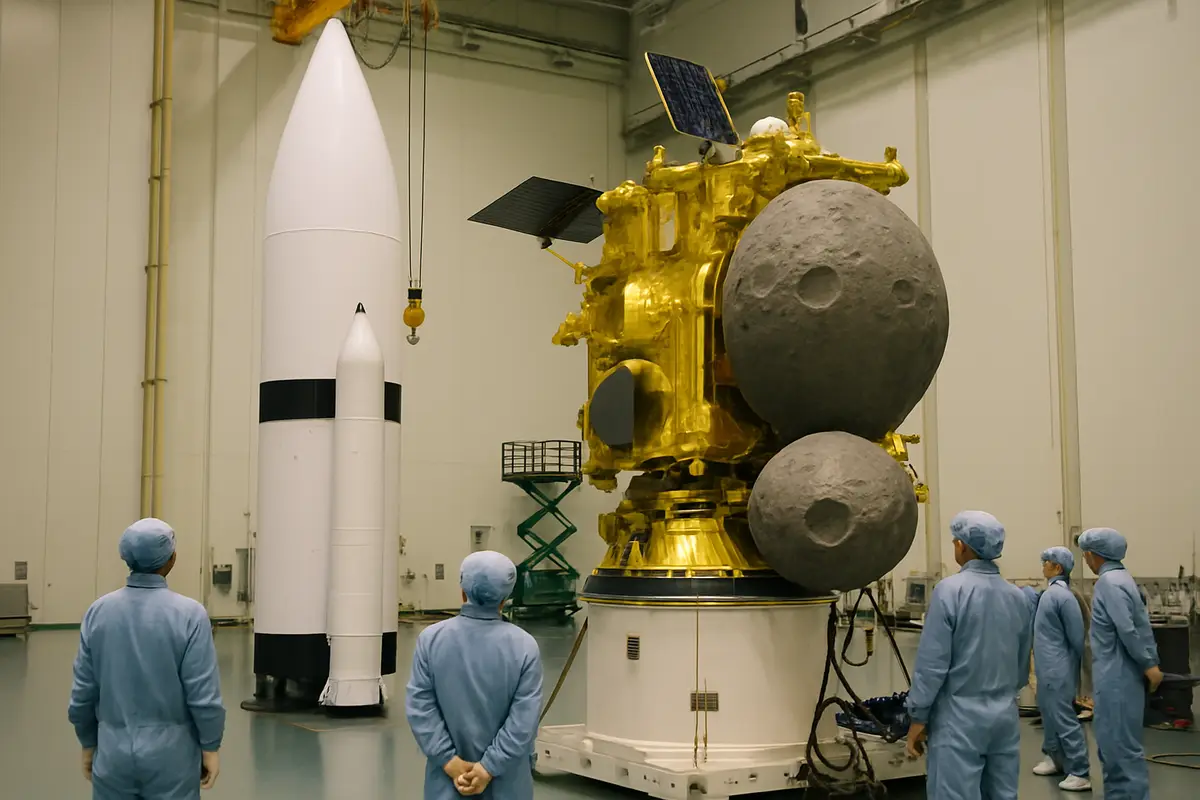
この画像はAIで生成され、学習目的で使用されています。
This image is AI-generated and used for educational purposes.
日本の宇宙機関は、新しい探査機をロケットで打ち上げました2。探査機は、これから約一年かけて火星の近くまで飛んでいく予定です3。
火星のまわりには、二つの小さな星が回っています4。探査機はその一つの「フォボス」に下りて、表面の砂や石を集めます5。そして、それを地球に持って帰る計画です6。
研究者たちは、フォボスがどのようにできたのかを調べたいと考えています7。持って帰った砂や石を調べると、火星や地球の水の歴史についても、新しいことが分かるかもしれません8。
Discussion
to rate or comment.
No comments yet.