もうすぐハロウィーンです2。ある水族館で、ハロウィーンの服を着たペンギンたちが散歩をしました3。ペンギンたちは、かぼちゃやおばけの小さな服を着て、ゆっくり歩きました4。
水族館に来た人たちは、ペンギンを見て「かわいい」と言いながら、写真をたくさん撮っていました5。子どもたちも、ペンギンのそばで楽しそうに笑っていました6。
ペンギンにとって、散歩はいい運動になります7。この季節、日本のいろいろな所で、ハロウィーンのイベントが開かれています8。
(はろうぃーん)
Halloween
(ふく)
clothes
(きる)
to wear, to put on (upper body/full body)
(ぺんぎん)
penguin
(さんぽ)
a walk, a stroll
(もうすぐ)
very soon / before long
(ある)
a certain (some)
(すいぞくかん)
aquarium
(かぼちゃ)
pumpkin
(おばけ)
ghost, monster
(ちいさな)
small / little
(ゆっくり)
slowly, at ease, peacefully
(あるく)
to walk
(くる)
to come
(ひと)
person / people
(みる)
to see, watch
(かわいい)
cute
(しゃしん)
photograph
(たくさん)
a lot / many
(とる)
to take (a photo)
(こども)
child
(そば)
side, near
(たのしい)
fun, enjoyable
(わらう)
to laugh
(いい)
good
(うんどう)
movement; exercise; campaign
(きせつ)
Season
(にほん)
Japan
(いろいろ)
various
(ところ)
place; area
(いべんと)
event
(ひらく)
to open, to hold (event)
polite copula / is, am, are
Describes states such as the mother panda being healthy and the baby being small.
これは本です。
This is a book.
今日は寒いです。
It is cold today.
by means of / using
The particle で indicates the means by which something is done. Here, '宇宙船で' means 'by/using a spaceship'.
電車で行きます。
I go by train.
はしで食べます。
I eat with chopsticks.
plural suffix (for people)
Pluralizing suffix attached to nouns referring to people.
子どもたち
children
私たち
we
and (non-exhaustive list)
や lists representative examples — Shikoku and Kyushu among other regions (四国や九州).
りんごやみかんを買った。
I bought apples and oranges (among others).
東京や大阪は大きい都市だ。
Tokyo and Osaka are big cities.
and then ~ (te-form linking actions)
The te-form links two actions in sequence without ending the sentence. 歩いてまく means "walk and (then) spray", and 写真を撮って、…調べる means "take photos and then check".
写真を撮って、農家に送ります。
I take a photo and send it to the farmer.
畑に行って、薬をまきました。
I went to the field and sprayed chemicals.
to say that ~ (quotation)
津波が来ると言っています reports the expert's statement; と marks the quoted content.
先生は明日テストがあると言いました。
The teacher said there will be a test tomorrow.
彼は行かないと言っています。
He says he won't go.
while doing ...
Verb stem + ながら indicates doing two things simultaneously. The action before ながら is the secondary action; the main action follows.
音楽を聞きながら勉強します。
I study while listening to music.
歩きながら話しましょう。
Let's talk while walking.
テレビを見ながらごはんを食べます。
I eat while watching TV.
was doing, had been doing
Past progressive or past continuous state. Formed with て-form + いた. Describes an action or state that was ongoing in the past.
昨日は雨が降っていた。
It was raining yesterday.
子供の頃、毎日泳いでいた。
When I was a child, I used to swim every day.
彼女は3年間日本に住んでいた。
She had been living in Japan for 3 years.
also / too
Used in '心配する人もいます' — there are ALSO people who are worried (in addition to happy people).
私も行きます。
I will go too.
彼も学生です。
He is also a student.
looking / seemingly (manner)
Adverbial form of ~そう describing how something appears. おいしそうに食べていました (ate looking delicious / with apparent enjoyment).
うれしそうに笑った。
Smiled happily.
おいしそうに食べる。
Eats as if it's delicious.
for ~ / from the perspective of ~
Indicates a point of view or perspective. Used twice here for 'the company' and 'the Vietnamese people'.
私にとって家族は大切です。
Family is important to me.
子供にとって勉強は難しい。
Study is difficult for children.
to become
Expresses a change of state; Kawai became the new commissioner of the Sports Agency.
新しい長官になりました。
He became the new commissioner.
目が見えなくなりました。
He became unable to see.
passive ongoing state (be ~ed)
Passive forms describing food being thrown away and goods being sold, as ongoing situations.
古い建物が壊されている。
The old building is being demolished.
この本は多くの国で読まれている。
This book is read in many countries.
ハロウィーンの服を着たペンギンが散歩
Penguins go for a walk in Halloween costumes
もうすぐハロウィーンです。
It will soon be Halloween.
ある水族館で、ハロウィーンの服を着たペンギンたちが散歩をしました。
At an aquarium, penguins wearing Halloween costumes went for a walk.
ペンギンたちは、かぼちゃやおばけの小さな服を着て、ゆっくり歩きました。
The penguins wore little pumpkin and ghost outfits and walked slowly.
水族館に来た人たちは、ペンギンを見て「かわいい」と言いながら、写真をたくさん撮っていました。
People who came to the aquarium looked at the penguins and took lots of photos, saying "Cute!"
子どもたちも、ペンギンのそばで楽しそうに笑っていました。
The children, too, laughed happily beside the penguins.
ペンギンにとって、散歩はいい運動になります。
For penguins, a walk is good exercise.
この季節、日本のいろいろな所で、ハロウィーンのイベントが開かれています。
At this time of year, Halloween events are being held in various places around Japan.
2026年10月22日 19:13
著者: jpreader
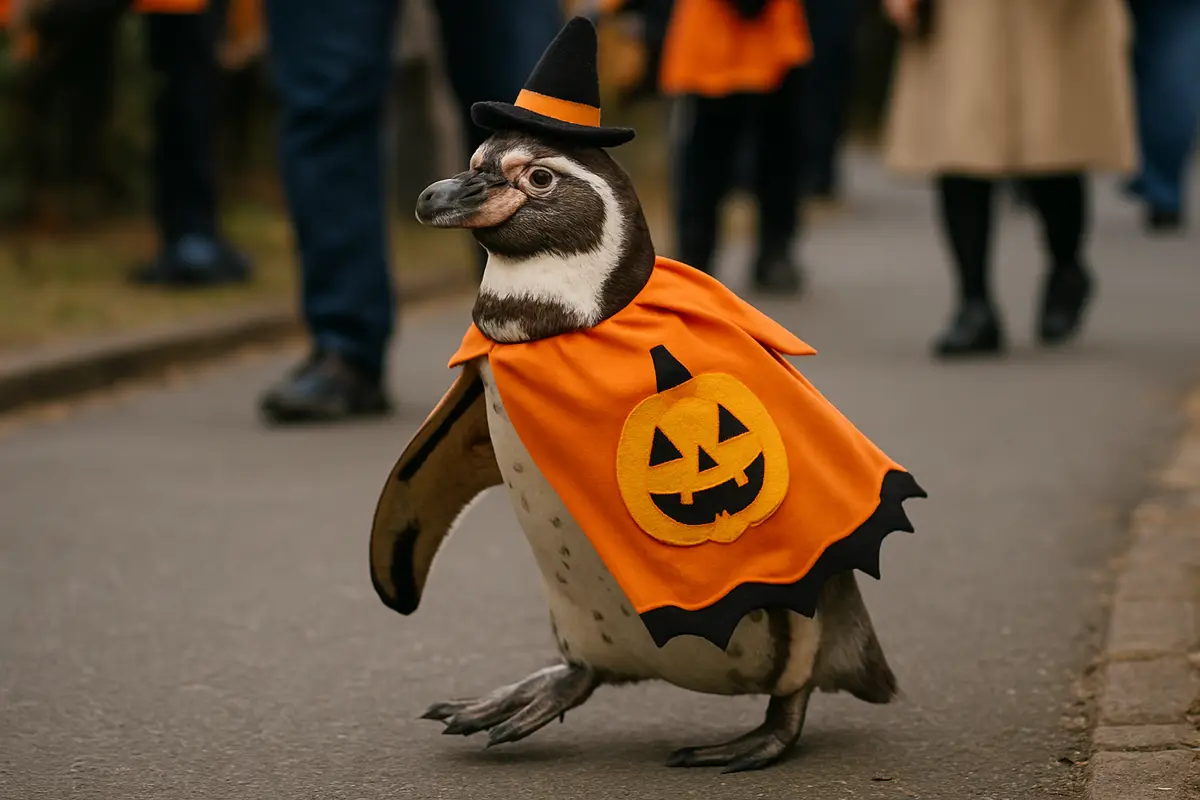
この画像はAIで生成され、学習目的で使用されています。
This image is AI-generated and used for educational purposes.
もうすぐハロウィーンです2。ある水族館で、ハロウィーンの服を着たペンギンたちが散歩をしました3。ペンギンたちは、かぼちゃやおばけの小さな服を着て、ゆっくり歩きました4。
水族館に来た人たちは、ペンギンを見て「かわいい」と言いながら、写真をたくさん撮っていました5。子どもたちも、ペンギンのそばで楽しそうに笑っていました6。
ペンギンにとって、散歩はいい運動になります7。この季節、日本のいろいろな所で、ハロウィーンのイベントが開かれています8。
Discussion
to rate or comment.
No comments yet.