競馬は馬が走る速さを比べるスポーツです2。「G I」はとても大切なレースです3。
この前、大きな「G I」レースがありました4。日本の女の人が乗った馬が、初めてこのレースで勝ちました5。女の人がこのレースで勝つのは、日本で初めてです6。
たくさんの人がこのニュースを聞いて、とても喜びました7。女の人は「うれしいです8。これからもがんばります」と話しました9。
(けいば)
horse racing
(にほん)
Japan
(おんなのひと)
woman
(はじめて)
for the first time
(かつ)
to win
(うま)
horse
(はしる)
to run
(はやさ)
speed
(くらべる)
to compare
(すぽーつ)
sport
(たいせつ)
important
(れーす)
race
(とても)
very; extremely
(このまえ)
the other day, recently
(おおきな)
big (attrib.)
(のる)
to ride, board
(たくさん)
a lot / many
(ひと)
person / people
(にゅーす)
news
(きく)
to listen, hear
(よろこぶ)
to be delighted
(うれしい)
happy; glad
(これから)
from now on
(がんばる)
to do one's best
(はなす)
to speak, talk
past tense
The た form indicates completed actions. 出発した means 'departed'.
昨日、映画を見た。
I watched a movie yesterday.
nominalizing a verb phrase with の
Used in 「みんなの前で話をするのは初めてです」to nominalize the verb phrase so it can serve as the topic of the sentence.
日本語を勉強するのは楽しいです。
Studying Japanese is fun.
朝早く起きるのは大変です。
Waking up early is tough.
te-form for connecting clauses
The te-form connects sequential actions or clauses. Here it links 'started' with the following action.
朝起きて、朝ごはんを食べます。
I wake up in the morning and eat breakfast.
店に行って、パンを買いました。
I went to the store and bought bread.
競馬で日本の女の人が初めて勝った
A Japanese woman has won in horse racing for the first time
競馬は馬が走る速さを比べるスポーツです。
Horse racing is a sport that compares how fast horses run.
「G I」はとても大切なレースです。
A "G I" is a very important race.
この前、大きな「G I」レースがありました。
The other day, there was a major "G I" race.
日本の女の人が乗った馬が、初めてこのレースで勝ちました。
A horse ridden by a Japanese woman won this race for the first time.
女の人がこのレースで勝つのは、日本で初めてです。
It is the first time in Japan that a woman has won this race.
たくさんの人がこのニュースを聞いて、とても喜びました。
Many people heard this news and were very happy.
女の人は「うれしいです。
The woman said, "I'm happy.
これからもがんばります」と話しました。
I'll keep doing my best from now on," she said.
2026年05月25日 21:10
著者: jpreader
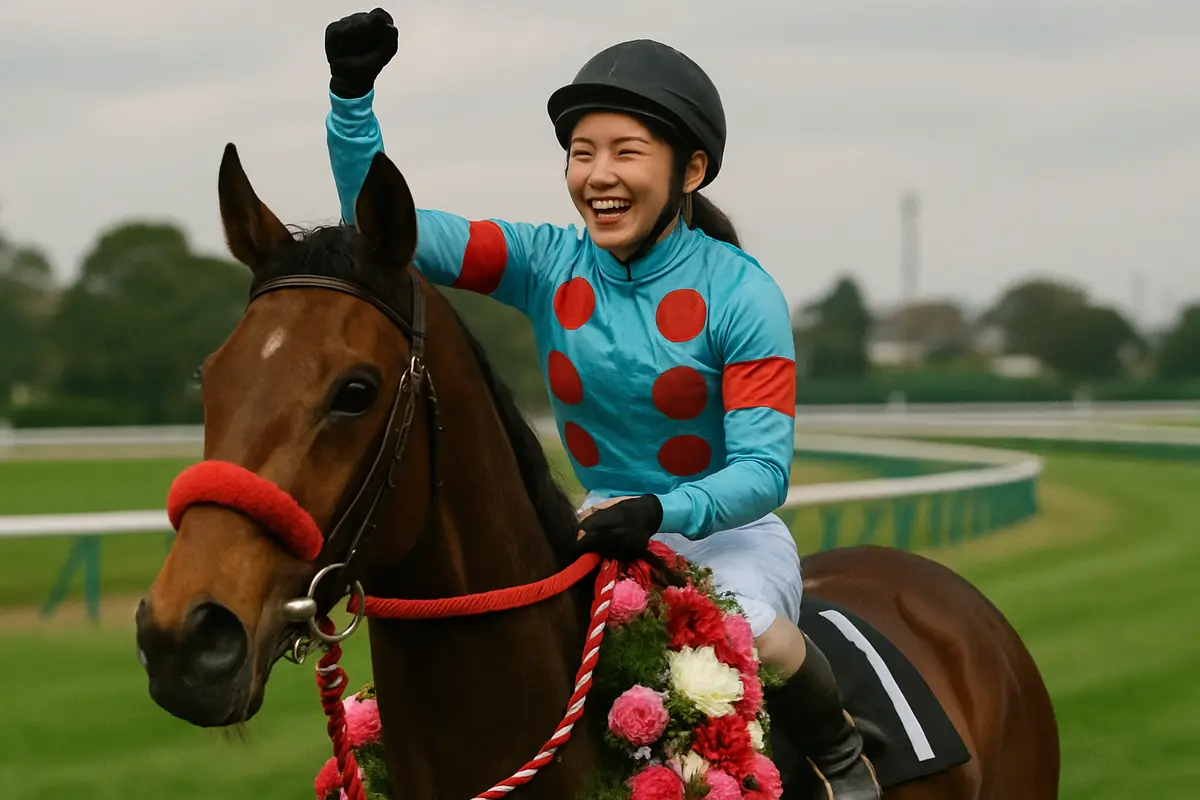
この画像はAIで生成され、学習目的で使用されています。
This image is AI-generated and used for educational purposes.
競馬は馬が走る速さを比べるスポーツです2。「G I」はとても大切なレースです3。
この前、大きな「G I」レースがありました4。日本の女の人が乗った馬が、初めてこのレースで勝ちました5。女の人がこのレースで勝つのは、日本で初めてです6。
たくさんの人がこのニュースを聞いて、とても喜びました7。女の人は「うれしいです8。これからもがんばります」と話しました9。
Discussion
to rate or comment.
No comments yet.