横浜市の港で、ヒアリが見つかりました2。ヒアリは外国から来た危険なアリです3。
ヒアリは体が赤くて、小さいです4。しかし、毒を持っています5。人が刺されると、とても痛いです6。体の調子が悪くなることもあります7。
市の係員は、見つけた場所のアリを全部殺しました8。そして「ヒアリを見つけたら、さわらないでください9。すぐに役所に連絡してください」と話しました10。
(よこはま)
Yokohama
(よこはまし)
Yokohama City
(みなと)
port, harbor
(ひあり)
fire ant
(みつかる)
to be found
(がいこく)
foreign country
(くる)
to come
(きけん)
danger; risk
(あり)
ant
(からだ)
body
(あかい)
red
(ちいさい)
small
(どく)
poison, venom
(もつ)
to have; to hold
(ひと)
person / people
(さす)
to sting; to bite (insects)
(とても)
very; extremely
(いたい)
painful
(ちょうし)
condition, state
(わるい)
bad
(し)
city
(かかりいん)
staff member, person in charge
(みつける)
to find; to discover
(ばしょ)
place
(ぜんぶ)
All; everything; entirely
(ころす)
to kill / to murder
(さわる)
to touch
(すぐに)
immediately
(やくしょ)
government office
(れんらく)
contact, communication
(はなす)
to speak, talk
passive (be done to)
The passive form expresses that the subject undergoes an action; 襲われる = 'to be attacked.'
熊に襲われた。
He was attacked by a bear.
先生にほめられた。
I was praised by the teacher.
if / when (natural consequence)
Conditional と indicating a natural or expected result. 一緒に捨てると…火が出て means 'if you throw them away together, fire starts.'
ボタンを押すと、ドアが開きます。
When you press the button, the door opens.
春になると、桜が咲きます。
When spring comes, cherry blossoms bloom.
is doing, has been doing (ongoing state/action)
Expresses a continuing action or resulting state. Formed with て-form + いる. Can describe an action in progress or a state resulting from a past change.
今、ご飯を食べています。
I am eating rice now.
東京に住んでいます。
I live in Tokyo.
ドアが開いています。
The door is open.
to become (い-adjective)
Expresses a change of state for い-adjectives. Drop the final い and add くなる. Indicates something has changed or will change to a new state.
寒くなりました。
It has gotten cold.
日本語が上手になりました。
My Japanese has gotten better.
値段が高くなりました。
The price became expensive.
there are cases/times when ~
Describes a possibility or occasional occurrence.
遅れることもある。
Sometimes I'm late.
雨が降ることもあります。
It sometimes rains.
if ..., when ...
Conditional form indicating 'if' or 'when' something happens. Formed by adding ら to the た-form of a verb. Expresses a hypothetical or temporal condition.
雨が降ったら、行きません。
If it rains, I won't go.
お金があったら、旅行したいです。
If I had money, I'd like to travel.
終わったら、電話してください。
When you're done, please call me.
please don't ~
Used in 「食べないで返してください」and 「食べないで返してほしい」as a polite request to not eat the butter and return it.
ここに座らないでください。
Please don't sit here.
心配しないでください。
Please don't worry.
please do ...
Polite request form. Formed with て-form + ください. Used to ask someone to perform an action.
ここに名前を書いてください。
Please write your name here.
もう一度言ってください。
Please say it once more.
窓を開けてください。
Please open the window.
横浜の港でヒアリが見つかった
Fire ants found at a port in Yokohama
横浜市の港で、ヒアリが見つかりました。
Fire ants were found at a port in Yokohama City.
ヒアリは外国から来た危険なアリです。
Fire ants are dangerous ants that came from abroad.
ヒアリは体が赤くて、小さいです。
Fire ants have red bodies and are small.
しかし、毒を持っています。
However, they have venom.
人が刺されると、とても痛いです。
When a person is stung, it hurts very much.
体の調子が悪くなることもあります。
Sometimes it can also make you feel ill.
市の係員は、見つけた場所のアリを全部殺しました。
City officials killed all the ants at the place where they were found.
そして「ヒアリを見つけたら、さわらないでください。
And they said, "If you find a fire ant, please do not touch it.
すぐに役所に連絡してください」と話しました。
Please contact the city office right away."
2026年05月27日 21:12
著者: jpreader
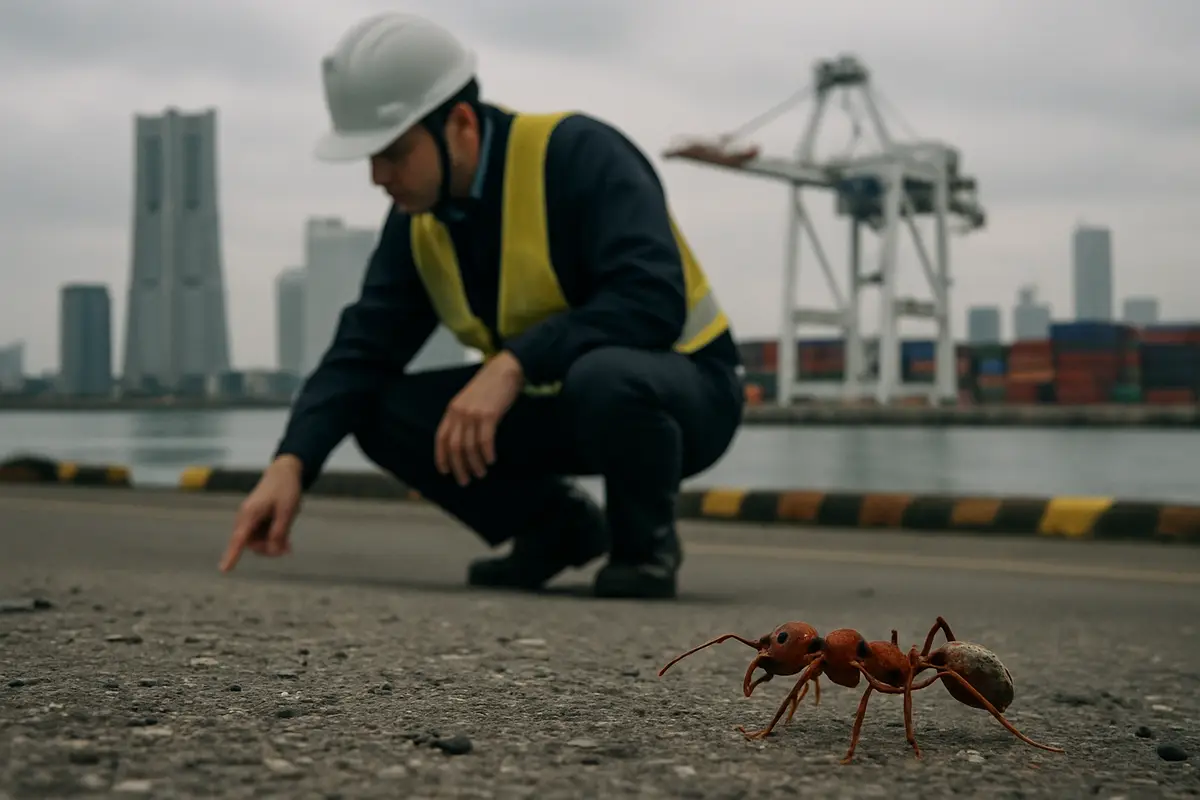
この画像はAIで生成され、学習目的で使用されています。
This image is AI-generated and used for educational purposes.
横浜市の港で、ヒアリが見つかりました2。ヒアリは外国から来た危険なアリです3。
ヒアリは体が赤くて、小さいです4。しかし、毒を持っています5。人が刺されると、とても痛いです6。体の調子が悪くなることもあります7。
市の係員は、見つけた場所のアリを全部殺しました8。そして「ヒアリを見つけたら、さわらないでください9。すぐに役所に連絡してください」と話しました10。
Discussion
to rate or comment.
No comments yet.